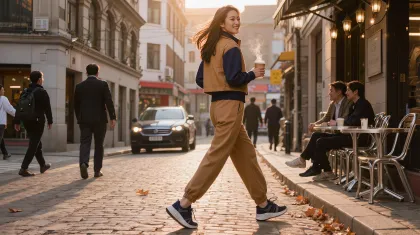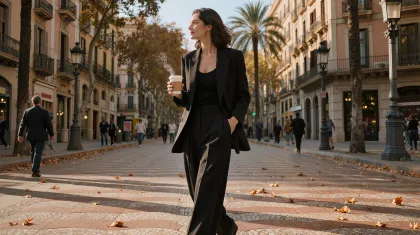
The wine hit my sleeve at ten past noon. Not a drop on the Uniqlo merino underneath, which tells you everything about why I now worship natural fibers. It was my first morning in Barcelona and I’d already committed the cardinal sin of the noir-obsessed traveler—treating black linen like it’s invisible to physics.
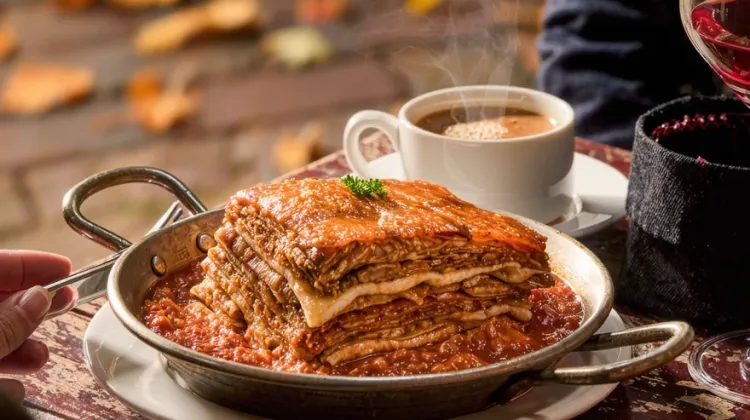
I’d packed for a wedding-adjacent dinner, operating under the delusion that one-bag rail travel meant a single blazer and sheer force of will. My nails—the color of overripe cherries, chipped on the thumb from the flight—left smudges on the ceramic cup at a corner café near Sant Antoni.
The coffee tasted like burnt caramel and diesel. The thermometer on the pharmacy wall read twenty-two degrees Celsius and I was sweating through three layers of intention.
The Merino Miracle and the Linen Mistake
I’ve ruined enough clothes in transit to know that cotton-poly blends pill in suitcases and that viscose trousers tear at the crotch after three sits. For this trip, I committed to Uniqlo’s extra-fine merino turtleneck—seventeen microns, thin enough to layer, magic at resisting odor for four days straight without a wash.
Over it, I wore a heavyweight linen blazer from & Other Stories. Linen breathes like a sieve but wrinkles like a shar-pei, which suits the Kyoto Gion Summer humidity strategy I’ve adopted for any city that hits eighty degrees by noon.
The trousers were the error. Wide-leg, black, ninety-six percent cotton with four percent spandex from COS. They showed every lint particle from the train seat, and the Tempranillo—€4.50 a glass at the market bar—left a constellation of purple dots I had to dab with seltzer behind a dumpster.
The Gaudí tiles on the Eixample balconies caught the sunlight like shattered stained glass, throwing green and blue patches onto my cuff. I could feel the heat radiating off the stone.
La Boqueria to Barceloneta: The Nine-Hour Outfit
The market smelled like overripe peaches and the Mediterranean. I walked from La Boqueria to the beach in ninety minutes, cutting through the Raval, where the temperature dropped five degrees in the shade of the narrow streets.
This is the thing about Barcelona in October—the locals reclaim the city from August’s tourists, and the weather rewards wandering, but it punishes static outfits.
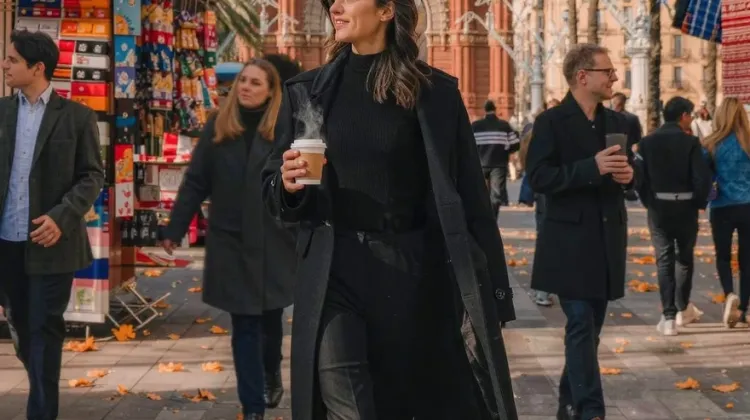
I stopped for patatas bravas at a bar with mismatched chairs and a chalkboard menu. €3.50 for a ceramic dish that could feed two, the potatoes crisp, the aioli sharp with garlic. I sat alone because I’d made the rookie error of dining at eight-thirty.
Fair warning—if you order before nine, the kitchen knows you’re not from here. The staff eats at ten, alongside everyone else in the city.
The sand at Barceloneta had a coarse, shell-studded texture that found its way into my Everlane loafers—black leather with rubber soles that survived the Gothic Quarter cobblestones without the ankle-rolling that heels invite. I learned this shoe strategy from a Ginza Shopping Day earth tones trip, and it holds up.
The Barcelona Temperature Trap
You need layers for this city’s elevation changes. I took the metro to Alfons X around four—still warm in the valleys, but the climb to Bunkers del Carmel is fifteen minutes of vertical breathing.
By the time I reached the panoramic concrete ruins, the wind had teeth. Eighteen degrees Celsius feels like twelve when you’re exposed on a hilltop overlooking the grid.
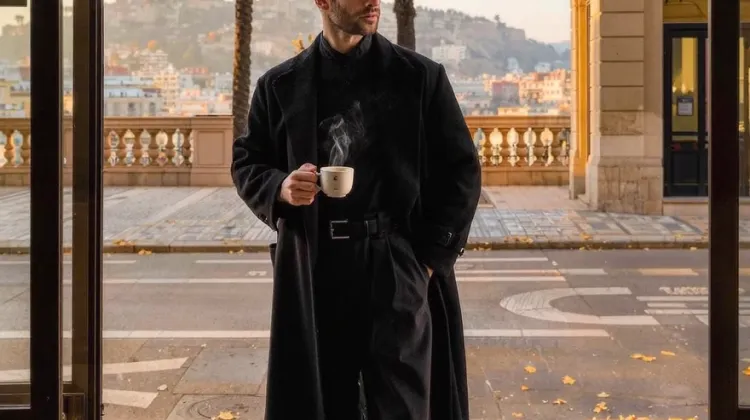
The merino wool saved me. It regulates body temperature like a thermostat, wicking away the sweat from the climb while the linen blazer blocked the gusts. I watched the sun set behind the Collserola hills, painting the Sagrada Familia pink in the distance.
A group of locals shared wine from a plastic bottle and laughed at a dog chasing pigeons. The air smelled like jasmine and exhaust.
Fair warning—the metro closes at midnight, but the night buses run all night on weekends. I stayed until nearly eleven, which meant a twenty-minute wait for the N0 line back to Gràcia, shivering in my cotton-spandex trousers that offered zero wind resistance.
What the Formal Event Required vs. What the City Demanded
The dinner reservation required a blazer. The city required movement. I managed both by accepting that my one-bag humidity strategy works across climates if you trust the base layer. The COS trousers stretched enough for the ninety-minute walk, but the fabric held the heat like a grudge.
You cannot skip the layers. The day spanned fifteen to twenty-two degrees, and the only thing that adapted was the merino.
What I’m Changing Next Time
I used to be the person who packed four shoes for three days. This trip, I wore one pair and survived. But next time, I’m adding a silk-cotton scarf—something weightless that adds ten degrees of warmth when the sun dips. I’m also swapping the black COS trousers for navy merino wool wide-legs that breathe better and hide wine.
The formal dinner went fine. I looked appropriate, hiding the stains with strategic napkin placement. But I spent the whole meal calculating whether I could catch the night bus back without freezing. Next time, I’m eating at ten like a functioning local, and I’m bringing a backup layer that isn’t a blazer.
What fabric base layer works best for Barcelona in October?
Uniqlo’s extra-fine merino wool turtleneck regulates temperature between the 15-22°C range and resists odor for days without washing, unlike cotton-poly blends that trap sweat.
What time do locals actually eat dinner in Barcelona?
Locals eat at 10 PM. Arriving before 9 PM means dining alone, as the author discovered when eating €3.50 patatas bravas at eight-thirty while the staff prepared their own meal.
How do you get to Bunkers del Carmel using public transport?
Take the metro to Alfons X station, then walk fifteen minutes uphill. Fair warning: the metro closes at midnight, but night buses like the N0 line run all night on weekends for the return trip.
Can you wear all-black outfits in Barcelona heat?
Yes, if you choose breathable fabrics like heavyweight linen from & Other Stories or merino wool, rather than cotton-spandex blends that trap heat and show every lint particle and wine stain.
What shoes survive both cobblestones and beach walks in Barcelona?
Black leather loafers with rubber soles, like those from Everlane, handle the Gothic Quarter’s uneven stones and the coarse sand at Barceloneta without requiring a change of shoes.