The Best Solo Morning: Coffee, a Fresh Pastry, and Writing in a Cafe
A slow solo morning with coffee, a fresh pastry, and a notebook can anchor your whole trip. Here is how to build the routine, dress for it, and pack light.
 ✓

There is a moment on every solo trip when you wake up in a room that is not yours, in a city that is still quiet, and you get to decide exactly how the morning goes. This guide is about turning that moment into a simple ritual: a good coffee, a fresh pastry, and twenty minutes with a notebook at a small table. It is not a complicated system, and that is the whole point.
Why a Slow Solo Morning Makes the Whole Trip Better
When you travel alone, the first hour of the day belongs entirely to you. Nobody is waiting outside your door, nobody is checking the time, and nobody is asking what the plan is. That freedom can feel odd at first if you are used to moving fast in the morning, but it is also the reason a solo trip can feel so restful.
A slow morning gives your body time to wake up properly. You drink a glass of water, you wash your face, you put on something soft, and you walk a few minutes to a cafe you noticed yesterday. By the time the coffee arrives, your head has caught up with your feet. That small gap between waking and rushing is where the calm of the whole trip is hiding.
A Gentle Start Beats a Rushed One
Most travel advice tells you to get out early and beat the crowds. That is good advice for some days, but doing it every single day will wear you out, especially when you are on your own and making every decision yourself. One unhurried morning makes the busy mornings easier to handle, because you start the day rested instead of already behind.
There is a practical side to this as well. When you sit still for half an hour, you notice things. You notice which street the locals walk down, how much a coffee really costs, and whether the bakery next door opens at seven or at nine. That kind of small knowledge makes the rest of your stay smoother.
Twenty Minutes With a Notebook Changes the Day
Writing a few lines in the morning is not about keeping a perfect journal. It is about sorting out what you actually want from the day, before the day fills itself up with other people's recommendations. On the page, three or four honest sentences are enough.
I like to write down what I am curious about, what I am hungry for, and what I would like to do slowly. On one trip that meant a small museum in the morning, a bowl of noodles at lunch, and an hour in a park with no plan at all. Written down, the day felt possible instead of overwhelming.
When you write your day by hand instead of scrolling through a list of must-see sights, you give yourself permission to want less and enjoy more.
It Helps You Learn the Neighborhood
Choosing a cafe near where you are staying does more than fill an hour. You walk the same street twice, once on the way there and once on the way back, and your brain starts to build a map. You notice the pharmacy on the corner and the small grocery store with fruit in the window. By the second morning, you are no longer a stranger on that street.
This is why I try to find one cafe and go back to it. The person behind the counter starts to nod at you, and you get the seat you like. You stop feeling like a visitor who is passing through, and you start feeling like someone who lives there for a few days.
Solo Mornings Are Not Lonely When They Have a Shape
People worry that eating breakfast alone will feel sad, and it can, but usually only when there is nothing to do. Give the hour a shape and the feeling changes. You have a walk, a drink, a pastry, and a page to fill, and suddenly the hour has company built into it.
The shape also takes the pressure off the rest of the day. You are not searching for a perfect experience, because you have already had one small good one before nine in the morning.
How to Build Your Solo Morning Coffee Routine
The routine itself is short and easy to repeat, and that is what makes it work in any city. The steps below are the same whether you wake up in Tokyo, Copenhagen, Montreal, or a small town you had never heard of last month.
Start With a Simple Wake-Up Sequence
Begin with the basics. Drink a glass of water, wash your face, brush your teeth, and put on clothes that feel comfortable rather than impressive. You are not dressing for anyone. You are dressing for a short walk and a chair by a window.
Then walk five to ten minutes to the cafe you noticed the day before. A short walk is better than a long one in the morning, because you want to arrive calm, not tired. If you have not found a cafe yet, look for one with people inside and a counter where you can order standing up. Those two signs usually mean good coffee and no pressure to leave quickly.
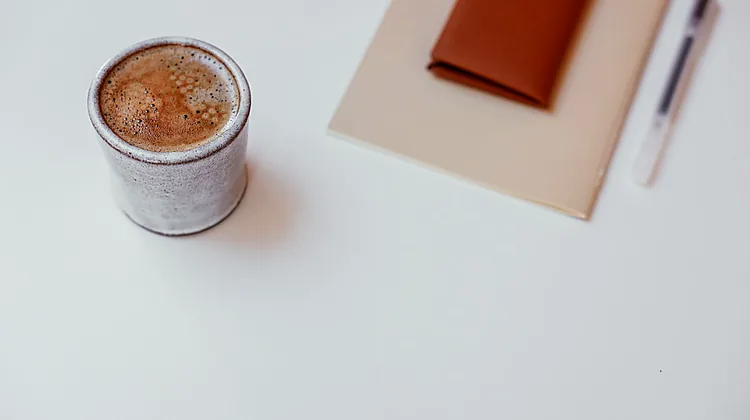
A quiet moment to plan the day.
Order Simply and Sit Where You Can Spread Out
Order at the counter and keep it simple. Ask for the house coffee, order whatever the person in front of you ordered, or ask for a flat white if you want something familiar. Add one fresh pastry, ideally something baked that morning, because a good pastry is half the reason this routine feels like a treat instead of a chore.
Choosing a seat matters more than people think. Sit facing the window if you like watching the street, or facing the room if you like watching people. A bar seat along the wall works well when the cafe is busy, and a long shared table is fine too. Nobody is watching you write, and nobody minds a quiet solo guest.
Write Three Short Lists
Open your notebook and write three short lists. The first list holds one thing you want to see, such as a garden, a market, or a particular building. The second list holds one thing you want to eat, and it can be as small as a piece of cheese or as big as a proper lunch. The third list holds one thing you want to do slowly, like reading in a square or walking along the water without checking the time.
Three items are enough. If you write more, the day turns back into a checklist and the calm feeling disappears. If you finish everything on your list by lunchtime, you have won the day and you are free to do whatever you like.
How Much Time and Money This Really Takes
An honest cafe morning costs about the price of a coffee and a pastry, which is one of the cheapest things you can do in any city. It takes somewhere between forty minutes and an hour if you write for a while, and much less if you are quick. That is a small investment for the calmest hour of your day.
If money is tight, order just the coffee and eat something simple from a grocery store on the walk back. The notebook does not care what is on the table, and the pause still works the same way.
Keep the Routine Flexible
Some mornings you will want to stay for an hour, and some mornings you will finish your coffee in fifteen minutes and leave. Both are fine. The routine is a starting point, not a rule. If it rains, you stay longer. If the sun comes out, you pay and go.
Keep it flexible enough that it still works in a city where cafes open late or where the coffee comes in a tiny cup. The shape of the morning stays the same even when the details change.
What to Wear for a Comfortable Cafe Morning
You want clothes that feel good when you are sitting still and still feel good when you stand up and walk for two hours. Soft layers do that best, because you can add one or take one off without changing your whole outfit.
A Simple Outfit That Works Almost Everywhere
Start with a breathable cotton tee. Add a light cardigan or a thin wool sweater over the top. Choose relaxed trousers that do not dig in when you sit, and finish with slip-on sneakers or low ankle boots that you have already broken in. A thin scarf is the most useful extra piece you can carry, because it handles cool air conditioning, a chilly morning, and a breeze off the water all at once.
In warmer places, swap the sweater for a linen shirt and choose lightweight pants that hide a small coffee drip. Linen creases, and that is part of its charm, so do not worry about looking perfectly pressed. In cooler places, add a light rain shell and a pair of thin socks that dry overnight.
| Layer | What to Choose | Why It Works |
|---|---|---|
| Base layer | A soft cotton tee or a linen shirt | It breathes when you sit inside a warm cafe |
| Mid layer | A light cardigan or a thin wool sweater | It comes off easily when the morning warms up |
| Trousers | Relaxed cotton or a soft stretch blend | They stay comfortable for sitting and for walking |
| Shoes | Slip-on sneakers or low ankle boots | They are quick to put on and kind to your feet |
| Extra | A thin scarf and a small rain shell | They handle cold air conditioning and showers |
| Bag | A small crossbody with a flat pocket | It keeps your notebook, pen, and card within reach |
Notice that nothing on this list is fragile or precious. That matters, because cafe mornings often turn into unplanned wanders. You finish your coffee, you see a street that looks interesting, and suddenly you are three neighborhoods away from your room. Dressing for that possibility is what keeps the whole morning relaxed.
Dressing for Warm and Cool Cities
In a warm city, your biggest problem is not the heat outside but the cold air inside. Many cafes run strong air conditioning, so a light linen shirt with long sleeves over a simple top gives you a way to adjust. Loose pants that do not stick to your legs make a long sit far more pleasant.
In a cool city, your biggest problem is damp air in the morning. A thin wool layer under a light jacket keeps you warm without turning you into a bundle of coats, and shoes that keep your socks dry matter more than anything else. Whichever city you are in, choose one comfortable walking shoe you trust, because the best mornings often turn into a long walk after breakfast.
Keep Your Clothes Fresh and Wrinkle-Free on the Road
When you pack light, you wear the same few pieces again and again. That only works if you can keep them clean and reasonably smooth without a washing machine or an iron.
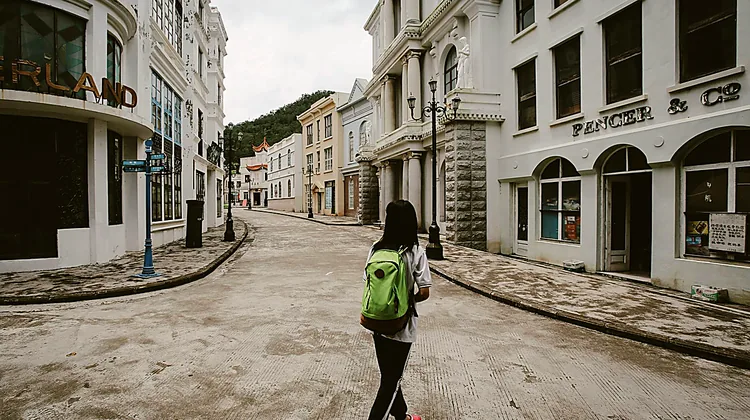
Comfortable layers for a slow morning walk.
Wash Small Items in the Sink
After a cafe morning, take five minutes to rinse the small things. Socks, underwear, and a thin tee are easy to wash in a sink with a little gentle soap. Swish them around, squeeze the water out without twisting, then roll them in a dry towel and press down. Hang them somewhere with moving air and they will usually be dry by morning.
This habit keeps your bag light and means you never run out of clean basics. It also means you can pack fewer things, which makes every other part of traveling alone easier.
Deal With Wrinkles Without an Iron
For shirts and dresses, hang them in the bathroom while you take a hot shower. The steam relaxes the fabric, and most light creases fall out on their own. A small spray bottle filled with water and one drop of fabric softener works well too. Lightly mist the fabric, smooth it with your hand, and let it hang for ten minutes.
Rolling your clothes tightly when you pack also helps. Folded clothes crease along the same lines every time, but rolled clothes bend in different places, so the creases are less noticeable. Keep one lightweight hanger in your bag and hang the pieces you plan to wear in the morning.
Packing Light Starts With the Fabric
Fabrics that dry quickly make everything on this list easier. Cotton, linen, and thin wool all dry faster than heavy denim or thick fleece, and they take up less room in your bag. When you shop for travel clothes, touch the fabric and ask yourself how it will feel after a sink wash and a night on a hanger.
You do not need special travel clothing to make this work. You need pieces that are simple, light, and comfortable enough that you stop thinking about them once you are dressed.
Keep Clean and Worn Clothes Apart
Bring a separate pouch for anything you have already worn. When your clean clothes stay in their own space, your cafe morning outfit always looks fresh, and you never have to dig through the bag wondering what is what. A simple cotton drawstring bag or a large zip pouch does the job for almost nothing.
| Job | What to Carry | How It Helps |
|---|---|---|
| Quick wash | A small bottle of gentle soap | It cleans a tee, socks, or underwear in minutes |
| Drying | A thin microfiber towel | It removes water fast so clothes dry overnight |
| Smoothing | A small travel spray bottle | It relaxes light wrinkles on shirts and dresses |
| Hanging | Two lightweight hangers | They give wet or creased clothes somewhere to rest |
| Separating | One pouch for worn clothes | It keeps clean pieces ready for the next morning |
Your Quick Solo Morning Checklist
Before you leave your room, run through the same short list. It takes ten seconds and saves you a lot of walking back upstairs.
- A charged phone and, if you use one, a small power bank.
- A small notebook and a pen that actually writes.
- A crossbody bag with a little cash and your card.
- One light layer in case the cafe is cold inside.
- Comfortable shoes you have already worn for a full day.
- Headphones, for a quiet walk back or a podcast on the way.
- A reusable cup only if you know the cafe accepts one.
Notice what is not on the list. There is no heavy guidebook, no camera with three lenses, and no plan to see nine things before lunch. The goal is not to do everything. The goal is to enjoy one unhurried hour that makes the rest of the day feel simpler.
A Small Word About Eating Alone
If sitting alone in a cafe still feels uncomfortable, remember that most people are busy with their own mornings. The person at the next table is checking email, reading a newspaper, or waiting for a friend. You are not the strange one in the room. Order your coffee, open your notebook, and give it twenty minutes. It gets easier on the second morning, and by the third it feels like something you look forward to.
When the Morning Does Not Go to Plan
Sometimes the cafe is closed, or the pastry you wanted is sold out, or it is pouring rain. None of that ruins the routine. Find another door with people behind it and try again. The point was never the specific cafe. The point is the pause.
Make This the Part of the Trip You Look Forward To
You do not need a perfect city, a famous cafe, or a beautiful leather journal to make this work. You need a cup of coffee, something baked that morning, and a few quiet minutes to decide what kind of day you want. Dress in soft layers, carry a small bag, keep your clothes clean and simple, and let the morning set the pace for everything that comes after.
Do it tomorrow. Choose a cafe you walked past today, put your notebook in your pocket, and give yourself one slow hour. It will quietly become the best part of the trip, and it will cost you almost nothing at all.
Frequently asked questions
✓ Kristina Mate
Founder & Lead Travel Editor · TravelStyleMate
Kristina is the founder and lead editor of TravelStyleMate. Over the past 8 years, she has explored 35+ countries across Europe, Asia, and the Americas—traveling almost exclusively with a single 40L carry-on bag. A dedicated solo traveler, she specializes in cobblestone-tested footwear, minimalist capsule packing formulas, and realistic transit logistics. Every packing rule, walking shoe, and itinerary on TravelStyleMate is personally tested on actual trips with real luggage constraints.
Testing Guarantee: Every packing rule, walking shoe, and transit route is personally tested with real luggage constraints. No paid rankings, no untouched gear, no AI fluff.
Related guides
Easy Journal Prompts to Write Down During Your Morning Coffee
Turn a quiet morning coffee on your solo trip into a memory you can keep. Simple journal prompts, easy clothing tips, and a routine that takes ten minutes.

How to Beat the Scared Feeling You Get the Day Before a Solo Trip
A day-before scare is normal. Plan your first hour, pack one comfy outfit, keep your bag light, and calm your nerves with a simple checklist.
The Joy of Sitting Outside at a Cafe and Watching the City Go By
Learn how to choose a good outdoor cafe seat, dress for slow sitting, order without rushing, and keep your travel clothes fresh on a long solo trip.