Budget Travel vs. New US Tariffs: What It Means for Your Next Trip
New US tariffs raise the price of gear, clothes, and souvenirs. Here is how to pack smart, dress for the flight, and keep your trip budget intact.
 ✓
The new US tariffs do not have to cancel your trip. They are a very good reason to buy less gear before you fly, pack what you already own, and learn the one border rule that keeps your money safe.
Most headlines about tariffs are written for shoppers rather than travelers, which leaves the rest of us wondering whether a summer trip suddenly costs more than it did last year. The short answer is that your flights, your hotel nights, and your meals are not really part of this story at all.
What is part of the story is stuff. Anything you buy and carry across a border is now more expensive in ways that are easy to miss. So let us walk through it slowly, in plain English, and then get to the part you actually control, which is what you pack and what you wear to the airport.
What the New US Tariffs Actually Mean for Your Trip
A tariff is simply a tax that one country adds to goods crossing its border. That is the whole idea in a single sentence. When the United States raises tariffs, the price of many imported things goes up, including shoes, jackets, bags, phones, coffee, wine, and plenty of small kitchen items.
For a traveler, that shows up in three ordinary places.
- In US shops before you even leave. The $60 duffel bag you were thinking about may now ring up closer to $72, which makes buying a whole new travel wardrobe for the trip the worst deal on your list right now.
- In what you carry home. The United States still gives each traveler a personal duty-free allowance on items they bring back with them. The figure changes from time to time, so check the current number on the official customs website during the week you fly. It applies per person and not per family, which means a couple gets the allowance twice.
- In shipping. Mailing a purchase home, or ordering something and having it sent to your hotel, can add customs charges on top of the price tag you already paid.
Here is the honest part up front. Nobody can tell you the exact number for your specific item, because it depends on what the item is, where it was made, and what the rate is that week. Check the current rate before you assume something is a bargain.
Treat every big purchase abroad as a maybe until you have checked the current duty rules. Guessing is how a good deal turns into a surprise at the counter.
Which Parts of Your Trip Get Pricier, and Which Don't
Here is the good news, and it is genuinely good. Most of a great trip is a service rather than an imported object, and services are not touched by these tariffs. Flights, train passes, hotel nights, guided walks, museum tickets, and meals out all sit outside this conversation. An afternoon of street food in Mexico City or a walking tour in Krakow costs about what it cost last year.
What does move is stuff. That includes the gear you buy before you go, imported souvenirs, new clothing, electronics, and anything you mail home. The simple rule that follows is to buy the trip, not the stuff.
| Part of your trip | What happens to the price |
|---|---|
| Flights, trains, and rental cars | These are services, so the new tariffs do not change them. |
| Hotels, hostels, and guesthouses | Your room rate is a service too, and it stays on its own track. |
| Tours, museum tickets, and classes | Local guides and museums set their own prices, and tariffs are not part of it. |
| Restaurants, markets, and street food | Meals out are unaffected, though a few imported ingredients may edge up. |
| New clothing, shoes, and bags | Many imported items cost more, both at home and while you travel. |
| Souvenirs, electronics, and shipped gifts | Imported goods and items you mail home can carry extra customs charges. |
Two small habits protect you at the border, and both take about ten minutes to set up.
- Photograph what you already own. Keep a phone folder of receipt photos for anything expensive you are carrying with you. A laptop, a camera, or a good watch is easy to prove as yours when you have the paper trail ready, and an officer who asks gets a quick answer instead of a long story.
- Keep one receipt pocket. Tuck the paper receipts for anything you buy abroad into the same zipper pocket every time. You always know your total without guessing, and you never have to dig through your whole bag at a counter.
Pack the Things You'd Otherwise Buy on the Road
The cheapest way to beat a price hike is to not need the thing at all. Before every trip, write down the last five items you panic-bought at a destination. For most of us the list looks almost identical, and it usually reads sunscreen, a plug adapter, a phone cable, a rain jacket, and blister plasters.
Every one of those costs more at a hotel gift shop or an airport kiosk than it does at home. So pack them from the start and stop paying the emergency price.
- Pack one small bottle of sunscreen, decanted into a 100ml container so it sails through security.
- Bring a universal plug adapter that covers the countries on your route, because a single-country adapter is a trap.
- Add a spare charging cable, since cables always fail on the day you need the map most.
- Take a thin packable rain shell that folds into its own pocket and weighs almost nothing.
- Slide in a strip of blister plasters, which cost pennies at home and save whole afternoons abroad.
Then build a seven-day list that fits in a carry-on-size bag, and stick to it no matter how good the sale looks.
| What to pack | How many | Why it works |
|---|---|---|
| Tops | Three | You wear one on the plane and rinse the others as you go. |
| Bottoms | Two | One comfortable pair handles travel days and one tidy pair handles evenings. |
| Mid-layer | One | A thin sweater or fleece covers cold planes and cool nights. |
| Light jacket | One | A packable rain shell or light puffer handles most weather you meet. |
| Underwear and socks | Five pairs of each | Five is plenty for a week when you wash a few items in the sink. |
| Sleep set | One | A soft tee and shorts make shared rooms and long flights far easier. |
| Shoes | Two pairs | You wear the heavier pair and pack the flatter pair. |
Fewer things bought means fewer things to declare, fewer things to carry, and fewer things to regret once you are home.
Airport Outfit Ideas That Earn Their Place in Your Bag
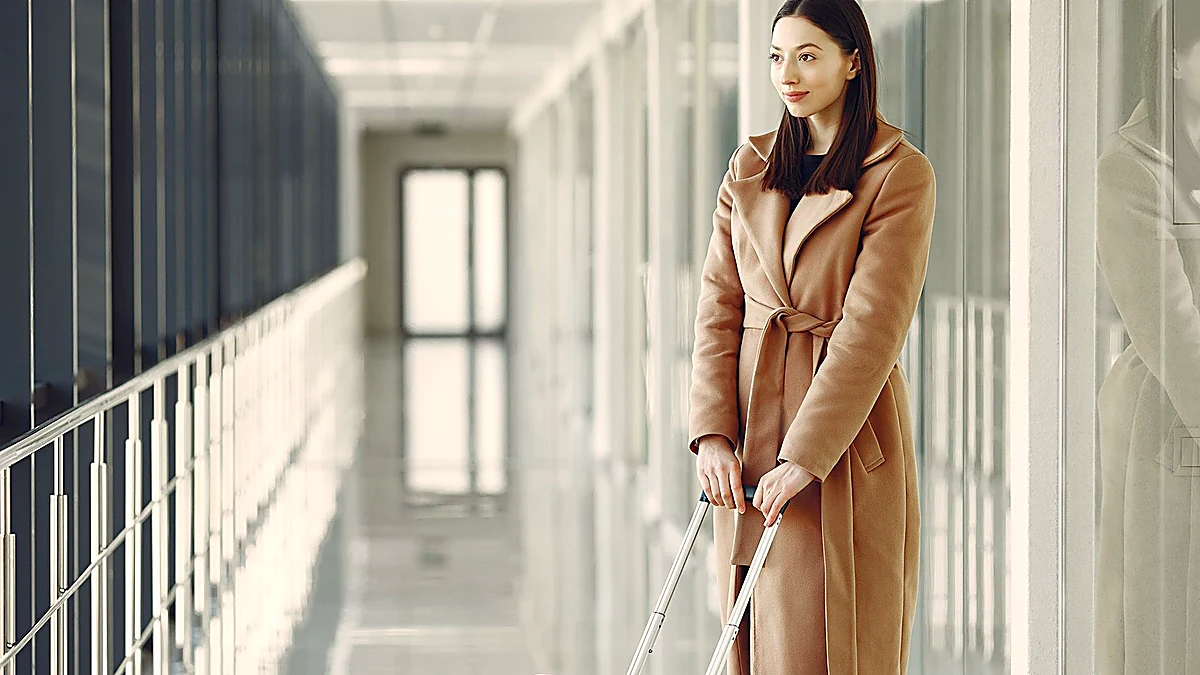
Wear your bulkiest and heaviest items on travel day and your bag gets lighter for free. This is the oldest trick in the book, and it is completely tariff-proof because every piece already lives in your closet.
| Weather you are flying into | Outfit that works | Why it earns its place |
|---|---|---|
| Warm and humid | A soft breathable cotton tee, a lightweight linen shirt worn open as a layer, stretchy travel pants with real pockets, and worn-in support sneakers with thin merino socks. | Every piece stays light, dries fast, and still looks fine at dinner. |
| Cool and dry | A thin merino or light cashmere sweater, straight-leg dark denim, a packable puffer over the top, and slip-on leather shoes with your socks tucked inside them at security. | The heavy layers ride on your body instead of filling your bag. |
| Cold and windy | A merino base layer, a warm mid-layer, a windproof outer layer, and a scarf or light beanie. | Merino next to your skin keeps you warm without adding bulk. |
| Rainy or mixed | A rain shell over a cotton blend top, quick-drying pants, and shoes that handle a wet sidewalk. | You stay dry without packing an umbrella you will probably lose. |
One footwear pairing always works, and it is the pair I recommend to everyone. Bring one cushioned walking shoe for long days on your feet and one flat, packable shoe for dinners, and that is genuinely all you need. A scarf or a light beanie also handles the plane's air conditioning without taking up any real space in your bag.
Weather adjustments are simple once you know the rule. Humid places get thin cotton and linen, dry cold places get merino next to your skin with a windproof layer over it, and mixed weather gets a shell you can peel off and stuff into a pocket.
Nothing in these outfits is a special purchase. If it is already hanging in your closet, it is already tariff-proof.
Wash, Rewear, and Skip the Shopping Stop
One sink wash in the evening buys you several days of clean clothes, and it takes all the pressure off souvenir shopping. Roll each item up in a towel and press down firmly to squeeze the water out. Never wring a shirt out by hand, because wringing stretches the fabric and shortens the life of a piece you actually like.
Then hang the item on a hanger or a travel line overnight and let it finish drying on its own. Thin merino, cotton blends, and technical travel fabric dry the fastest. Heavy denim and thick fleece dry slowly, so wear those two or three times between washes instead of trying to launder them on the road.
For wrinkles, hang the item in the bathroom while you shower and smooth it gently with your hands. A tiny travel spray bottle of water does the same job in seconds when the bathroom is not steamy enough.
Then apply the money rule, which is the whole point of this article. If you would only wear it at home during the week you get back, do not buy it abroad. Buy one small thing made by a local maker instead, ask for a receipt, write your total down somewhere you will find it, and put the rest of your budget into the trip itself.
Your Five-Minute Money Check Before You Fly
Run through this short list the night before you leave, and you will land with a clear head and a full wallet.
- Check the current duty-free allowance on the official customs website, and note whether it applies per person for your group.
- Photograph the receipts for any expensive item you are carrying with you, and save the photos in one phone album.
- Write your packing list and cross off anything you were planning to buy new for the trip.
- Pack the five items you usually panic-buy, starting with sunscreen and a plug adapter.
- Decide on one small local souvenir in advance, and leave a little room in your bag for it.
Tariffs change the price of objects, and they change it in ways that are hard to predict from one week to the next. What they cannot touch is a traveler who packs well, wears the right layers, washes a shirt in the sink, and spends the money on the trip rather than on the stuff around it.
So buy the flight, book the room, take the walking tour, and eat the street food. Your closet is already full of everything the airport and the border will ask of you.
Frequently asked questions
✓ Kristina Mate
Founder & Lead Travel Editor · TravelStyleMate
Kristina is the founder and lead editor of TravelStyleMate. Over the past 8 years, she has explored 35+ countries across Europe, Asia, and the Americas—traveling almost exclusively with a single 40L carry-on bag. A dedicated solo traveler, she specializes in cobblestone-tested footwear, minimalist capsule packing formulas, and realistic transit logistics. Every packing rule, walking shoe, and itinerary on TravelStyleMate is personally tested on actual trips with real luggage constraints.
Testing Guarantee: Every packing rule, walking shoe, and transit route is personally tested with real luggage constraints. No paid rankings, no untouched gear, no AI fluff.
Related guides
Small Earbuds or Big Headphones: Which is Better for Packing Light?
Earbuds or big headphones for your next trip? Compare packing space, comfort, battery life, and quiet to pick the one pair that fits your travel day.
The Best Slip-Off Shoes for Airport Security Lines
Slip-off shoes make airport security lines easy. Learn which easy-on shoes stay comfortable all day, what to avoid, and how to keep them fresh on trips.
The Best Weekend Duffel Bags for Short 3-Day Trips
How to choose and pack a weekend duffel for a three-day trip, so you skip the wheels, fit the overhead bin, and keep your clothes fresh on the road.