How to Pack Phone and Laptop Cords So They Never Get Tangled
Learn the simple loop-and-band method that keeps phone and laptop cords neat in your bag, so you never fight a tangled knot at the hotel desk again.
 ✓
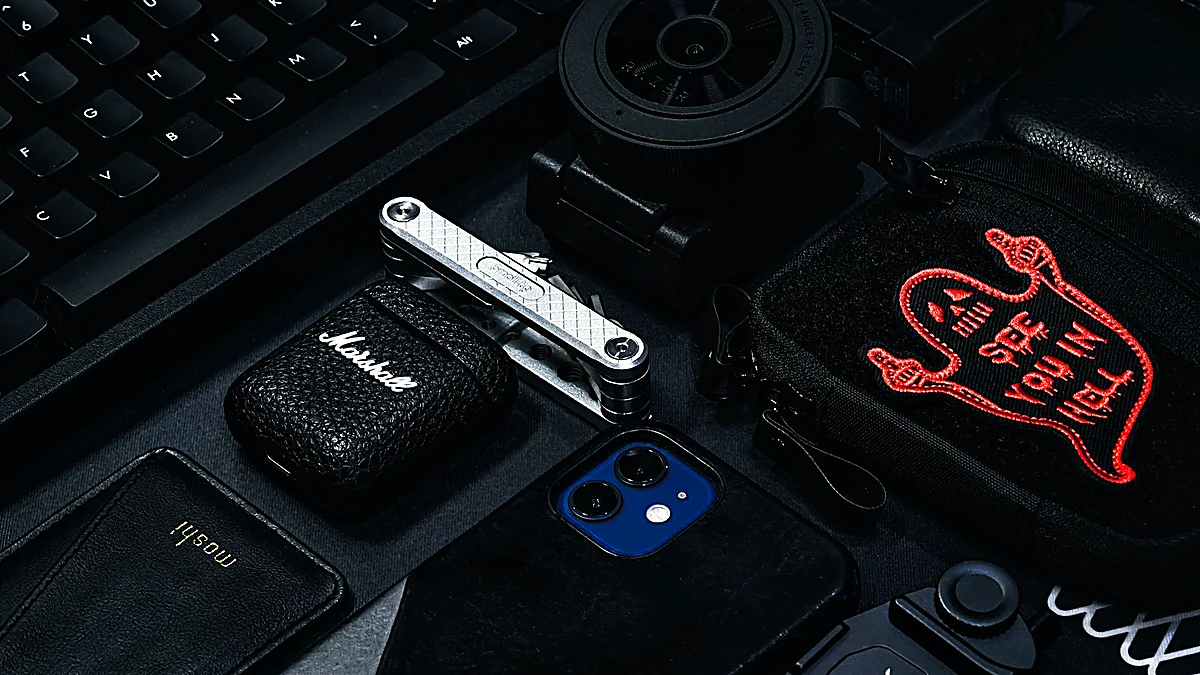
There is one small moment on almost every trip that can spoil an otherwise good day. You sit down at the hotel desk, tired from the flight, your phone is at two percent battery, and you pull out a cable that has tied itself into a tight knot. The fix for this is surprisingly simple, and it takes about ten seconds per cord once you know the routine.
I have packed cables for short weekend trips and for long flights across several time zones, and I have made just about every mistake a person can make. For years I dropped my chargers into a backpack pocket and hoped for the best. I wrapped them around my hand like a ball of string and pushed them into the front pocket of my bag. Every time, I ended up standing at an airport charging station, picking at a small nest of wire with my fingernails while a voice on the loudspeaker announced boarding for the third time.
What finally changed things for me was not a new gadget or an expensive travel organizer. It was two small habits. First, I stopped letting my cables move around freely inside my bag. Second, I gave every cord a fixed shape and a fixed home. That is really the whole idea behind this guide, and it works whether you carry one cable or eight.
Why Cords Turn Into a Bird's Nest Inside Your Bag
A cable tangles because it is long, a little springy, and free to move in every direction. When you drop a cord into a backpack and close the zipper, nothing holds it in place. Every step you take shakes the bag, and every shake lets the cable curl a little more. Over an hour of walking through an airport, that free cable loops around your zipper pull, your pen, your headphones, and your keys, and slowly pulls itself into a tight knot.
It helps to understand that the knot is not really your fault. You did not do anything wrong when you packed. The cord simply had nothing else to do but wander, and it wandered into the nearest small spaces it could find. This is why the same thing happens to careful packers and messy packers alike.
Here are the three things that let a cord tangle so easily:
- The cable is long, so it has plenty of room to loop around other objects.
- The cable is springy, so it wants to return to a curved shape once it is released.
- The cable is loose in the bag, so nothing stops it from moving with every step you take.
This is also why buying a fancier cable does not usually fix the problem. A well-made cable can still tie itself into a knot if you leave it loose next to your headphones. The real fix is to stop the cable from moving freely. When a cord keeps the same shape and stays in the same small pouch, the tangling problem mostly disappears.
If you give a cable a fixed shape and a fixed home, it stops behaving like a loose shoelace and starts behaving like a tool.
This matters most on travel days, when your patience is already thin. You are standing at a charging station near the gate, holding a phone that is nearly dead, and you really do not want to spend five minutes untangling a knot. You want to plug in, sit down, and take a breath.
The Loop-and-Band Method Anyone Can Do
This is the method I use for every cable I own, and it takes about ten seconds once you have done it a few times. It also protects the wire inside the cable, which matters more than most people realize. Cables usually fail near the ends, and the damage often starts with a sharp bend that was pressed into the same spot again and again.
Start by unplugging the cable and letting it hang straight for a moment. You are waiting for the memory of the last fold to relax a little. Then make a loose loop about the size of your palm, and keep looping in the same direction. This is the key step. Do not fold the cable back and forth like a ribbon, because back-and-forth folding is exactly what creates the tight bends that damage the wire inside.
When you have three or four loose loops, wrap a soft velcro tie or a wide elastic band around the middle of the bundle. Do not use thin twist ties, because they dig into the outer cover of the cable and leave marks that turn into breaks over time. If you only have a hair tie, that works fine for a very short cord, but for a laptop charger the wider velcro tie is a better choice.
Then label it. A small colored dot sticker or a tiny piece of tape with a letter on it is enough. When you are half asleep in a dark hotel room, you will be glad you can grab the laptop charger without guessing which black cable is which.
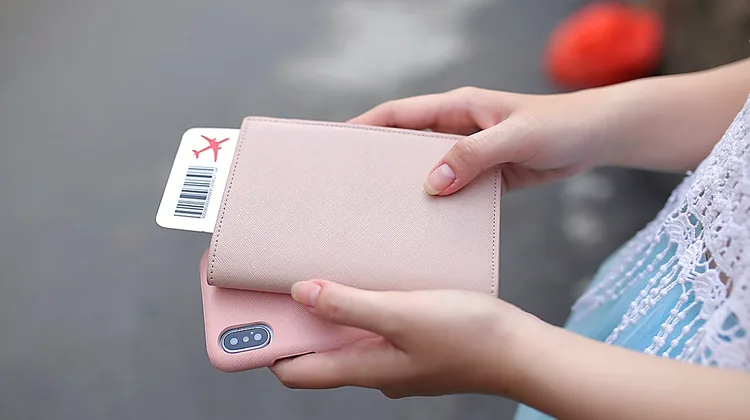
Neat loops make cords easy to find.
A few extra details make this routine even better. Keep the loops a little loose rather than tight, because a tight bundle puts pressure on the wire. Leave the connector ends visible so you can see which cable you are holding. If you carry a very long cable, you can fold it into two loose loops and then wrap the tie around the middle. The goal is a neat bundle that feels soft in your hand, not a hard, tight package.
What to do about very long and very short cables
A long laptop cable that is two meters or more is the hardest one to keep tidy, so give it a wide velcro strap and a dedicated pocket in your pouch. Short cables, such as the small one you use to charge your phone from a power bank, can simply be looped twice and held with a hair tie. If a cable has a bulky adapter at one end, wrap the tie just under the adapter so the heavy part cannot swing around and pull the loops loose.
One more habit worth building is doing this the same way every time. The same number of loops, the same direction, the same tie. When a routine becomes boring, it becomes fast, and fast is what you want on the night before an early flight.
What to Wear and Carry on Travel Day So Cords Stay Handy
Your clothes are part of your cord setup, and this is something I did not understand for years. On a flight day, choose clothes with real pockets. A light jacket with zipped side pockets, or simple trousers with deep front pockets, lets you keep your phone and a short charging cable within reach. That way you are not digging through a packed bag at the gate while people line up behind you.
Wear slip-on shoes so you can move through security without bending and fumbling. A soft, breathable cotton tee under a thin wool or merino layer handles the changeable temperatures on a plane, where the cabin can feel warm at the gate and chilly two hours later. If you tend to run cold, a light scarf doubles as a small cushion and a place to rest a cable so it does not slide off your tray table.
Where you keep your cords matters just as much as how you pack them. Put your main cord pouch in the personal item that goes under the seat in front of you, not in the bag that goes in the overhead bin. This is such a small change, but it means you can charge your phone during the flight without standing up and opening a bin while the seatbelt sign is on.
A small crossbody bag with one flat inner pocket works really well for cables. Flat pockets hold their shape, so the cords inside do not slide around or fold into new bends. If rain or cold is expected at your destination, a packable rain shell with a chest pocket gives you one more safe and dry place for a cable, which matters because damp connectors are one of the most common reasons a cable stops working on a trip.
| Travel day item | Why it helps with cords |
|---|---|
| Light jacket with zipped pockets | Keeps your phone and a short cable secure and easy to reach. |
| Trousers with deep front pockets | Gives you a spot for a cable when you leave the jacket in the bin. |
| Soft cotton tee with a thin wool layer | Keeps you comfortable in cabins that change temperature fast. |
| Small crossbody bag with a flat pocket | Holds cords flat so they do not slide around and bend. |
| Packable rain shell with a chest pocket | Gives you a dry, safe place for a cable on a wet day. |
| Slip-on shoes | Less bending and fumbling at security, so nothing falls out of your bag. |
There is also a small rule that saves a lot of trouble at security. Spare batteries and power banks must travel in your carry-on bag, not in checked luggage, so keep them with your cords in the same pouch. That way everything that holds or moves electricity is in one place, easy to find, and easy to take out if a security officer asks.
Keeping Cords Clean, Dry, and Untangled for the Whole Trip
Once you arrive, the routine changes a little. At the hotel, pick one spot for charging, usually the desk or a bedside table, and always put the cords back in their pouch when you unplug them. A cord that stays on the nightstand for three days will find a way to wrap itself around a lamp, a glass, and the corner of a book. A cord that goes back in the pouch does not.
Try not to wrap a cable tightly around the power brick. This is one of the most common habits, and it is also one of the fastest ways to break a cable. The sharp angle at the base of the connector is exactly where the wire inside starts to crack. If you need to carry the brick and the cable together, keep them side by side in the same pouch instead of winding one around the other.
Keep cables away from keys, coins, and anything else with rough edges. Even a small metal key can scratch the outer cover of a cable over a couple of weeks of travel, and once that cover is nicked, the wire inside is exposed to bending and moisture. A small zippered pouch or a light zip bag is enough to keep grit out of the connectors too, which is often what causes a cable to work one day and fail the next.
Cables stay tidy in a small pouch.
Give the ends a quick wipe with a dry cloth every few days. Do not use a wet wipe, and never pack a damp cable after you have used it near a sink, a bathroom counter, or a rainy street. Water and metal connectors are not a good pair, and a slightly damp cable can also start to smell musty inside a closed pouch.
If a cord still gets a kink, do not pull hard on it. Straighten it gently by hand, let it relax for a moment, and then re-loop it in the same direction as before. Pulling on a kink stretches the wire inside and makes the problem worse. I have rescued several cables this way and have thrown away far fewer of them since I started doing it.
One last thing worth packing is a spare short cable in a different color, along with a small power bank. It is a tiny amount of space and weight, and it saves a whole evening when a main cable finally gives up. When you are far from home and your phone is your map, your boarding pass, and your camera, a backup cable is not a luxury. It is basic peace of mind.
Your Five-Minute Cord Checklist Before You Zip the Bag
Run through this list the night before you leave, while your bag is still open and you are not rushing. It takes about five minutes, and it prevents the small annoyance that tends to show up at the worst possible moment.
- Every cable is looped in the same direction and held with a velcro tie or a wide elastic band.
- Each cord has a sticker or a small label, so you know what it is without turning on a light.
- All cables live in one small zippered pouch, and that pouch goes into your personal item.
- Chargers and cables are dry, clean, and kept away from keys and coins.
- You packed one short spare cable and a small power bank, both in your carry-on.
- Your travel day outfit has at least one zipped or deep pocket for your phone and a short cable.
Do those six things and you will land, reach into your bag, and pull out a cord that is ready to use instead of a knot. That is the whole payoff. It is not about owning better gear or packing less. It is about giving each cord a shape it can keep and a home it can return to, so your attention can stay on the trip instead of the tangle.
Start with one cable tonight. Loop it in one direction, wrap a soft tie around the middle, and put it in a small pouch. Tomorrow, when you unzip that pouch and the cable comes out clean and ready, you will understand why this tiny habit is worth keeping.
Frequently asked questions
✓ Kristina Mate
Founder & Lead Travel Editor · TravelStyleMate
Kristina is the founder and lead editor of TravelStyleMate. Over the past 8 years, she has explored 35+ countries across Europe, Asia, and the Americas—traveling almost exclusively with a single 40L carry-on bag. A dedicated solo traveler, she specializes in cobblestone-tested footwear, minimalist capsule packing formulas, and realistic transit logistics. Every packing rule, walking shoe, and itinerary on TravelStyleMate is personally tested on actual trips with real luggage constraints.
Testing Guarantee: Every packing rule, walking shoe, and transit route is personally tested with real luggage constraints. No paid rankings, no untouched gear, no AI fluff.
Related guides

How to Freshen Up in an Airport Bathroom During a Long Layover
A simple layover refresh routine: what to pack in a tiny kit, how to use an airport bathroom calmly, and outfit picks that still feel fresh on board.
Fun Things to Do on a Long Flight Without Staring at a Phone Screen
Pack one tiny fun pouch, wear soft layers, and quietly let the long hours pass with books, cards, and puzzles instead of a small phone screen.

How to Wear and Fold a Soft Sweater in a Tight Airplane Seat
Learn how to roll and wear one soft sweater on a long flight so it works as a pillow, a blanket, and a fresh layer that still looks good when you land.