Avoiding Money Card Fees: Which Buttons to Push at Foreign Card Terminals
The card machine abroad asks one simple question. Choose wrong and you pay a hidden fee on everything you buy. Here is the button to press every time.
 ✓
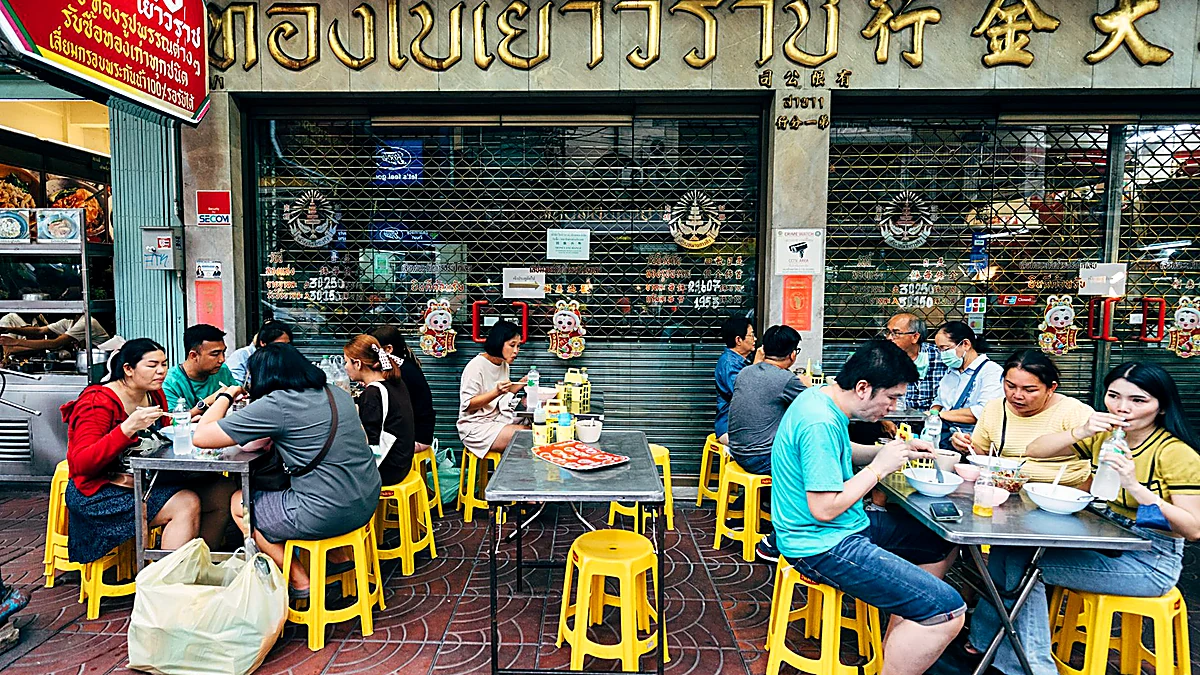
You have just finished a good lunch in a city far from home. The waiter brings the card machine to the table, you tap your card, and the screen asks a simple question: would you like to pay in your own currency or in the local one? Most of us tap whatever button looks familiar and walk away without a second thought. That single tap can quietly add a few percent to everything you buy for the rest of your trip.
This guide is about that moment. It is not about complicated banking, and it is not about carrying a calculator in your pocket. It is about knowing which button to press, what to keep in your bag, and which small habits keep your money where it belongs while you enjoy the trip.
The Button That Quietly Costs You Money
When a card machine abroad offers to charge you in your home currency, it is using a service with a long name: dynamic currency conversion. In plain words, the machine's bank picks an exchange rate for you, and that rate is almost never as good as the rate your own bank would give you. On top of the weaker rate, a service fee of roughly three to seven percent is usually folded into the final number, so you never see it as a separate line on your receipt.
Here is the part that catches most people. The price in your home currency looks tidy and easy to understand. You see "$18.40" instead of "16.90 euros", and your brain relaxes because you know exactly what you are paying. That comfort is what you are being charged for. It is not a scam in the illegal sense, because the fee is written somewhere in the fine print. It is simply a poor deal that is very easy to accept when you are tired, hungry, or in a hurry.
The fix is one button, and it takes about a second. If the screen asks whether you want to pay in your home currency, say no. If it offers you the local currency, choose that instead. Then let your own bank handle the conversion at its normal rate.
A few examples make this easier to remember. In Tokyo, you tap the button marked JPY. In Munich, you tap EUR. In Montreal, you tap CAD. In Bangkok, you tap THB. In Mexico City, you tap MXN. In London, you tap GBP. Those three letters are the code for the local money, and that code is the button you want to press.
Choosing the local currency is not rude, and it is not a complaint about the shop. It is simply the cheaper choice, and the staff behind the counter make that same choice on their own travels.
It also helps to know who earns the fee. The company that runs the terminal and the bank behind the machine split it, and the shop you are standing in usually sees very little of it. That is why the cashier often cannot explain the difference between the two buttons, and why asking them to remove the charge rarely works. The choice lives on the screen, and only your finger can make it.
How to Read the Terminal Screen Step by Step
Card machines vary from country to country, but the order of questions is surprisingly similar. Once you know what to look for, you can handle any of them in a few seconds. Here is the way things usually play out, and what to do at each step.
Step one: tap or insert your card, then wait
You pay the same way you would at home, but after you tap, do not walk away yet. The machine will often ask one more question, and if you leave before answering, the sale may default to the home currency option or simply fail to complete. Give it three seconds and read the screen before you pick up your bag.
Step two: look for the two-button choice
Many terminals show two options side by side. One might say "Pay in EUR" and the other "Pay in USD", or one might say "With conversion" and the other "Without conversion". The wording changes with the machine, but the meaning never does. One button uses the local money, and the other uses your home money with a fee attached.
| What the screen says | What it means | What to tap |
|---|---|---|
| Pay in USD? (your home currency) | The machine will convert for you and add its own fee | No, or the local currency option |
| Without conversion | The charge stays in the local money | This one |
| Local currency, or the code such as EUR | The same good option in different words | This one |
| Decline conversion | Refuse the machine's own rate | This one |
| With conversion | Accept the machine's rate and its fee | Avoid it |
| I accept the rate shown | Usually the conversion offer on a cash machine | Look for Decline or No |
Step three: at a cash machine, do exactly the same thing
Cash machines ask the same question in different words. The screen might say that the machine will convert your withdrawal, show you a rate, and offer "Yes" or "No". Always choose no, which is sometimes worded as "Decline" or "Without conversion". The machine then hands you local cash, and your own bank does the conversion at its usual rate.
There are two things worth knowing about cash machines. The first is to use the machine of a real bank rather than a stand-alone currency kiosk, because kiosks often give weaker rates and charge higher fees. The second is that the amount offered in your home currency may look neat and round, and that tidy number is usually the sign of a conversion offer.
Step four: if you are unsure, just ask
You can always say to the cashier, "Local currency, please." This short sentence works in cafes, train stations, small shops, and hotel desks, and most staff understand it right away. In places where English is not common, you can point at the local currency button on the screen and smile. Nobody minds, because the person serving you has helped many travelers with this same question.

Choose local currency on the screen.
The right button is almost always the local one. There is one narrow exception worth knowing, and it is rare. If your card is from a country whose money is not widely traded, or if your bank charges a very high fixed fee for each foreign purchase, the conversion offer might occasionally cost about the same. For nearly every traveler with a normal card, the local currency button still wins.
What to Wear and Carry for Easy Terminal Stops
You do not need special gear to pay well abroad, but a little thought about your bag and your clothes makes the whole thing calmer. When your card is easy to reach and your hands are free, you can read the screen properly instead of rushing through it.
A small crossbody bag with a zipped pocket is the easiest setup. The bag sits across your chest where you can see it, the zip keeps your cards from sliding out, and you can reach your card with one hand while you hold your coffee with the other. A backpack works too, but a bag you wear on the front is simpler in busy markets and on crowded trains.
Your shoes matter more than people expect on a travel day. A comfortable pair of walking shoes means you can stand in a queue at a ticket machine without shifting your weight, and it means you are not distracted when the payment screen appears. Pack shoes you have already worn for a few long days at home, because new shoes on a long walking day are a well-known mistake.
Clothing is really about staying comfortable in the weather you are actually in. On a warm day, a breathable cotton or linen shirt and thin trousers keep you cool while you move between shops, stations, and museums. On a cool day, add a thin wool layer and a packable rain shell that folds into your bag. The goal is simple: clothes that let you stand at a counter for thirty seconds without digging through layers for your wallet.
| What you carry | Why it helps at the terminal |
|---|---|
| A slim wallet with two cards | One card with no foreign fees as your main card, plus one backup in case the first is blocked or damaged |
| A crossbody bag with a zipped pocket | Keeps the card within easy reach and safer in crowds |
| A little local cash | Useful for buses, small markets, and cafes that do not take cards |
| A phone with your banking app | Lets you check the charge the same day and spot anything odd |
| A small pocket for receipts | Makes it easy to compare each charge with your statement later |
Keep your backup card somewhere different from your main card, such as an inside pocket or a separate pouch. If one card stops working, you still have a way to pay, and you will not lose an afternoon sorting it out by phone.
Simple Habits That Save Money All Trip
The biggest saving happens before you leave home. Look at the terms of the card you plan to use and check whether it charges a foreign transaction fee, which is usually around three percent of every purchase made in another currency. Many travel cards and some ordinary bank cards charge nothing at all, and that difference adds up quickly over a week of coffees, train tickets, and museum entries.
Once you are on the road, choose the local currency at every terminal and every cash machine. This one habit is the heart of everything in this guide, and it costs you nothing except a moment of attention. It also gets easier with practice, because after two or three days you will recognise the offer the second it appears.
Use bank cash machines rather than airport currency counters. Airport kiosks are convenient, but they often give weaker rates and add their own charges on top. A machine outside a real bank branch, ideally during the day when the branch is open, is usually the better choice. Take out a slightly larger amount less often, because many banks charge a fixed fee for each withdrawal, and a handful of small withdrawals can cost more than one bigger one.
Carry a little local cash even if you plan to pay by card for almost everything. Small cafes, market stalls, country buses, and some ticket machines still prefer coins and notes. A modest amount in your pocket means you are never stuck, and it also gives you a fallback if a terminal happens to be offline.
Keep your receipts and open your banking app once a day. This takes about a minute, and it lets you catch a wrong charge while you still remember where you were standing. If you notice that you accidentally accepted the home currency option, you have two choices. First, ask the cashier right away whether they can cancel the sale and run it again in the local currency, which works more often than people expect, especially in a quiet shop. If the sale is already finished, note the amount and the date, and call your bank when you get home, because some banks will remove the charge as a goodwill gesture.
One more habit is easy to forget. Tell your bank you are traveling before you leave, using the app or a quick phone call, and add the dates you will be away. A card that gets blocked at a train station ticket machine is a frustrating way to spend an afternoon, and a two-minute note to your bank prevents it.

Keep your card handy for quick payments.
Your Quick Checklist Before You Tap
Before you travel, run through a short list at home. Then, at the counter, you only need to remember one thing: local currency.
- Check whether your card charges a foreign transaction fee, and choose a card that does not if you have one.
- Pack a slim wallet with one main card and one backup card kept in a different place.
- Write down your card's PIN and make sure it works abroad if you plan to use cash machines.
- Tell your bank your travel dates and the countries you are visiting.
- Leave a little room in your bag for local cash and for receipts.
At the terminal or the cash machine, the list is even shorter.
- Wait for the machine to finish asking its questions before you walk away.
- Look for the three-letter code of the local money, such as EUR, JPY, or CAD.
- Press the button for local currency, or the one that says "without conversion".
- Decline any offer to pay in your home currency, including at cash machines.
- If the screen confuses you, say "Local currency, please" and point at the screen.
These steps take seconds. Over a week of small payments, they can quietly save you more than a nice dinner, and you never have to think about exchange rates again.
None of this asks you to become an expert in money or banking. It only asks you to slow down for three seconds at the counter, read the screen, and choose the local button. Do that, and your trip stays about the places you go and the food you eat, rather than the fees you paid along the way.
Frequently asked questions
✓ Kristina Mate
Founder & Lead Travel Editor · TravelStyleMate
Kristina is the founder and lead editor of TravelStyleMate. Over the past 8 years, she has explored 35+ countries across Europe, Asia, and the Americas—traveling almost exclusively with a single 40L carry-on bag. A dedicated solo traveler, she specializes in cobblestone-tested footwear, minimalist capsule packing formulas, and realistic transit logistics. Every packing rule, walking shoe, and itinerary on TravelStyleMate is personally tested on actual trips with real luggage constraints.
Testing Guarantee: Every packing rule, walking shoe, and transit route is personally tested with real luggage constraints. No paid rankings, no untouched gear, no AI fluff.
Related guides
Old Public Libraries: Free Quiet Places with Beautiful Wooden Rooms
Old public libraries are free, quiet places to sit, warm up and rest on any city day. Here is what to wear, what to carry and how to walk in and sit down.
Public City Parks: Where Locals Sit, Talk, and Rest for Free
Find calm free parks in European cities: where locals sit, cheap picnic food to buy, comfy clothes to pack, and a simple checklist for a restful break.

Afternoon Drinks and Snacks: Enjoying Small Bites and Soda at Sunset
Learn how to enjoy cheap afternoon drinks and free small bites across Europe, plus what to wear and how to keep your clothes fresh at sunset on a budget.