Compression Packing Cubes: Do They Really Save Space in Your Bag?
Compression packing cubes push air out of soft clothes, not fabric. Here is what they really save, what to pack inside, and how to avoid wrinkles.
 ✓
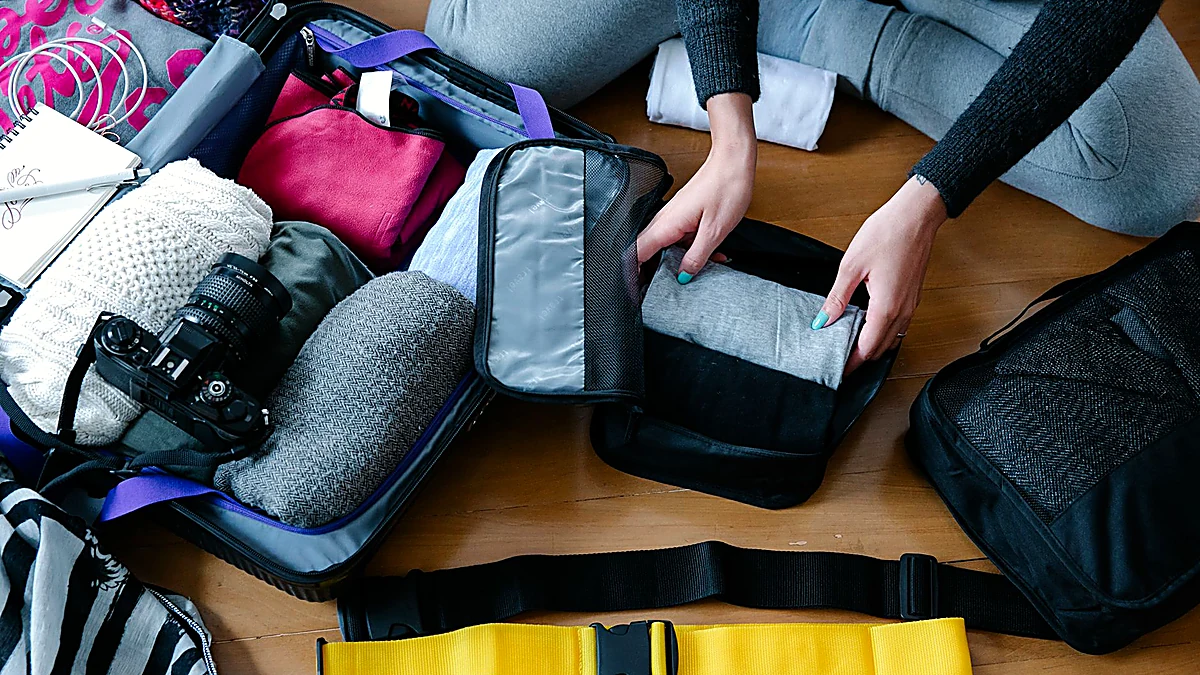
Most people buy their first set of compression packing cubes expecting a small miracle. They picture a puffed-up bag turning slim and tidy, and then they press the air out of one cube, step back, and wonder why their suitcase still looks full. Compression cubes do help, but they help in a quieter and smaller way than the product photos suggest. Once you understand what they are actually good at, they earn their place in your bag.
What Compression Cubes Really Do to Your Clothes
A compression cube is a soft fabric bag with two zippers. The first zipper works like any normal packing cube and closes the top of the bag. The second zipper runs around the outside edge, and when you pull it shut, it brings the top and the bottom of the cube closer together.
That second zipper does one simple thing. It presses the air out from between your folded clothes. Air is the reason a folded t-shirt takes up more room than the fabric inside it. When you push that air out, the stack becomes flatter and firmer, and it slides into your bag without leaving odd gaps around it.
What a compression cube cannot do is shrink the fabric itself. A cotton shirt still holds the same amount of cotton after you close the zipper. A thick fleece is still thick. This is the part that surprises people, and it explains why two travelers can use the exact same cubes and get completely different results.
Soft clothes compress well, and stiff clothes barely move
Clothes behave differently depending on how soft they are. Thin cotton, socks, and light layers hold a lot of air inside them, so they flatten nicely. Denim, thick knits, and shoes keep their shape no matter how hard you press on the zipper.
Here is a simple way to see what to expect from each item on your packing list.
| What you are packing | Does compression help? | Why |
|---|---|---|
| Cotton t-shirts | Yes, a lot | The air between the folds escapes and the stack goes flat |
| Socks and underwear | Yes, a lot | They are small and soft, so they fill gaps easily |
| Thin merino layers | Yes, a fair amount | They are light and already fold down small |
| Swimwear and light pajamas | Yes | Thin fabric with plenty of air inside it |
| Jeans | A little | Denim is stiff and holds its own shape |
| A chunky knit sweater | Barely | Thick yarn keeps its own space |
| Shoes | No | They are solid and simply do not squeeze |
| A stiff rain jacket | Barely | Seams and coatings keep it puffy |
That table tells an honest story. Compression cubes are excellent at tidying up the soft middle of your packing list. They are close to useless for the heavy, firm items that usually take the most room in a bag.
Think of a compression cube as an organizer that saves a little space. It is not a machine that turns a winter coat into a paperback book.
How to Pack a Compression Cube Step by Step
Packing a cube well takes about two minutes once you have done it a single time. The goal is a flat and even stack with no hard lumps and no air pockets trapped in the corners.

The steps that work
- Lay each item flat on the bed and fold it into neat thirds so it is roughly the same width as your cube.
- Stack three to five soft items on top of each other and keep the pile as even as you can.
- Slide the whole stack into the cube instead of pushing items in one at a time.
- Close the main zipper first and check that nothing is caught in the teeth.
- Press down on the cube with one hand and pull the second zipper around with the other.
- Set the cube into your bag and see how it sits before you pack anything else.
A medium cube holds about five t-shirts, three pairs of socks, and two pairs of underwear when everything is folded flat. That is a comfortable load, and it is also a realistic picture of how much space a single cube saves. The same clothes loose in a bag would take up noticeably more room and would spread out across the whole suitcase.
The mistake that ruins a good cube
The most common mistake is stuffing the cube until it feels full before you even touch the second zipper. If you have to sit on the cube to close it, you have packed too much. The outer zipper will strain, the seams will pull, and your clothes will come out looking like you slept in them.
Overstuffing also defeats the purpose. A cube that is packed too tight turns into a hard brick that does not fit the shape of your bag. You lose the flexibility that made packing cubes useful in the first place, and you gain nothing but wrinkles.
Leave a little breathing room
Fill your cube to about four fifths of its height, then compress it. The zipper should move with steady pressure rather than a hard yank. When you are finished, the cube should feel firm and flat, a bit like a thick book, and it should not feel stiff or lumpy in your hands.
If the outer zipper keeps popping open on its own, that is your cue to take one item out. A cube that stays closed on its own is a cube that will survive a long train ride and a bumpy bus without spilling your clothes everywhere.
What to Pack Inside (and What to Leave Out)
Compression cubes reward a certain kind of packing list. If your clothes are soft and light, the cubes will feel like the best purchase you made all year. If your bag is mostly jeans and hiking boots, they will feel like extra weight and extra fuss.
Good items for compression cubes
- Cotton and cotton-blend t-shirts
- Thin merino wool layers
- Underwear and socks
- Swimwear and quick-drying tops
- Light pajamas and a soft sleeping shirt
- Thin leggings and workout tops
- A light scarf or neck buff
Items to leave out
- Chunky knit sweaters
- Jeans and heavy denim shorts
- Shoes of any kind
- Stiff jackets with thick seams
- Anything you plan to wear to a nice dinner
- Cameras, chargers, and other hard items
Dressier clothes deserve a different treatment. Fold a crisp shirt or a dress flat in the main part of your bag, where it can lie still and stay smooth. Compression cubes press folds into fabric, and pressed folds are exactly what you do not want on the clothes you plan to wear somewhere special.
A week in Munich, packed with cubes
Picture a cool week in Munich with a mix of city days and a day trip by train. Three lightweight tees, one thin sweater, one pair of comfortable pants, socks and underwear for the week, and a light rain shell will cover the whole trip when you use two cubes. The tees and socks go into one cube, and the sweater and rain shell go into the other.
Wear your heaviest shoes on the plane, because shoes never compress and they eat space in any bag. Pack slim sandals or flat shoes for the evenings and slide them along the edge of the suitcase where nothing else fits. Add a small pouch for chargers and toiletries, and your bag is ready.
A week in Seattle, with rain in the forecast
Seattle adds water to the packing list, but it does not need to add bulk. A compact umbrella and a warm layer that squishes down small will handle most wet days. Put the warm layer inside a compression cube so it takes the shape of whatever space is left in your bag.
The lesson in both examples is the same. Soft, layer-friendly clothes are where compression cubes shine, and thin layers you can wear together are the easiest way to pack light. Build your list this way and the cubes will make your bag feel smaller and far more organized at the same time.
Keeping Clothes Fresh and Wrinkle-Free on the Road
Once your clothes are pressed flat in a cube, the next question is how to keep them looking decent after a few days of travel. A small routine goes a long way, and it costs nothing at all.

Wash a few things in the sink
- Fill the sink with cool water and a few drops of mild soap or travel wash.
- Put in socks, underwear, and one or two t-shirts, then gently squeeze the water through them.
- Rinse until the water runs clear.
- Roll each item in a dry towel and press down to soak up the extra water.
- Hang everything overnight, ideally near a window or over a warm rail.
Thin fabrics dry overnight in most hotel rooms. That means you can pack fewer shirts and still look put together, which is the real reason packing light works so well over a long trip.
Keep one cube for dirty clothes
A second cube, even a small one, is worth the space it takes up. Use it for clothes that need washing so your clean items stay separate and easy to find. A cube with a mesh panel lets a little air move through, which helps on the days when you are not doing laundry.
Getting wrinkles out without an iron
- Hang your clothes in the bathroom while you take a hot shower and let the steam smooth them.
- Pack a small bottle of wrinkle release spray for shirts that need a little help.
- Shake an item out and hang it overnight instead of pressing it straight back into the cube.
- Keep dressier clothes out of the cubes and folded flat in the bag.
Compression cubes can leave soft creases in fabric that stays pressed for days, so save them for casual clothes you do not mind looking relaxed. If you notice a sharp fold line in a shirt after you unpack, that is a sign you packed the cube a little too tight. Give it less next time and those lines will ease.
Your Quick Checklist for Using Compression Cubes
Before your next trip, run through this short list. It takes five minutes and saves a lot of quiet frustration at the airport.
- Use cubes only for soft, squishy clothes that fold flat.
- Fold each item before it goes in, and keep the stack even.
- Zip and compress, but leave a little breathing room.
- Keep one small cube for dirty laundry.
- Pack your heaviest shoes and stiffest layers outside the cubes.
- Weigh your bag before you leave so there are no surprises at check-in.
- Lay out everything you plan to pack and remove one item you will not miss.
So, do compression packing cubes really save space in your bag? Yes, but in a modest and useful way. They save the most room with t-shirts, socks, underwear, and light layers, and they save almost nothing with shoes, jeans, and heavy sweaters. If your packing list leans soft to begin with, cubes will make your bag neater and slightly smaller.
They are also worth it for the calm they bring to a trip. A tidy bag means you know where everything is, you can find a shirt without unpacking the whole suitcase, and you can repack in a few minutes when you are tired at the end of a long day.
Compression cubes are a small tool, not a magic trick. Pack light, choose soft layers, and they will quietly do their part.
If you want the honest summary, here it is. Buy compression cubes for organization and for soft clothes, and do not expect them to fix a bag that is simply too full of heavy gear. With the right packing list, they turn a messy pile of clothes into a neat stack you can lift out in one go. That, more than saving a few centimeters, is what makes them worth carrying.
Frequently asked questions
✓ Kristina Mate
Founder & Lead Travel Editor · TravelStyleMate
Kristina is the founder and lead editor of TravelStyleMate. Over the past 8 years, she has explored 35+ countries across Europe, Asia, and the Americas—traveling almost exclusively with a single 40L carry-on bag. A dedicated solo traveler, she specializes in cobblestone-tested footwear, minimalist capsule packing formulas, and realistic transit logistics. Every packing rule, walking shoe, and itinerary on TravelStyleMate is personally tested on actual trips with real luggage constraints.
Testing Guarantee: Every packing rule, walking shoe, and transit route is personally tested with real luggage constraints. No paid rankings, no untouched gear, no AI fluff.
Related guides

How to Pack Jewelry in Your Bag Without Getting Tangles
Learn a simple packing routine for necklaces, bracelets and earrings so they come out of your bag ready to wear in seconds, with no knots to untangle.

The Best 4 Dresses to Pack for Vacation That Take No Space
Pick four dresses that fold down tiny, and a single carry-on covers a week or two. Simple fabrics, easy washes, and outfits that work every day.
How to Pack Warm Winter Clothes in One Small Bag
Pack warm winter layers, one coat, and boots you can walk in — all in one small bag. Simple folding tips, outfit ideas, and a quick checklist.