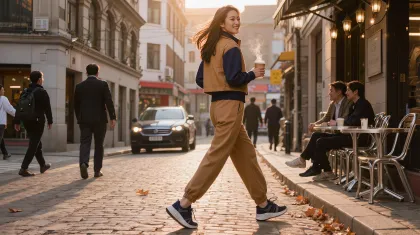
Everyone assumes winter in southern Europe means you can finally wear that heavy wool coat. That's a trap. Lisbon in February had me peeling off layers at two PM on a tram, sweating through a synthetic blouse that suddenly felt like plastic wrap against my shoulder blades.
The fabric — some cotton-poly mix I'd grabbed thinking it was "breathable" — trapped every degree of heat. Real talk: the sun here doesn't care about your winter packing list.

The temperature swings between fourteen and twenty-one degrees Celsius, which sounds manageable on paper until you're climbing the third of seven hills — and yes, they are literal, not metaphorical. My calves were already burning by day one, and I still had four days to go.
I stepped off the metro at Baixa-Chiado — twenty minutes from the airport for one euro sixty-five — and immediately regretted the cashmere sweater I'd worn for the flight.
Lisbon's Hills Will Destroy the Wrong Shoes
You read about the seven hills in guidebooks and think, cute, ancient city topography. Real talk: by the time you reach Alfama at night, hearing fado drift from doorways around ten PM — that melancholic, yearning sound that seems to seep from the walls themselves — your feet are broadcasting every bad shoe decision you've ever made.
I wore Everlane Day Glove flats — leather, structured, zero break-in time — and they survived the cobblestones because the sole has actual grip. Most ballet flats die here. The stones are slick, uneven, and unforgiving, tilted at angles that test your ankles.
I watched a woman in heeled boots navigate the same steep climb near São Jorge Castle. She was gripping her companion's arm like a life raft, her ankles wobbling on every third stone. Don't be her.
Rubber soles aren't just practical; they're the difference between enjoying Pastéis de Belém — the original shop, with its blue and white azulejo tiles and that vanilla-cinnamon scent that hangs heavy in the air, warm and egg-rich — and nursing blisters in your Airbnb.
The Fabric Science of Looking Employed
My goal was to look like I still had a LinkedIn profile, even though I was technically on PTO. Deep greens, burgundies, and navy — colors that hide sweat shadows better than black or white when you're hustling up to a miradouro.
But the real hero was Uniqlo's merino wool turtleneck. I wore it for four days straight, including the day trip to Sintra where wildflowers — purple and yellow blooms I couldn't name — covered the hillsides around the Moorish castle.
Merino doesn't hold odor; it breathes when you're power-walking up to Miradouro da Senhora do Monte, and it insulates when the sun drops at six and the thermometer slides toward fourteen degrees. The fibers feel like silk but perform like technical gear. I hand-washed it in the sink with hotel soap and it dried by morning.
Cotton blended with four percent elastane saved my trousers. Regular cotton bags at the knees after ten minutes of stairs. The stretch meant I could stride up Rua da Bica without looking like I was doing lunges.
I paired them with a COS blazer — heavy enough to look professional for dinner near Chiado, breathable enough to drape over my shoulders when the afternoon heat hit. It never wrinkled, much like the blazer for Mayfair tea I relied on in London last year.
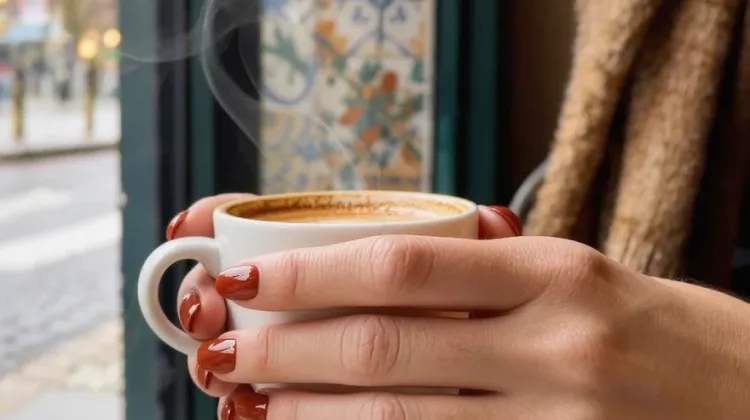
As I reached for my third pastel de nata at Belém, my terracotta nails caught the afternoon light against the blue tiles. Small detail, but grounding. They didn't chip even when I was gripping the tram railing uphill, knuckles white.
The Budget Airline Arithmetic
The metro from the airport takes exactly twenty minutes and costs one euro sixty-five. That's the same price as two and a half espressos at any local café — those tiny cups for seventy cents that you drink standing at the counter, the crema sweet and thick.
I took the red line to São Sebastião, switched to blue, and emerged sweating because I'd over-layered for the plane.
Budget airline restrictions meant everything had to fit under the seat. No overhead drama, no rolling suitcase clicking against cobblestones. I packed the merino, the blazer, two pairs of the stretch trousers, and the flats.
That was it. This wasn't my Barcelona wine-stained lesson — that trip was about surviving humidity and red wine disasters. This was about surviving elevation and reflection.
Why Getting Lost Beats Google Maps
I had a route plotted. Then I deleted it. The highlight wasn't São Jorge Castle or the Belém Tower; it was a Tuesday around eleven AM when I turned left instead of right in Alfama and found a corner place with mismatched chairs and a chalkboard menu.
No tourists. Just older men arguing about football in rapid-fire Portuguese I couldn't follow, and the smell of grilled sardines — oily, salty, charred — drifting from a kitchen I couldn't see.
I sat there for two hours. The sun moved across my table. I ordered another espresso and watched a cat sleep on a windowsill. That was the trip. The fado music wasn't coming from a restaurant with a cover charge.
It was leaking from a ground-floor window, accompanied by the clink of glasses and a woman's voice that sounded like smoke.
The wildflowers in Sintra — bright purple and yellow against the red and yellow Moorish castle walls — made the train ride worth it. But getting there required walking through Pena Park, which is basically hills eight through twelve. My feet were grateful for the merino socks I'd packed, cushioned and breathable.
The Skincare Truth Nobody Mentions
Sunscreen is the only skincare that actually works. I know. It's February. But that Atlantic light reflects off white buildings and tram tracks with an intensity that feels personal. I reapplied at noon, sitting on a bench near the Tagus, watching the 28 tram rattle past, its yellow paint gleaming.
My skin didn't burn, but it would have. The breeze at fourteen degrees tricks you into thinking you're safe.
This isn't the Barcelona wine-stained layer strategy — that was about surviving humidity and tapas bars. This is about realizing that winter sun near the ocean is sneakier than summer heat. I used the same SPF 50 I bring to tropical beaches. I needed it.
- The Survivor's Checklist:
- One Uniqlo merino turtleneck (hand-wash in sink, dries overnight)
- One pair Everlane Day Glove flats (check the rubber sole grip)
- One COS blazer (wrinkle-resistant wool)
- Two pairs cotton-elastane trousers (four percent stretch minimum)
- SPF 50 (reapply every two hours, even in February)
I'm still thinking about whether the blazer was worth the suitcase space. It worked for the one nice dinner I had near Bairro Alto, but mostly I just wanted another merino layer. Maybe next time I skip the structured jacket and just bring better sunscreen. Or maybe the hills get steeper as I get older. Hard to say.
What shoes actually work for Lisbon's cobblestones?
Everlane Day Glove flats survived because of the rubber grip, but anything with a heel or slick sole will betray you on the steep, uneven stones near Alfama.
How do you pack for 14-21°C weather?
Uniqlo merino wool works as a base layer that breathes at 21 degrees and insulates at 14, paired with cotton-elastane trousers that don't bag at the knees after climbing hills.
Is the Lisbon metro easy from the airport?
The red line takes twenty minutes to the center and costs €1.65, though you'll likely emerge sweating if you over-layer for the flight like I did.
Why bring sunscreen to Portugal in winter?
The Atlantic light reflects off white buildings and tram tracks; I reapplied SPF 50 at noon sitting by the Tagus even though it was only February.
What fabric survives budget airline packing?
COS wool blazers resist wrinkles even when squashed under seats, and Uniqlo merino dries overnight after hand-washing in the hotel sink.