Morning Food Markets: Buying Fresh Fruit and Cheese Like a Local
Shop European morning food markets like a local: pick ripe fruit, buy the right cheese, and keep everything fresh while eating cheap on your trip.
 ✓
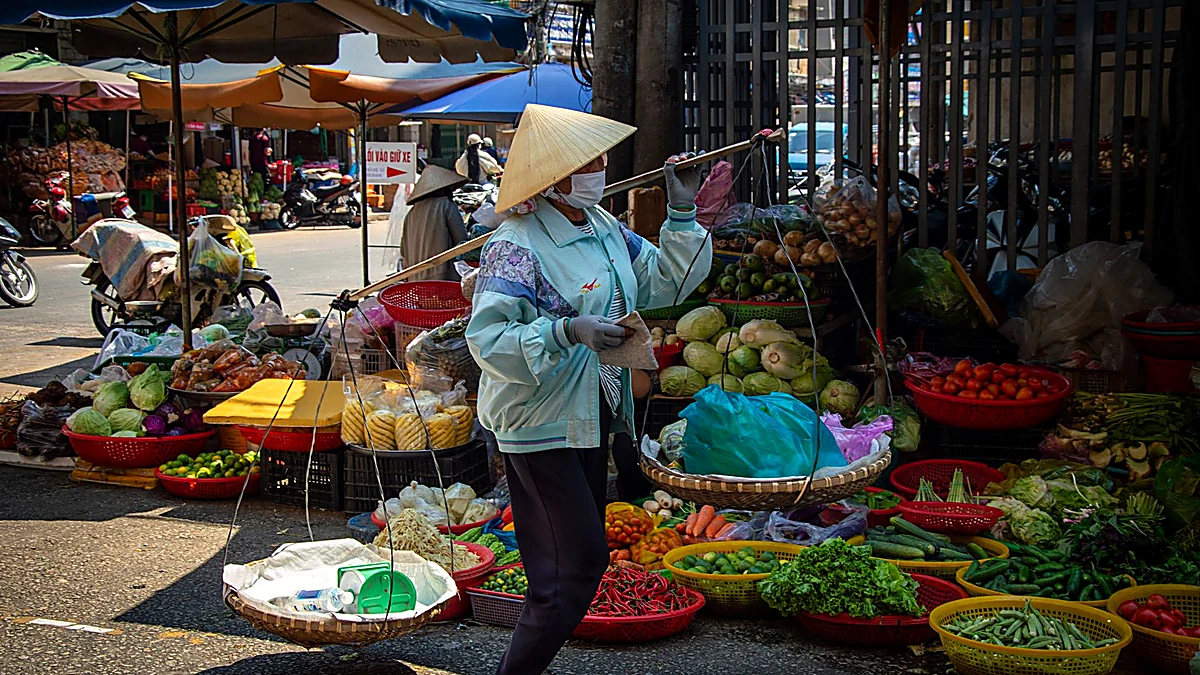
A morning at a food market can feed you better than most restaurants, and it costs a fraction of the price. The secret is simple: buy what is ripe right now, ask for a small piece of cheese instead of a big one, and eat it before the day heats up.
Why Morning Markets Are a Budget Traveler's Best Friend
Almost every city and small town in Europe has a market, and the best time to see it working is early in the morning. This is when locals come with their own bags to buy fruit for the day, bread for lunch, and cheese for the evening meal. The sellers know their regulars, the prices are fair, and nobody is trying to sell you a souvenir.
When you arrive early, you also get the best picks. The stalls are still full, the peaches have not been handled by fifty other people, and the cheese has not sat in the sun. Crowds build up around nine or ten o'clock, and by then the good fruit is often gone.
Breakfast at a market is one of the cheapest and happiest meals you can have on a trip. A couple of ripe peaches, a fresh roll, and a small piece of soft cheese will cost you less than a single coffee and pastry at a cafe table nearby. You can eat it sitting on a bench, on a low wall by a fountain, or in a quiet square a few streets away.
What a market breakfast really costs
The difference is bigger than most people expect, and it adds up over a two-week trip. Here is a rough comparison from markets in France, Italy, and Spain.
| What you buy | Rough market price | What a cafe charges |
|---|---|---|
| Two ripe peaches | About 1 euro | About 4 euros for a small fruit plate |
| One fresh roll | About 1 euro | About 3 euros for a pastry |
| A small wedge of soft cheese | About 2 euros | About 6 euros for a cheese board |
| A bottle of water | About 1 euro | About 3 euros |
| Total | About 5 euros | About 16 euros |
Do that five mornings in a row and you have saved enough for a proper dinner somewhere nice. You also eat better food, because the fruit was picked when it was ready rather than shipped before it was ripe.
How to find the market near you
The easiest way to find a market is to ask the person at your hotel or guesthouse desk. They will usually know which square fills up on which morning, and how far it is on foot. If you would rather find it yourself, walk out early and look for awnings, wooden crates, and people carrying baskets in one direction.
Most markets run two or three mornings a week rather than every day, so it is worth checking the day before. A short walk at sunset will often show you the empty square with the painted stall lines on the ground, which tells you a market happens there.
Keep it small and simple
You do not need a plan or a long list, and you do not need to know the name of every fruit. Pick one market close to where you are staying, walk there before the day gets busy, and buy only what you can carry in one bag and eat within a day or two.
A small tote, a little cash, and an open mind are enough. This is how you eat fresh food on a tight budget without feeling like you are missing out on anything.
How to Shop a European Food Market Like a Local
The first thing to do when you reach a stall is nothing at all. Stand back for a minute and watch. See how other shoppers point, how they hold up their fingers for quantity, and how the seller answers. You will learn more in sixty seconds of watching than in an hour of guessing.

Pick what looks and smells best.
Use your hands, your smile, and a few polite words
You do not need to speak the language well to shop well. Point at what you want, hold up two fingers for two pieces, and say please and thank you in the local tongue. These words are easy to learn and people appreciate the effort.
- French: s'il vous plaît for please, and merci for thank you.
- Italian: per favore for please, and grazie for thank you.
- Spanish: por favor for please, and gracias for thank you.
- German: bitte for please, and danke for thank you.
If you want to know the price, point at the fruit and raise your eyebrows with a small question on your face. Most sellers will tell you the number, or they will hold up their fingers, or they will point to the price card beside the pile. Many stalls make this easy, so a quick look usually answers the question before you ask it.
You do not need to speak the language well to shop well. A smile, a pointed finger, and a thank you in the local tongue carry you a long way.
Let the seller choose your fruit
The person behind the stall knows which peaches are ready today and which ones need two more days on a windowsill. If you are not sure, ask them to pick for you. Point at the pile, hold up one finger, and let them decide.
If samples are offered, take one and say thank you. This is a normal and friendly part of market shopping, and it saves you from buying a whole bag of something you do not enjoy. A single taste tells you more than any label ever will.
Buy fruit that is in season
Fruit that is growing right now, in this country, tastes better and costs less. It also travels better, because it was picked at the right moment instead of being shipped halfway across the world.
| Season | Best fruit to buy |
|---|---|
| Late spring | Strawberries, cherries, and the first apricots |
| Summer | Peaches, nectarines, melons, tomatoes, and figs |
| Autumn | Apples, pears, grapes, and late figs |
| Winter | Oranges, clementines, lemons, and kiwis |
Winter citrus is worth remembering, because it keeps for days and it does not bruise in a bag. If you are travelling in the colder months, oranges and clementines will feed you well on the move.
How to buy cheese without feeling lost
Cheese counters can look intimidating, but the rules are simple. Tell the seller what you like in plain words. Say soft or hard, mild or strong, and they will point you in the right direction.
- Soft cheese, such as brie or a fresh goat cheese, is best eaten the same day. Buy a small piece that you can finish in one sitting.
- Semi-hard cheese, such as a young gouda or a mild cheddar, holds up well for a day or two in a cool bag.
- Hard cheese, such as parmesan or an aged pecorino, keeps for a week or more and travels beautifully without a fridge.
Ask for a piece you can actually finish. A small wedge is cheaper, easier to carry, and less likely to go soft and warm in your bag. Ask them to wrap it in paper rather than plastic, because paper lets the cheese breathe and stops it from sweating.
Carry cash and small coins
Many market stalls do not take cards, and some ask for a minimum spend if they do. Bring small notes and a little coin purse with a few low-value coins. This makes paying quick, and it helps the seller, who may not have change for a large note first thing in the morning.
If you are unsure whether a stall takes cards, just ask before you buy, or hold up your cash with a friendly look. Nobody minds. Market shopping is built around simple, fast, friendly exchanges.
Buy a little, not a lot
It is easy to get excited when everything looks good, but a big bag of fruit is heavy and it spoils fast in warm weather. Buy a few pieces at a time and go back the next morning if you want more.
If you are not sure where to start, buy one peach, one pear, and a small wedge of cheese. That makes a lovely light lunch with a fresh roll, and it costs very little. Add a handful of tomatoes and a small bottle of olive oil, and you have a meal that would cost three times as much in a restaurant.
What to Wear and Carry for a Market Morning
You will be standing, walking, and probably sitting on a park bench or a low stone wall. Dress for that, not for a photo shoot. Comfort matters far more than style on a market morning.
A breathable cotton tee with a light linen shirt over it works well in warm weather. On the bottom, relaxed chinos, loose cotton trousers, or a simple skirt are all good choices, because they let you move and sit easily. If the morning is cool, add a thin wool sweater that you can take off and roll into your bag.
Choose shoes with grip
Market floors are often wet, uneven, or covered in crushed fruit and vegetable leaves. Comfortable walking shoes with grippy soles are much safer than sandals or smooth-soled flats. You will also be on your feet for an hour or two, so pick the pair you already know is kind to your feet.
Keep your hands free
A crossbody bag or a small backpack keeps your hands free for a tote and for your food. Wear the bag in front of your body in crowded lanes so you can see it and keep it safe.
| What to wear | Why it works |
|---|---|
| Breathable cotton tee | Keeps you cool while you stand in the sun |
| Light linen shirt | Easy to remove and roll into your bag |
| Relaxed chinos or a simple skirt | Comfortable for walking and sitting on benches |
| Walking shoes with grippy soles | Safer on wet and uneven market floors |
| Crossbody bag or small backpack | Keeps your hands free and your money close |
| Thin wool sweater | Warmth for early mornings without any bulk |
| Compact rain shell | Light protection if the weather turns |
| Light scarf | Doubles as shade or a small picnic cloth |
Skip white trousers and delicate fabrics on market day. Juice, oil, and soft cheese can leave marks, and they always seem to find the palest thing you own. Save those clothes for a quiet afternoon instead.
What to pack in your bag
- A reusable cloth tote for your fruit, bread, and cheese.
- Small notes and coins in a little purse.
- A water bottle, so you are not buying plastic ones all day.
- A cloth napkin, which works for hands, fruit, and small spills.
- A tiny bag for peels, wrappers, and pits.
- A small folding fruit knife, if local rules allow you to carry one.
That is the whole kit. It fits in a small bag, and it turns any market into a picnic waiting to happen.
Keep Fruit and Cheese Fresh While You Travel
Fresh food does not like a hot backpack, and a warm car or a sunny bus seat will spoil it fast. Plan your day so your market haul is eaten at the right time. Soft cheese and cut fruit are best on the same day you buy them, while hard cheese, apples, and pears will happily wait a day or two.

Easy layers for a slow market morning.
Wrap cheese the right way
Wrap your cheese in wax paper or a beeswax wrap, then place it in a small insulated pouch or a clean cloth. Plastic bags make cheese sweat and turn slimy, so paper or wax is always the better choice. If you are carrying more than one kind, keep them separate so the strong one does not flavor the mild one.
Handle berries and soft fruit gently
Do not wash berries until you are ready to eat them. Water makes them soft, and they start to break down within hours. Put them on top of your bag so they do not get crushed by heavier things, and eat them first. Peaches and apricots should also travel on top, while apples and pears are happy at the bottom.
Find the coolest spot you have
If your room has a fridge, put your market haul there as soon as you get back. If it does not, keep the food in the coolest part of your bag and out of direct sun. In hot weather, a damp cloth wrapped around your cheese pouch helps to keep it cool as the water dries off.
Clean your gear and your clothes
A quick wash in a hotel sink with a drop of gentle soap keeps your tote, napkin, and cloth wraps fresh and ready for the next morning. Rinse them well and hang them to dry overnight. They will be dry by breakfast.
For clothes, treat juice or cheese marks with cold water as soon as you notice them. Cold water lifts fruit juice far better than hot water, which can set the stain for good. Pat the mark, rub gently, and let the cloth air-dry. Do not scrub hard, because that pushes the stain deeper into the fabric.
Packing habits that make this easy
Roll your clean clothes tightly so they take up less room and wrinkle less. Keep one spare zip bag in your day bag for messy peels, cheese rinds, and wrappers, so nothing ends up loose at the bottom of your nice tote. Wash your tote and napkin every couple of days, and your bag will stay pleasant to use for the whole trip.
Your Quick Market Morning Checklist
Before you leave, run through this short list in your head. It takes ten seconds and it saves a lot of small troubles later.
- Pack a cloth tote, small notes and coins, a water bottle, a napkin, and a tiny bag for trash.
- Wear comfortable shoes, a breathable top, and a light layer you can take off.
- Choose one market close to your stay and arrive early, before the crowds arrive.
- Buy only what you will eat today or tomorrow, and choose fruit that is in season.
- Ask for a taste if samples are offered, and let the seller pick a ripe piece for you.
- Ask for a small wedge of cheese that you can finish in a day.
- Say please and thank you in the local language, and pay with small notes and coins.
- Store cheese and fruit in the coolest spot you can find, and clean marks right away.
Then find a bench, a low wall, or a quiet square, and eat. This is the part of travel that most people miss, and it costs almost nothing. A ripe peach, a fresh roll, and a small piece of cheese in the morning sun beat a rushed hotel breakfast every single time.
Do this once and it becomes a habit. You will start every trip by finding the nearest market, and you will come home with stories about the seller who picked the best fig you have ever eaten and the hard cheese that survived three days in your bag without going bad. That is what eating like a local really looks like, and it is one of the easiest travel skills you can learn.
Frequently asked questions
✓ Kristina Mate
Founder & Lead Travel Editor · TravelStyleMate
Kristina is the founder and lead editor of TravelStyleMate. Over the past 8 years, she has explored 35+ countries across Europe, Asia, and the Americas—traveling almost exclusively with a single 40L carry-on bag. A dedicated solo traveler, she specializes in cobblestone-tested footwear, minimalist capsule packing formulas, and realistic transit logistics. Every packing rule, walking shoe, and itinerary on TravelStyleMate is personally tested on actual trips with real luggage constraints.
Testing Guarantee: Every packing rule, walking shoe, and transit route is personally tested with real luggage constraints. No paid rankings, no untouched gear, no AI fluff.
Related guides

Historic Drinking Fountains: Finding Cold Free Spring Water in Old Cities
Learn to find free cold drinking water in old cities, from Rome's nasoni to Paris's Wallace fountains, plus what to wear and how to keep bottles fresh.
4 Ways to Spot an Overpriced Tourist Restaurant Before You Sit Down
Learn four simple ways to spot an overpriced tourist restaurant before you sit down, so you spend less and eat better on your next trip to Europe.
Visiting Cities in the Fall: Cheap Hotels and Zero Lines
Fall city breaks cost less when you pack light layers, stay two stops from the center, and travel midweek. Here is the simple plan that works.