Why Thin Wool Socks Keep Your Feet Cool and Stop Blisters
Thick cotton socks trap sweat and cause blisters on long travel days. Learn why thin merino wool socks keep feet cool, dry, and comfortable on your trip.
 ✓
Most of us pack the thickest, softest socks we own before a long trip, because they feel warm and cozy in our hands at home. Then we walk ten miles through a new city and wonder why our feet are hot, damp, and sore by lunchtime. The fix is smaller and simpler than you might think, and it starts with swapping those thick cotton socks for a thin pair of merino wool socks.
Why Thick Cotton Socks Wreck Your Feet on Travel Days
When you pull open your sock drawer the night before a flight, your hand usually reaches for the thickest pair. Those socks feel soft and plush, and they seem like the safe choice for a day that involves a lot of walking. The trouble is that thick cotton behaves very differently on your foot than it does in your hand.
Cotton holds onto sweat like a sponge. Once the fabric becomes damp, it stays damp for hours, because the fibers do not let moisture escape into the air. Your foot then sits inside a warm, wet sock while you walk. Every step presses that wet fabric against your skin, and the skin slowly softens. Soft skin tears easily, and that is exactly how a blister begins.
Dampness also makes your feet feel heavy and hot. On a long walking day in a city like Tokyo or Florence, that trapped heat builds up inside your shoes with no way out. By late afternoon your feet feel swollen and tired, and every step feels like work instead of fun.
Thin wool socks work in the opposite way. The fibers pull moisture away from your skin and let it dry out into the air, so your feet stay dry and cool even after many hours of walking. This is honestly the single easiest change you can make before your next trip, and it costs very little.
Your shoes get most of the credit, but your socks decide whether your feet stay comfortable. A dry foot is a happy foot.
How Thin Wool Socks Actually Keep Feet Cool
Wool has a reputation for being hot and itchy, and that reputation comes from thick winter sweaters. Fine merino wool is a completely different material. It feels soft against the skin, and it is naturally breathable in a way that cotton simply is not.
Each merino fiber has a natural crimp, which is a small wave or curl in the strand. Those tiny waves create pockets of air inside the fabric. Air moves through those pockets freely, so heat escapes from your foot instead of building up around it. When you walk, a small amount of air also pumps in and out of your shoe with each step, which helps push the warm, damp air out.
Wool can also absorb a lot of moisture vapor before it ever feels wet to the touch. That means sweat leaves your skin, travels into the fiber, and then dries out into the air around you. Cotton does not do this at all. Cotton soaks up liquid sweat and holds it right against your skin, which is why cotton socks feel clammy after an hour of walking.
Thin merino socks are usually only a few millimeters thick, so they sit snugly inside your walking shoes without bunching up. This matters more than most people realize. When a sock folds or bunches under your toes, it creates a small ridge of fabric. That ridge rubs the same spot on your skin with every step, and after a few miles you have a blister. A smooth, thin sock that stays flat inside the shoe means no friction, and no friction means no blisters.
What to Look For on the Label
You do not need to become an expert in fabrics to buy the right pair. A few simple words on the packaging will tell you almost everything you need to know.
- Look for the words lightweight or ultra-light. These describe thin socks made for warm weather and long walks. Avoid anything labeled heavy or expedition, because those are built for cold weather and thick boots.
- Look for merino wool. Merino is finer and softer than ordinary wool, so it does not itch the way people remember from childhood.
- Check for a little nylon or spandex. A blend with about 15 to 30 percent nylon adds strength, and a small amount of spandex helps the sock keep its shape after many washes. Socks made of pure wool wear out faster in the heel and toe.
- Choose a crew height for city walking. A crew sock reaches just above the ankle, which keeps the shoe from rubbing your ankle bone.
- Choose seams that sit flat. A bulky seam across the toes is a common cause of blisters, so run your finger along the inside of the sock before you buy it.
What to Wear With Them: Shoes, Outfits, and Warm Weather
Thin wool socks work best with shoes that have a little room in the toe box. If your walking shoes are already tight, then adding any sock at all will feel cramped, no matter how thin it is. The simple fix is to try your shoes on with the exact socks you plan to wear on the trip. Do this in the afternoon, when your feet are a little larger than they are in the morning, and you will get a much more honest fit.
For warm-weather city trips, a light merino crew sock paired with a breathable knit sneaker or a soft leather walking shoe is a combination that is hard to beat. The sock keeps your foot dry, and the breathable shoe lets that moisture escape into the air. Together they keep your feet cool through a long day of museums, markets, and train stations.
In cooler weather, the same thin socks work inside slightly roomier shoes, or you can wear a thin liner sock underneath for extra cushioning. Just remember that two thick socks inside a tight shoe is a recipe for sore feet. It is always better to add warmth through a roomier shoe or a warmer outer layer than through a bulky sock.
Skip the heavy padded athletic socks on travel days. They trap heat, they slide around inside the shoe, and they take forever to dry after a wash. Save those for the gym at home.
Simple Outfit Pairings That Work
| Trip Style | Shoes | Socks | Why It Works |
|---|---|---|---|
| Warm city walking | Breathable knit sneakers | Ultra-light merino crew | Air moves freely and feet stay dry |
| Museum and cafe days | Soft leather walking shoes | Lightweight merino crew | Leather breathes and the sock stays smooth |
| Cool spring or fall | Slightly roomier trail shoes | Lightweight merino plus a thin liner | Extra cushion without extra heat |
| Rainy days | Waterproof shoes | Lightweight merino | Dries fast even when it gets damp |
Pack two or three pairs of thin wool socks in neutral colors such as charcoal, oatmeal, or navy. Neutral colors match almost every outfit you bring, so you never have to think about it in the morning. Three pairs weigh about as much as a single paperback book.
Easy Washing and Drying on the Road
One of the best things about thin merino socks is how simple they are to clean. You do not need a washing machine, and you do not need to find a laundry service. A bathroom sink, a little gentle soap, and five quiet minutes at the end of the day are enough.
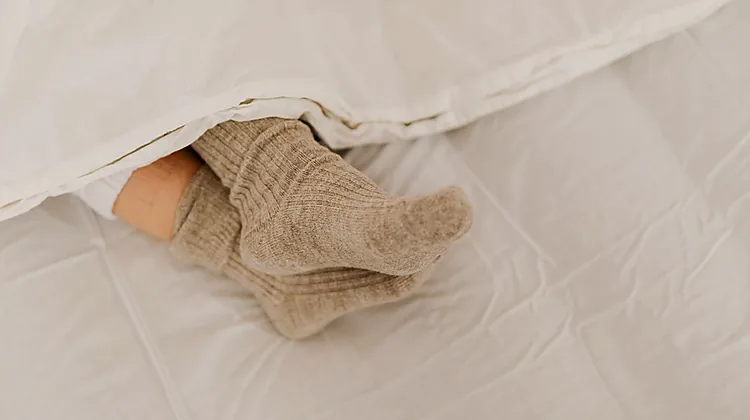
Here is the whole routine. Fill the sink with cool water and add a small drop of gentle soap or a little shampoo. Put the socks in and press them gently with your hands for about a minute. Do not scrub them hard against each other and do not twist them, because rough handling stretches wool out of shape. Then empty the sink and press the socks against the bottom to push the soapy water out.
Rinse them in cool, clean water the same way, pressing instead of wringing. When the water runs clear, lay the socks flat on a clean towel, roll the towel up, and press down with your knees. The towel soaks up most of the remaining water. Then hang the socks on a chair back, a towel bar, or a travel clothesline.
Merino dries much faster than cotton, so by morning they are usually ready to wear again. If the air in your room feels damp, hang them near a window or under the air conditioner vent. You can travel comfortably for two weeks with just three pairs using this routine.
Two Things to Avoid
Never wring wool socks hard, and never put them in a hot dryer. Heat and rough handling shrink wool and break down the fibers, which turns a soft, smooth sock into a stiff, scratchy one. A quick cool hand wash, a gentle squeeze, and a night of air drying keeps them soft and stretchy for many trips.
It also helps to rotate your pairs. Wear one pair on Monday and another on Tuesday, and let each pair rest for a day or two before you wear it again. Wool fibers spring back into shape while they rest, so the sock keeps its fit for longer.
Your Quick Pre-Trip Sock Checklist
Before you leave home, take ten minutes to run through a short checklist. It is a small amount of effort that pays off on every single walking day of your trip.
- Pick three pairs of thin merino wool socks in lightweight or ultra-light weight.
- Choose colors that match your shoes and most of your clothes, such as charcoal, oatmeal, or black.
- Try the socks on with your main walking shoes and walk around the block.
- Check for rubbing at the heel, the ankle, and across the toes.
- If a spot feels hot, change the sock or the lacing before you travel.
- Pack a tiny bottle of gentle wash or a few travel soap sheets.
- Pack a small mesh bag so damp socks never touch your clean clothes.
- Add one spare pair beyond the three you plan to use, so a slow-drying night never leaves you without socks.
On the trip, rotate your pairs, rinse them at night, and let them air dry. If you feel a hot spot starting on your foot, stop right away and adjust your sock or shoe. Loosen the laces, smooth out any bunching, and give your feet a minute to cool down. That tiny pause saves you from a painful blister later in the day, and it costs you almost nothing.
A hot spot is a warning, not a small annoyance. Stop and fix it while it is still just a hot spot.
Thin wool socks are small, light, and inexpensive compared to the misery of sore feet on a trip you have been planning for months. They add almost no weight to your bag, and they take up less space than a folded t-shirt. Make them the first thing you pack, and your feet will thank you on every long walking day of your journey.
Frequently asked questions
✓ Kristina Mate
Founder & Lead Travel Editor · TravelStyleMate
Kristina is the founder and lead editor of TravelStyleMate. Over the past 8 years, she has explored 35+ countries across Europe, Asia, and the Americas—traveling almost exclusively with a single 40L carry-on bag. A dedicated solo traveler, she specializes in cobblestone-tested footwear, minimalist capsule packing formulas, and realistic transit logistics. Every packing rule, walking shoe, and itinerary on TravelStyleMate is personally tested on actual trips with real luggage constraints.
Testing Guarantee: Every packing rule, walking shoe, and transit route is personally tested with real luggage constraints. No paid rankings, no untouched gear, no AI fluff.
Related guides
How to Stop Foot Pain After Walking All Day on Hard Stone Streets
Hard stone streets beat up your feet fast. Here is the simple shoe, sock, and evening routine that stops the ache and keeps you walking all day.
Loafers or Sneakers: Which Shoes are Better for Walking on Old Streets?
Loafers or sneakers for old cobblestone streets? Here is how to choose, break them in, and keep your feet really happy on long walking days.
Dressy Flat Shoes That Look Nice at Dinner After Walking All Day
Pretty flat shoes that survive a full day of walking and still look right at dinner. What to check before you buy, plus easy outfits and care tips.