4 Ways to Spot an Overpriced Tourist Restaurant Before You Sit Down
Learn four simple ways to spot an overpriced tourist restaurant before you sit down, so you spend less and eat better on your next trip to Europe.
 ✓
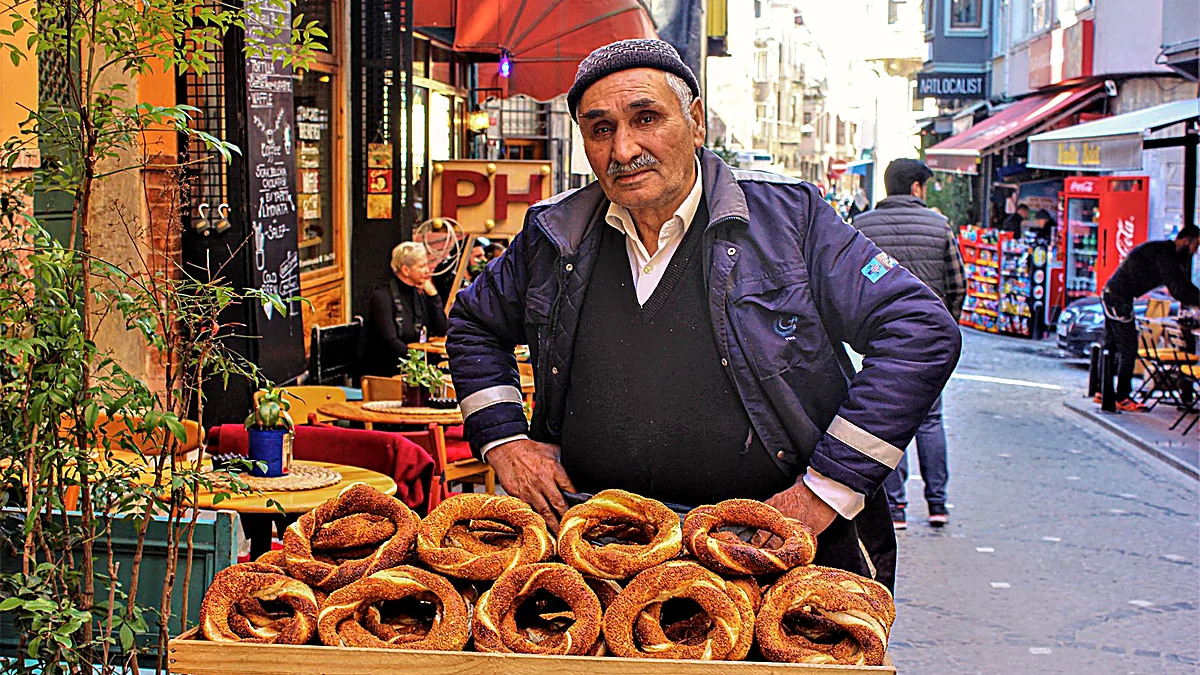
You are tired, you are hungry, and the square in front of you is beautiful. Then the bill arrives, and the plain plate of pasta you did not really enjoy costs more than your hotel room for the night. The good news is that you can spot that restaurant before you sit down, and it takes about thirty seconds.
I have made this mistake more times than I want to admit. I have sat down at a place with a lovely view and a menu the size of a poster, and I have paid far too much for food that tasted like it came out of a freezer bag. Over the years, I learned that a few small habits save me both money and disappointment. This guide shares four simple things to notice before you take a seat, so you can spend less and eat better without any stress.
The rules are not complicated, and you do not need to speak the local language to use them. You only need to slow down for a moment and look around.
Look at the Menu Before You Walk In
Standing outside and reading the menu is free, and it is the single most useful habit you can build. Almost every restaurant in a tourist area posts a menu near the door, and that menu tells you a great deal about who the place is cooking for.
Be careful when the menu has thick plastic pages and a photograph of every single dish. A photo menu is not always bad, but a menu where every dish has a glossy picture usually means the kitchen is cooking for people who will never come back. The same goes for a menu that repeats the same text in five languages. It is not the English translation that worries me, because many good restaurants help visitors with a translation. The warning sign is the combination of big photos, five languages, and a menu that looks like it was printed in a hurry.
Watch the prices and the small print
Check whether the prices are clear and easy to find. Then look for the small print at the bottom of the page. In Italy, you may see a cover charge, and that is normal in many places. What matters is whether it is written openly or hidden in tiny letters. In some cities, restaurants add a service charge, a bread charge, or a music charge that nobody mentioned. If you cannot understand what you will pay, that is your answer, and you can keep walking.
The best menu is usually the one somebody wrote by hand that morning, because it changes when the market changes.
A short menu is a good sign
A short menu, written by hand in the local language, is usually a better sign than a long printed one. It often means the kitchen cooks a few things well and buys fresh food instead of keeping a freezer full of everything. If the menu offers pizza, sushi, paella, and schnitzel all at the same time, something has to give, and it is usually the quality of the food.
In cities like Rome, Prague, or Barcelona, the worst places often sit right on the main square with the best view. That view is part of what you are paying for, and it is often the only thing you are paying for. You do not need to be rude about it. Just keep walking and compare three or four menus before you choose. This first step is the heart of learning how to spot tourist trap restaurants, and it saves you from bad food in Europe more often than any other trick.
Check Who Is Sitting at the Tables
Take ten seconds to look at the people already eating. This is a free test, and it is surprisingly accurate. Are the tables mostly full of tourists holding cameras and large shopping bags, or are there locals on a lunch break reading the news on their phones?
A busy place full of local workers at one in the afternoon is often a very good bet. Those people eat there every week, and they would not come back if the food was bad or the prices were silly. On the other hand, a nearly empty restaurant with a staff member waving you in at five in the afternoon is usually not a good sign. Good food takes time to cook, and real kitchens are busy at real meal times.

Look for tables of families, older couples, and groups of friends who speak the local language. If you hear the language of the country around you, you are probably in the right place. If every table has the same giant plate of french fries and the same giant glass of soda, you are almost certainly looking at a tourist menu that was designed to feel familiar rather than to taste good.
Look at what is on the plates
You can learn a lot from the food on other people's tables. Do the plates look fresh and carefully made, or does everything look the same shade of brown? Portions are worth a glance too. A plate so large that nobody can finish it is often a way of hiding average cooking behind a mountain of food.
It also helps to check the mood in the room. Are people relaxed and talking, or are they staring at a bill with surprise on their faces? A table where everyone looks happy and unhurried tells you more than any sign outside ever will.
Think about the time of day
Meal times matter more than most travelers expect. In Spain, lunch often runs from two until half past three, and dinner starts around nine in the evening. In Italy, many kitchens close between three and seven. If a restaurant in Spain is packed with tourists at six in the evening while the rest of the neighborhood is quiet, that tells you exactly who it is cooking for.
Notice the Small Clues in the Room
Before you sit down, peek inside for a moment. You do not need to walk around the whole room, and a quick look through the window is enough. Pushy staff who stand in the doorway or block your path and call you “my friend” are often a bad sign, because a confident kitchen does not need to chase people off the street.
A good local place may look plain, and that is fine. What you want to see is a daily special board, a short wine list, and bread that looks like it was baked today rather than last week. Simple things like these show that somebody is paying attention to the details.
A short wine list is a good sign too. If the list is short and includes a house wine poured by the glass, the kitchen is probably confident about simple food that goes well with it. A wine list with two hundred bottles and no house wine is often there to impress rather than to serve.
Watch for sneaky extras
Some places make their money on extras rather than on the food itself. A bread basket that appears on your table without you asking for it, a cover charge written in letters you can barely read, or a waiter who pushes the most expensive dish on the menu are all small warnings. None of these things is a crime on its own, but together they suggest that the restaurant is more interested in your wallet than in your dinner.
If you see a person outside holding a laminated menu and a photo of a brightly colored cocktail, you are probably looking at an overpriced place. The same is true when a restaurant employs someone whose only job is to bring people in from the street. Real restaurants with regular customers rarely need that.
If a place feels like a show, it probably is one, and the ticket price is on your bill.
Trust your gut
Your first feeling when you look through the window is usually right. If something feels off, you do not owe anyone an explanation, and you can simply walk on. There are thousands of restaurants in every city, and you will find another one within two minutes.
Walk One or Two Streets Away
The easiest fix of all is distance. Leave the main square, the train station, or the famous shopping street behind, and walk five to ten minutes into a normal neighborhood. Prices usually drop, portions get more honest, and the food starts tasting like somebody's grandmother is in the kitchen instead of a freezer.

In Rome, try Testaccio or Monti instead of the streets right next to the Pantheon. In Florence, cross the river and walk through the Oltrarno. In Barcelona, head to Gracia or Sant Antoni. In Vienna, walk away from the cathedral and into the quiet side streets behind it. In every one of these places, you will find smaller menus, friendlier prices, and food cooked for people who actually live there.
Look for the daily menu
Almost every country in Europe has a version of the fixed lunch, and it is usually the best value on the menu. It is often called a daily menu, and it gives you two or three courses for one fair price. Ask for it, because it is usually printed on a small board or a single sheet of paper rather than in the big leather folder they hand to tourists.
| Country | What to ask for | What you usually get |
|---|---|---|
| Italy | Menu del giorno or pranzo di lavoro | Two courses, sometimes wine included |
| Spain | Menú del día | Two or three courses with bread and a drink |
| France | Formule or menu du jour | Starter, main dish, and sometimes dessert |
| Austria and Germany | Mittagsmenü or Tagesmenü | A soup and a main dish at lunchtime |
| Portugal | Prato do dia | A daily plate served with soup and bread |
One more tip helps a lot. Ask the person at your hotel or guesthouse where they eat on their day off, and then go there. Local staff usually send you to a place they know well, and they gain nothing from sending you somewhere expensive.
If you are tired and do not want to search, pick the place with the most locals and the least shouting. A quiet room full of people eating is a better sign than a loud one full of people being persuaded.
Quick Checklist for Your Next Meal
Before you sit down, run through this simple list in your head. It takes less than a minute, and it will save you money on nearly every trip.
| Question to ask yourself | What the answer tells you |
|---|---|
| Is the menu outside short and handwritten? | Yes means the kitchen probably cooks fresh food each day. |
| Are the prices clear with no mystery charges? | Yes means you will not be surprised at the end of the meal. |
| Are locals eating there? | Yes means the food and prices work for people who live nearby. |
| Is the staff calm instead of pushy? | Yes means the restaurant trusts its own cooking. |
| Is it one or two streets from the main tourist path? | Yes means you are likely paying for food rather than for a view. |
If you answer yes to most of these questions, you are probably in a good spot, and you can sit down and enjoy yourself. If you answer no to most of them, keep walking, because there is no shame in it. You can always come back later if you change your mind, and the restaurant will still be there tomorrow.
This small habit does three things at once. It saves you money, it helps you avoid bad food in Europe, and it makes your trip feel more relaxed because you are choosing instead of being chosen. Remember that the best meal is not always the one with the biggest sign. Very often, it is the one with a handwritten menu, a few local families, and a free table because the room is small and honest.
So the next time you stand in a beautiful square with an empty stomach, take one slow walk around the corner. Read a menu, glance at the tables, and trust what you see. Your dinner will thank you, and so will your wallet.
Frequently asked questions
✓ Kristina Mate
Founder & Lead Travel Editor · TravelStyleMate
Kristina is the founder and lead editor of TravelStyleMate. Over the past 8 years, she has explored 35+ countries across Europe, Asia, and the Americas—traveling almost exclusively with a single 40L carry-on bag. A dedicated solo traveler, she specializes in cobblestone-tested footwear, minimalist capsule packing formulas, and realistic transit logistics. Every packing rule, walking shoe, and itinerary on TravelStyleMate is personally tested on actual trips with real luggage constraints.
Testing Guarantee: Every packing rule, walking shoe, and transit route is personally tested with real luggage constraints. No paid rankings, no untouched gear, no AI fluff.
Related guides
Historic Drinking Fountains: Finding Cold Free Spring Water in Old Cities
Learn to find free cold drinking water in old cities, from Rome's nasoni to Paris's Wallace fountains, plus what to wear and how to keep bottles fresh.
Visiting Cities in the Fall: Cheap Hotels and Zero Lines
Fall city breaks cost less when you pack light layers, stay two stops from the center, and travel midweek. Here is the simple plan that works.
Local Bakeries: How to Spot Real Fresh Bread vs Cheap Frozen Bread
Learn how to spot real fresh bread in local bakeries while traveling, from the sign on the door to the crackle of the crust, so you never overpay.