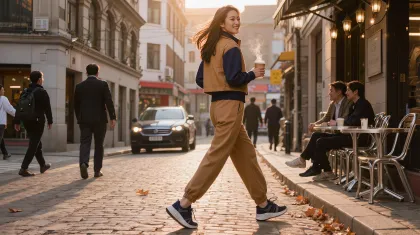
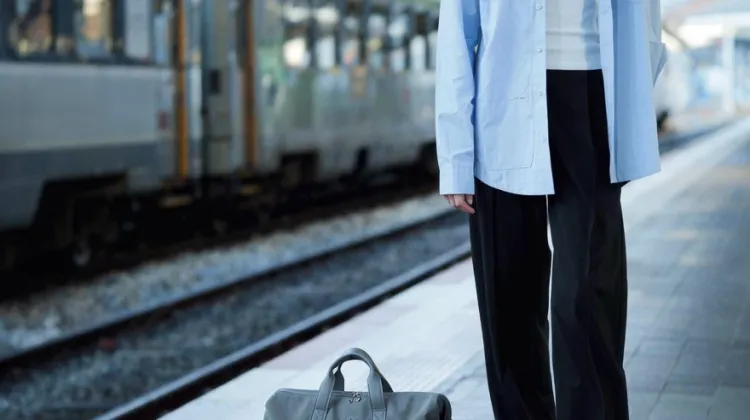
I thought the soft shell weekender would be overkill for three days. The COS bag looked enormous sitting there at Paris Montparnasse while I waited for the TGV to Bordeaux, and I remember thinking I'd overpacked again, that I'd be that person wrestling a half-empty duffel through vineyard rows.
But the thing about Atlantic rain is that it doesn't fall straight down—it blows in sideways at thirteen degrees Celsius, and suddenly that structured shell exterior isn't luggage, it's shelter.
The train took two hours and fifteen minutes. Around ten in the morning, the windows started streaking with gray, and the woman across from me closed her eyes, her head knocking gently against the seat with the rhythm of the tracks.
I could smell the coffee from the bar car—bitter, over-roasted—and the particular damp wool scent of winter commuters. My bag sat on the overhead rack, mocking me with its emptiness, but...
The Structured Bag Philosophy
Here's what nobody tells you about those sleek Scandinavian duffels with the rigid backs. When you're walking from the tram stop to your hotel and the wind is coming off the Garonne at nineteen degrees but feels like ten because of the humidity, that structured shell protects your merino layers better than any canvas tote.
I got off at Saint-Jean and immediately realized the walk to my hotel was longer than the map suggested, and by the time I reached Porte de Bourgogne, the bag had already proved its worth against the mist.
The trick is the compartmentalization. I used an & Other Stories zip pouch for my Uniqlo merino turtleneck—gray, the kind that doesn't hold odor even after four wears—and another for my one pair of trousers.
Cotton blend with 2% elastane. You need that stretch when you're climbing into a high-clearance van for vineyard tours, hoisting yourself up on seats that haven't been designed for short legs.
And the bag stands upright on cobblestones. That sounds like a small thing until you're in a plaza with wet granite underfoot and you need both hands free to wrestle with a map app that's deciding not to work. No toppling over into puddles. No fabric soaking up street grime.
What Bordeaux Winter Actually Feels Like
The limestone buildings on the right bank don't just look gold at sunset. They absorb the afternoon light between those 13 to 19 degree afternoons and radiate it back at you until nearly seven, which is when you realize you've been walking around Saint-Michel without a coat because the stone kept you warm.
But the Atlantic humidity is a different beast entirely. It creeps into the weave of your scarf, makes your hair expand in ways that defy physics, and finds the gap between your cuff and glove with the persistence of a determined burglar.
I learned this at Darwin Ecosystem. The old military barracks turned cultural space sits on the right bank, sprawling and industrial, filled with the smell of roasting coffee and wet concrete. I'd gone there for the evening drinks that everyone mentions but no one properly describes.
It's not just cocktails with a view—it's wind that whips your hair into your lip gloss and makes you grip your glass stem too tight. Oh and, I should mention the nails. My hands were freezing around the wine glass, chipped at the edges in that dark berry shade I'd applied hastily on the TGV, the color looking almost black against the pale pink of my sweater.
The Vineyard Day Uniform
This is the core of it. When you're visiting Pessac-Léognan in January, you need to look like you belong in the tasting room while surviving mud that sucks at your boots like wet cement. I wore the same formula three days straight, rinsing out the base layer in the hotel sink each night:
- Uniqlo extra-fine merino turtleneck (gray, crew neck)—Merino wool doesn't hold odor, even after four days of vineyard walks.
- COS oversized cotton-poplin shirt in soft lavender-white
- Everlane wide-leg trousers, cotton with 2% elastane, ankle length
- & Other Stories wool coat in oatmeal, unlined but dense
- Lululemon water-resistant sneakers, black
The merino matters because vineyard days are olfactory. You're smelling oak barrels, wet earth, fermentation, the particular green scent of dormant vines. The last thing you need is synthetic fabric holding onto yesterday's metro ride and hotel soap. Merino releases odor; it breathes when you step into a heated cave from the cold outside.
The shirt layer provides the elegance—you can tuck it in for the château visit, untuck it for the bistro after. Oh and, the pockets on those Everlane trousers are deep enough to hold a wine glass stem between tastings, which sounds absurd until you're standing in a cellar with no flat surfaces.
The high waist doesn't gap when you bend to examine vine roots or crouch to photograph frost on the grapes. The stretch saves you.
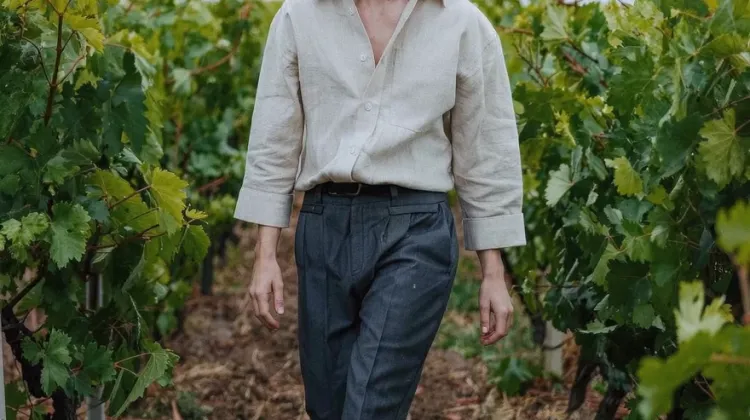
But shoes. I made the mistake of wearing leather Chelsea boots with no tread on day one. I slipped twice on the gravel paths at Château Haut-Bailly, grabbing at bare vines to steady myself, feeling the twigs scratch through my gloves.
Never again. By day two I was in the Lululemons—sleek enough that the sommelier didn't blink, but with soles that grip limestone gravel like talons. I walked twelve kilometers that day through three different estates and my arches didn't complain once.
Darwin After Dark
The thing about that rooftop is that everyone goes for sunset, but the real moment is just after six when the string lights come on and the wind dies down slightly, creating this pocket of stillness above the river.
I was up there with a glass of Médoc, watching the water mirror below create that fog effect tourists keep photographing because they think something's burning in the city. It's just condensation rising from the granite plaza, meeting the cold January air, turning into smoke that drifts across the reflected lights.
My mascara had given up around five. The humidity near the river does that—melts the waterproof promise right off your lashes until you look like you've been crying over a particularly emotional vintage. I wiped smudges from under my eyes with the collar of my shirt and decided it looked intentional. More or less.
The bar up there serves oysters that taste like the Atlantic—briny, cold, metallic. I ate six standing up, leaning against the heater, watching the limestone buildings across the river fade from gold to gray to black.
Someone was playing French rap from a portable speaker. My coat was damp at the hem from where it had brushed against wet metal stairs, but the wool hadn't let the moisture through to the lining yet.
It wasn't like those linen layers from beach trips where fabric dries in ten minutes. Here, everything stays damp until you actively fight it.
Pastels in a Gray City
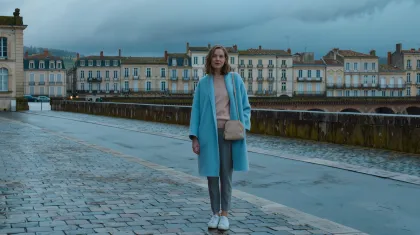
Everyone packs black for rain. Navy, charcoal, the safe camouflage of urban winter. I went the other way—blush pink, pale gray, that almost-white lavender that looks like it belongs in a spring catalog. The palette wasn't about being seen; it was about how those colors interact with wet cobblestones and low cloud cover.
When everything is gray stone and gray sky and gray river, a pale sweater becomes a light source. It sounds ridiculous until you're standing on Place de la Bourse and realize you're the only spot of warmth in the photograph, the only thing reflecting what little sun managed to break through at two in the afternoon.
The bag made this possible. Because the shell structure protected my clothes from the sideways rain during the walk from the tram, I didn't need to pack backups. One sweater. One shirt. One scarf in oatmeal merino that I looped three different ways.
The approach sounds austere, but when you're carrying everything on and off trains and up four flights of stairs because the elevator is broken, every gram matters. Unlike the Nice winter style transitions I wrote about before, this required fabrics that could handle saturated air without wilting.
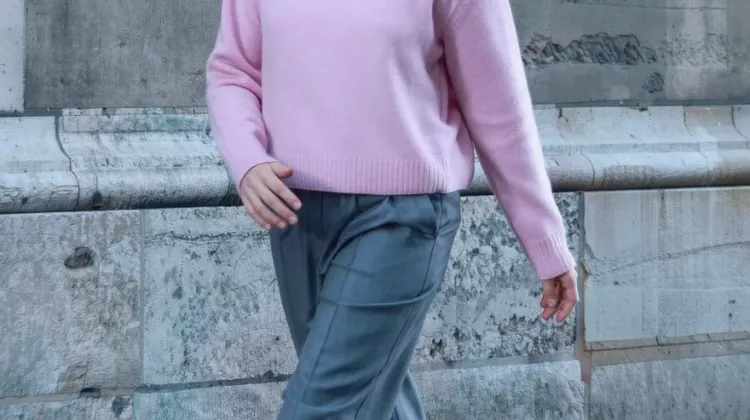
I saw a woman in head-to-toe black on Rue Sainte-Catherine looking like a rain cloud. She looked comfortable but invisible. I felt like a lantern. Not bright, not loud, just present. And when I ducked into a wine shop to escape a sudden shower, the owner commented on my coat color in French, asking if I was afraid of getting it dirty.
I touched the soft shell of my weekender and said no. The dirt wouldn't stick to either of us.
The Last Tram Home
On the final night, I caught the TBM from Quinconces just before midnight. The ticket was still €1.70, exact change dropped into the machine with cold fingers. The limestone had stopped glowing hours ago, and the rain had turned to that fine mist that doesn't quite register as precipitation until you've been standing in it for ten minutes and realize your hair is plastered to your forehead.
My bag was heavier now—full of wine bottles wrapped in the merino turtleneck and the cotton shirt, cushioned against each other—but the soft shell exterior was holding up against the wet platform, beaded with moisture instead of absorbing it.
I thought about how the whole trip had worked because nothing had fought me. The waistband that didn't dig in during the four-course lunch. The shoes that didn't blister even when I walked from the Darwin Ecosystem all the way back to the hotel because I missed the earlier tram.
The mascara that had smudged but in a way that looked like I'd meant to do it, like some French girl insouciance I'd finally mastered by accident. I've had movie star moments in Manhattan that felt less cinematic than this particular damp evening.
That's the only neutral that matters, really. When your clothes work so well you forget to think about them, when comfort becomes the baseline instead of the compromise.
The water mirror was smoking again as the tram pulled away, the fog rising thick enough to obscure the base of the columns. I pressed my forehead against the glass, watching the white billow chase us along the tracks, and...
What should I pack for Bordeaux in winter?
The Uniqlo extra-fine merino turtleneck I wore for four days straight is essential—it doesn't hold odor and layers well under a COS cotton-poplin shirt. Pair with Everlane trousers that have 2% elastane for stretch during vineyard walks, and bring Lululemon water-resistant sneakers instead of leather boots to handle the mud.
Is the Darwin Ecosystem worth visiting in winter?
Go just after six when the string lights come on and the wind dies down. The rooftop offers views of the water mirror's fog effect, which rises from the granite plaza and looks like smoke against the city lights.
How do I dress for vineyard tours in the rain?
Skip the black and pack soft pastels like blush or lavender—they reflect light on gray days. A structured soft shell bag protects merino layers from sideways Atlantic rain, and cotton-blend trousers with stretch are essential for climbing in and out of high-clearance vineyard vans.
What's the best way to get from Paris to Bordeaux?
Take the TGV from Paris Montparnasse—it takes 2 hours and 15 minutes. Once there, the TBM tram costs €1.70 and runs until midnight from stops like Quinconces.
Are soft shell bags better than canvas for travel?
Yes, especially for Bordeaux's humidity and sideways rain. The rigid structure protects clothes better than canvas, stands upright on wet cobblestones, and prevents moisture from seeping into merino wool layers during tram rides.