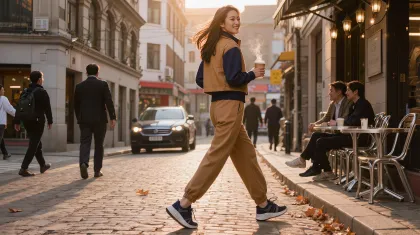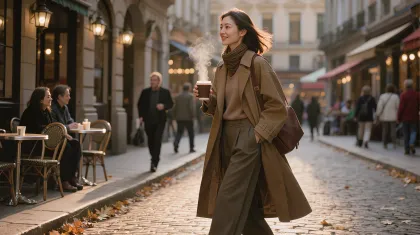
Fourteen degrees at nine in the morning smells like ozone and the clean cotton of hotel sheets that haven't been slept in yet. The Ginza Line platform at Shimbashi had that particular underground chill that makes you regret leaving your coat in the hotel room—until you remember that 22 degrees in afternoon sun will make you sweat through merino if you're overdressed.

I’d started at Tsukiji. The tamagoyaki stall—one of the ones with the yellow awning—charged ¥800 for a warm brick of egg. That's roughly €5, or the price of a bad coffee in Paris. I ate it standing up, elbows tucked, chin tilted forward to avoid drips on my collar.
Egg yolk doesn't forgive wool, and I wasn't wearing synthetics that day.
The €5 Breakfast Strategy
Why do I eat standing up in alleyways when I'm dressed for department stores? Because sitting requires a napkin, and napkins become crumpled balls in pockets that later stain blazer linings. The tamagoyaki method is strategic: protein that fills, packaging that folds flat, zero sauce risk.
The egg was still steaming when I swiped my Suica card at the turnstile. The Ginza Line—named, unimaginatively but accurately, after the district it serves—runs through the heart of Tokyo's luxury corridor. I boarded at Shimbashi and grabbed a seat near the door, the better to watch for my stop, the better to protect the coat folded across my lap.
Was I going to carry this weight all day? The answer, unfortunately, was yes. Because autumn in Tokyo isn't a single season—it's three microclimates that happen between morning coffee and evening sake.
Why the Ginza Line Dictates Your Fabric Choices
Train hopping with one bag isn't about looking minimal. It's about fabric surviving compression, friction, and the sweat of a hundred strangers' body heat.
I wore Uniqlo's extra-fine merino turtleneck in a shade I'd call 'moss' if forced to describe it. Merino resists odor for days. It breathes when the carriage heaters crank up to tropical, and it insulates when the doors open to platform drafts.
I've worn cotton on this route before; by noon I smelled like a gym bag, and by three I was shivering in the shade of the Hermès building.
The trousers were COS—97% cotton, 3% elastane. That three percent is the difference between trousers that bag at the knees after ninety minutes of browsing, and trousers that snap back into shape. Pure cotton has no memory. It remembers every chair you've sat in. These forgot immediately.
I asked myself: could I wear this outfit to a meeting, then to dinner, then on a train at midnight? The answer has to be yes, or it doesn't get packed.
I thought about The One Blazer That Works for Mayfair, which I'd worn during a London drizzle. That blazer was wool crepe. This coat was boiled wool. Both repel water, but only one survives being draped over an arm for eight hours without looking like a paper bag.
Twelve Floors of Vertical Endurance
Itoya isn't a store. It's a stamina test with an elevator option that feels like cheating. Twelve floors of paper—washi, letterpress cards, leather journals heavier than laptops—and I took the stairs because the escalators were packed with couples carrying shopping bags from Mitsukoshi.
My shoes were Everlane loafers—rubber soles that didn't click on marble floors but gripped the stairs. Leather would have blistered after twelve floors. These didn't.
On weekends, Chuo-dori transforms. They close the street to traffic from noon until five, and the asphalt becomes a pedestrian boulevard six lanes wide. You walk down the white lines between the buildings, surrounded by a thousand people who also dressed for the air conditioning inside Dover Street Market.
I signed for a notebook on the eighth floor, using a pen tester that probably cost more than my breakfast. My thumbnail caught the fluorescent light—French tip, but squared off at the edges rather than rounded, a modern variation that looked absurdly polished against the kraft paper bag, surviving four days of train straps and wool friction without a single chip.
Sometimes the smallest detail holds the entire look together.
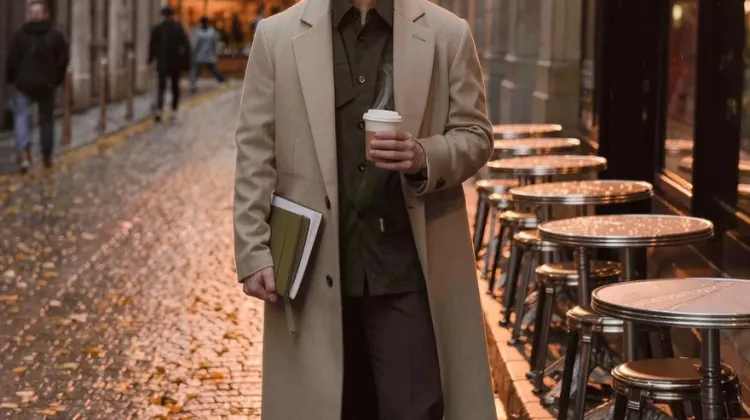
The smell hits you differently on every floor. Basement: ink and solvent. Fourth: vanilla from the leather goods. Eighth: lignin and starch from the fine papers. It's the scent of objects that outlast trends.
Neon, Rain, and the Weight You Carry
Honestly, I didn't expect the rain. The forecast promised clear skies, but Ginza generates its own weather systems of neon and condensation.
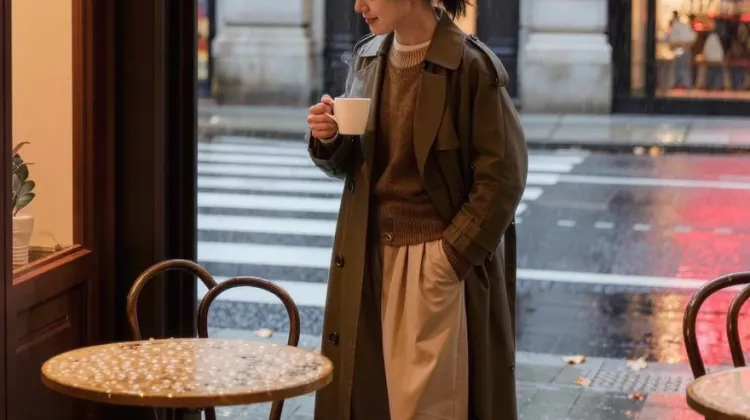
Just after six, the drizzle started. Not the tropical downpour that sends you sprinting, but the persistent mizzle that turns pavement into black mirrors. The Uniqlo and Sony signs reflected in the wet asphalt—pink and white light bleeding across the ground—and I stood there with my coat finally on, having carried it for eight hours like a fool.
Why didn't I just wear it? Because 22 degrees makes you sweat, and sweating through wool is worse than carrying it.
The Earth Tone Capsule Formula
My palette was built on the assumption that I'd look coherent even while dragging outerwear around like a security blanket. Moss green trousers. Camel merino knit. The coat in a shade I’ll call 'olive drab but make it fashion.' Everything talked to everything else.
Honestly, the color isn't the trick. It's the fabric weight hierarchy. Light base, mid-weight layer, heavy coat. You shed them like an onion as the thermometer climbs from 14 to 22 degrees, or you add them back when the sun drops and the neon takes over.
Key takeaway: If you can't wear it for twelve hours across three temperature zones, don't pack it.
My outfit checklist for transitional autumn days:
- One merino base layer (Uniqlo extra-fine, crew or turtleneck)
- One cotton-blend trouser with 2-3% elastane (COS or similar)
- One oversized shirt or light knit for mid-layering
- One substantial coat you'll hate carrying by 2 PM but need by 7 PM
- One structured crossbody bag that fits under the coat when rain hits
I used the Covent Garden Summer strategy here—one bag, two hands free for shopping—but adapted for the weight of fall fabrics.
The 22-Degree Afternoon
By three o'clock, I was down to the turtleneck. The coat was draped over my left arm, the bag over my right shoulder, and I was sweating slightly as I navigated the pedestrian chaos. A man in a full suit walked past me, looking fresh, and I hated him professionally.
That's the thing about effortless style. It's never effortless. It's just fabric doing the heavy lifting so you don't have to think about whether olive matches camel. (It does. Everything matches camel.)
The temperature peaked at twenty-two degrees around four, just as I was leaving Itoya with my paper bag full of lignin-scented purchases. I could feel the merino wicking the sweat from my back where the bag had rested. Good fabric doesn't announce itself. It just prevents disaster.
When the Train Home Gets Crowded
The Ginza Line at seven is a different beast. No seats. Just strap-hanging and the smell of perfume and rain-wet wool.
I stood near the door, my coat finally on, feeling the weight of the day in my shoulders. The nails clicked against the plastic handrail—still perfect, still squared off at the tips. The Uniqlo turtleneck had survived egg steam, stair sweat, and the crush of a hundred shoppers. Tomorrow I'd rinse it in the sink and wear it again.
Investing in fabric isn't glamorous. It doesn't photograph as well as a trending color. But when you're standing on a train at nine PM, and your clothes still smell like nothing, and they haven't bagged at the knees, you know you won.
I used the same bag from my King's Road Summer trip—same zero-ironing strategy, heavier contents.
I still don't understand why they named the train after the district, though. Seems backward.
What fabric survives Tokyo's autumn temperature swings from morning to evening?
Uniqlo's extra-fine merino wool handles the shifts better than cotton because it resists odor during long shopping days and regulates heat on crowded Ginza Line trains.
How do you carry a heavy coat all day without ruining your outfit?
Choose boiled wool or structured cotton blends that won't crease when draped over the arm for hours—unlike the wool crepe blazer I wore in Mayfair that wrinkled immediately upon removal.
What shoes work for both Itoya's stairs and Chuo-dori's cobblestones?
Everlane loafers with rubber soles survived twelve floors of climbing and the weekend pedestrian boulevard's uneven pavement without blistering or clicking too loudly in quiet stationery stores.
How do you pack for a Ginza shopping day with minimal luggage?
Stick to three earth-tone pieces that coordinate, use the one bag strategy tested during Covent Garden Summer, and choose COS cotton-blend trousers with elastane for comfort during vertical shopping.
Is the tamagoyaki at Tsukiji worth it for a minimalist traveler?
The warm egg brick I ate standing up was protein-rich packaging that folds flat, perfect for eating without utensils or risking stains on Uniqlo merino layers.