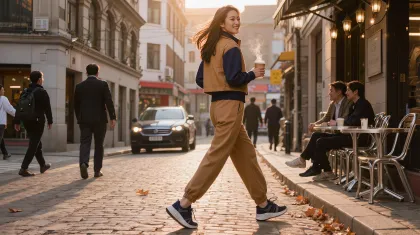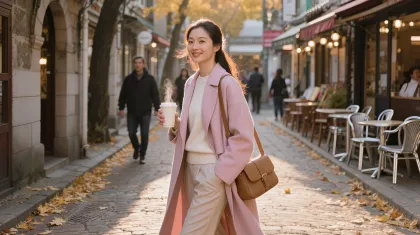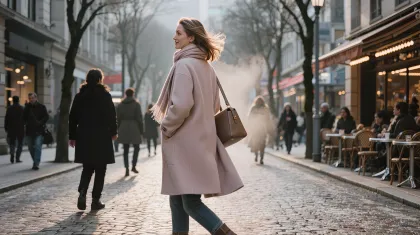
You know that thing where you're standing in the Shibuya scramble at 4pm, watching the sky turn that particular shade of steel-grey that means snow later, and you realize your ankles are still carrying August?
Those tan lines from summer sandals.
They're the traveler's tell — no matter how carefully you've picked your winter capsule, no matter how much cashmere you've layered up, those two stripes of bronze across your feet announce to the world that you were just in Bali last week.
I was there — right in the middle of the crossing, wearing a cloud-grey merino turtleneck that I'd already worn three days straight (merino doesn't hold odor; it's the only reason I got away with it), and all I could think about was how my feet looked like they belonged to two different people.
The 7kg limit at the Peach Aviation counter is what really started this. I'd committed to hand-luggage only — not because I'm one of those carry-on evangelists who weighs their socks, but because I missed the checked bag deadline by fourteen minutes and wasn't about to pay ¥8,000 to correct my mistake.
So I was working with constraints.
And constraints, I've learned, are where style actually lives.
The 7kg Math Problem
Peach allows 7kg total for their basic fare. That's your bag, your coat, your guilt. I stood in line behind a family trying to stuff puffer jackets into already-full backpacks, watching the scale like it was a roulette wheel. My own bag — an old Everlane nylon weekender I've beaten into submission across four continents — clocked in at 6.8kg.
The secret? I wasn't packing outfits. I was packing textiles.
One pair of trousers in a wool-cotton blend from & Other Stories that cost me €89 but has survived two years of cobblestones without pilling. One oversized shirt in Japanese cotton broadcloth — the kind that gets better when you sleep in it. And three layers of varying warmths, all in dusty rose, oat milk, and muted sage.
Oh and — I wore the heaviest boots on the plane. My feet were sweating for three hours, but I saved 1.2kg of precious weight allowance.
The thing about budget airline restrictions is they force you to edit. No "just in case" pieces. No trend items you'll wear once for a photo. Every gram has to earn its place. Which brings me to the only takeaway that actually matters: Buy the fabric, skip the trends.
Unlike my Kyoto summer humidity packing where breathability was the only metric, winter travel requires textiles that work harder.
Why Merino Outperforms Everything
I need to talk about wool science because people misunderstand it. Merino isn't just warm — it's temperature regulating.
I'd packed this Uniqlo Extra Fine Merino turtleneck in heather grey — ¥3,990 and feels like it should cost triple. On day one, the temperature swung from 4°C outside to 26°C inside the Yamanote Line trains. I didn't shiver, I didn't sweat through.
The fiber absorbs moisture without feeling wet, which means you can wear it from a 9am coffee meeting straight through to last call without smelling like you've been marinating.
Compare that to the acrylic blend I bought in a panic in Lisbon two years ago — same price point, smelled like a gym bag by noon. The difference is microscopic in the store, monumental by hour eight.
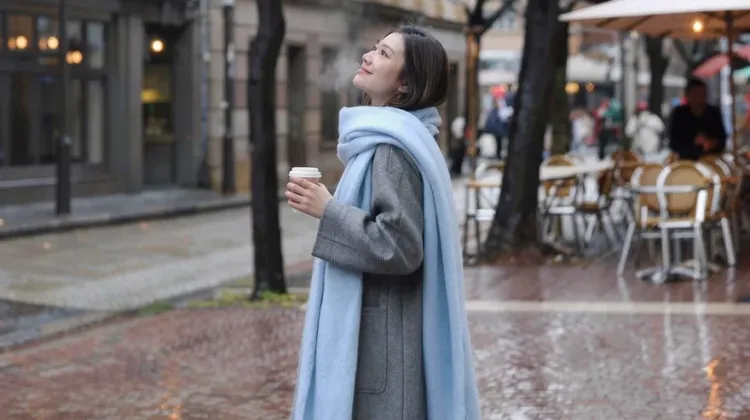
I washed that turtleneck in the hotel sink with convenience store detergent, rolled it in a towel, and it was dry by morning. When you're carrying everything on your back, wash-and-wear isn't a sustainability flex — it's survival. This beats my Gion one-bag strategy by a mile because winter layers actually clean easier than humidity-soaked linen.
Shibuya Doesn't Care About Your Schedule
Here's where the day-to-night transition gets interesting.
Shibuya operates on its own rhythm. The lights come on around four-thirty in December — not gradually, but all at once. The scramble crossing becomes a different animal after sunset. The tourists thin out, replaced by locals in black wool coats cutting diagonal paths through the crowds, heading to izakayas tucked above electronic stores, smelling of yuzu and cigarette smoke and wet wool.
I started my evening at a standing sake bar near the station — ¥600 per glass, no chairs, condensation running down the windows. I was still in my daytime uniform: the & Other Stories trousers, the merino turtleneck, and white leather sneakers that had carried me 12,000 steps already. They were comfortable, sure. But they were screaming "daytime tourist."
The transition happens in the details.
I'd packed one pair of leather ankle boots — flat, black, from a discontinued line I've had for years. They weighed 780g, which is why I wasn't wearing them on the plane. But they changed everything.
I swapped them in the station bathroom near the Hachiko exit — there are full-length mirrors just past the lockers where half of Tokyo adjusts their hems — added a slick of lipstick, and suddenly the same outfit read "evening" instead of "sightseeing."
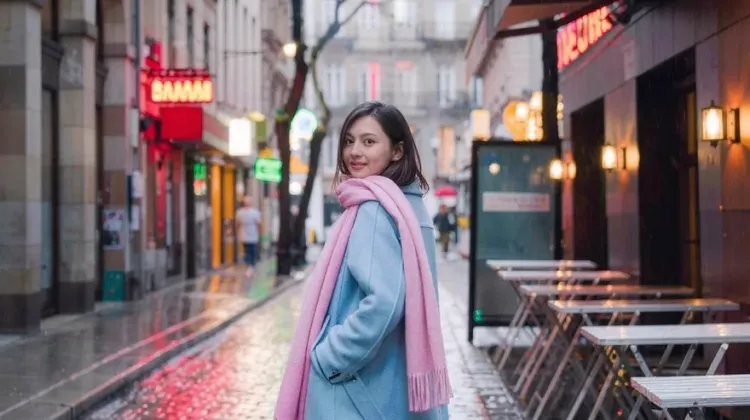
The sneakers went into my tote. The tote is important — it's a black nylon shopper that folds to nothing but holds everything. When you're moving from day to night without a hotel room to return to, your bag becomes your closet. That bag has carried groceries in Mexico City, wine in Paris, and now, sweaty sneakers in Tokyo.
The Pastel Camouflage
I want to talk about color because this is where I usually get it wrong.
Tokyo in winter is a sea of black, navy, and that particular charcoal grey that Japanese commuters favor. It's beautiful — this uniform of anonymity. But I don't own black winter clothes that aren't pilled or sad, and I wasn't about to buy new ones just to blend in.
So I went the other direction.
The dusty rose coat — thrifted in Berlin, 60% wool, 40% viscose, which means it drapes like liquid but costs dry-cleaning money every time it rains. The oat milk scarf. The sage green gloves I bought at Loft for ¥1,200.
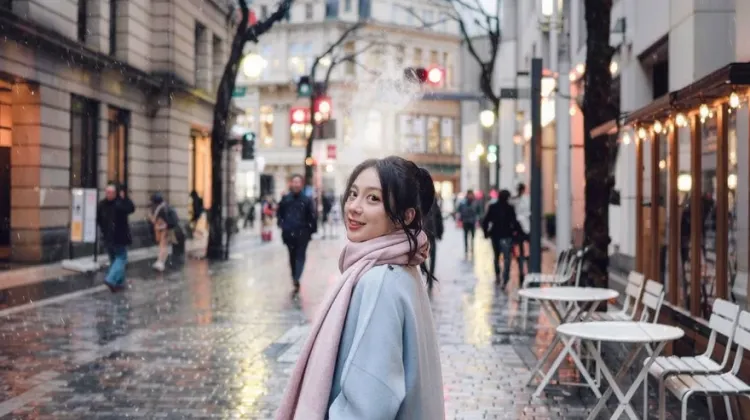
Together, they created this soft, muted palette that somehow worked better than black would have. In the neon glow of Center Street — where the lights are pink and blue and violent white — pastels absorb the color rather than fighting it. I looked like I belonged to the city rather than visiting it.
Oh and — my nails were Coral Sunset that week. I remember noticing them against the grey wool sleeve while holding a warm can of vending machine coffee, this impossible bright against all the neutral. It was a small rebellion, a piece of summer I hadn't scrubbed off yet.
When the Rain Makes Your Plans
Day three broke wet.
Not the dramatic Tokyo summer downpour that clears the streets, but a persistent, bone-cold drizzle that makes every surface treacherous. The kind of rain that ruins suede and good moods equally. I'd planned to walk to Yoyogi Park, but instead I pivoted to indoor exploration — which is where Tokyo excels.
I spent six hours in the Shibuya Sky complex without hitting the observation deck. That's too obvious. Instead, I mapped a route through the attached mall:
- The 14th-floor bookstore with floor-to-ceiling windows facing the tracks
- A basement-level depachika where I sampled ¥400 bites of wagashi and warmed my hands on matcha lattes
- The covered walkway connecting to Mark City, where the temperature stays constant and the windows steam up
The outfit that day was key. The wool-cotton trousers repelled light rain — tight-weave enough that water beaded and rolled off rather than soaking in. My technical shell — polyester-nylon blend that doesn't breathe well (bad for summer, great for winter drizzle) — proved perfect.
It has hidden pockets deep enough to hold my phone and the business card of a sake brewer I'd met the night before.
Similar to my Banff winter weekend guide, the key was breathable base layers under waterproof shells rather than bulky insulation.
I walked 8 kilometers that day without getting wet or overheated. The boots have rubber soles that grip wet pavement — I've slipped in enough European cities to know that leather soles are suicide in rain.
The sensory memory I kept: the smell of roasting chestnuts from a street vendor near the station, mixing with the metallic scent of wet train tracks and the artificial warmth of department store air. Cold cheeks, warm core. That's the goal.
I keep thinking about those boots. The way they sounded different on the wet pavement than my sneakers would have — heavier, more certain. I broke them in properly this time, which is rare for me. Usually I buy shoes and suffer for a week. These just worked.
I'm not sure if that's because Tokyo is easier on footwear than Lisbon, or if I'm just getting better at knowing what I need before I buy it. Maybe that's what four years of doing this teaches you — not how to pack lighter, but how to know.
Though honestly, I still don't know what to do about the tan lines.
How do you pack for winter in Japan with only carry-on luggage?
Wear your heaviest boots on the plane and prioritize merino wool base layers — the turtleneck I wore for four days straight without odor naturally resists bacteria. Stick to one pair of wool-cotton blend trousers and a technical polyester-nylon outer shell rather than bulky coats.
What's the best shoe strategy for Shibuya day to night?
Carry a pair of flat black leather ankle boots weighing under 800g and change in the station bathrooms near Hachiko exit. I switched from white sneakers to boots and the same outfit worked for sake bars at midnight. Ensure rubber soles for wet pavement.
How do you stay warm in Tokyo without looking like a tourist?
Skip the black puffer and opt for muted pastels like dusty rose or sage — my coat absorbed the neon glow of Shibuya better than navy would have. Layer with breathable merino rather than synthetic fleece, which traps sweat on trains where temperatures hit 26°C.
What do you do in Shibuya when it rains?
Explore the connected indoor corridors from Shibuya Sky to Mark City via department store food halls and high-floor bookstores, never stepping outside. Bring a polyester-nylon shell with deep pockets and rubber-soled boots for the dash between buildings.