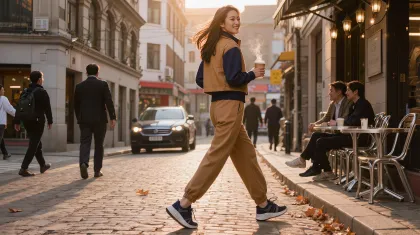
The crepe soles had gone gray with subway grit by day three. 
I was standing just inside Grand Central Terminal's main concourse, watching the constellation ceiling blur through the morning haze of commuters. The thermometer read twelve degrees at seven-thirty, and I could see my breath in short clouds.
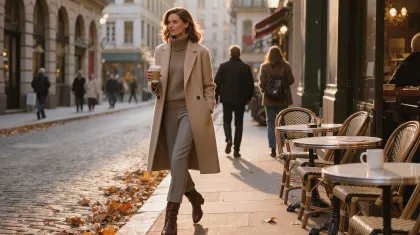
That wool-cashmere coat from COS cut the chill without adding bulk, which mattered because I was already at capacity—two weeks of living out of a carry-on that fit in an overhead bin with room to spare.
I’d laid out four sweaters, three lipsticks, and two pairs of boots the night before. The lipsticks stayed home, two sweaters were redundant, and the second pair was a fantasy. What actually made it:
1. The Uniqlo merino turtleneck that I’d end up wearing repeatedly
2. The Everlane cotton twill trousers with enough stretch for subway seats
3. The structured bag that would eventually hold a folded $3 slice of pizza without leaking grease onto the silk lining
4. The hope that I wouldn't need the umbrella I left behind
The Fabric Science of Vertical Cities
The subway car was a sauna by two in the afternoon, all bodies and coffee breath and the particular humidity of underground tunnels. I’d sweated through cotton blends before; they stay damp and start to smell like a gym sock by day two.
But merino wool pulls moisture away from your skin and somehow doesn’t retain odor. I tested this theory by wearing that Uniqlo turtleneck through three boroughs and an impromptu afternoon train to Cold Spring.
After four days straight, it still smelled like nothing.

The temperature swung to twenty degrees by noon, that perfect October window where Central Park turns into a gradient of rust and ochre and burnt gold. I shed the COS coat and tied it around my waist, which looked deliberate rather than desperate because the shoulders were structured enough to hold their shape when crushed.
Cotton twill doesn’t wrinkle like linen, and it breathes better than synthetic blends. When you’re carrying everything on your back, every fabric needs to work like a tool, not just a decoration.
I passed a corner where halal cart smoke mixed with taxi exhaust, that specific Manhattan perfume that clings to hair and coat collars. The air felt heavy, like a promise of rain that would break later that afternoon.
Manhattan's Vertical Dress Code
The outfit had to survive the subway and a rooftop seventeen floors up. That’s the vertical geography of the city: underground heat, street-level wind, then open-air exposure where the temperature drops ten degrees instantly. The crepe soles were silent on the rooftop decking, still gray from the morning platform.
I kept the Everlane trousers on and added the coat back. The bag—a structured leather one I’ve had since my magazine days—pulled the look together. It sat against my hip like armor, hiding the fact that I’d been wearing the same socks since Tuesday.
This wasn’t The One Blazer That Works for Mayfair Afternoon Tea—this was survival gear with better architecture.

We think of dress codes as horizontal, moving from office to bar. But in Manhattan, it’s about elevation. The subway platform at midnight required waiting twenty minutes for the next train, standing on concrete that vibrated with every passing express.
Upstairs, at the rooftop bar near the terminal, the wind threatened to turn my hair into a sculpture. The wool-cashmere blend held warmth without the puffy silhouette of down. I didn’t look like I’d just climbed out of the 6 train, even though I had.
The key is choosing pieces that communicate intention at eye level. When you’re standing at a slice counter at midnight, nobody cares about your hemline. But at seven-thirty on a rooftop, the same outfit needs to suggest you belong there. The bag does that work. It fixes the visual narrative.
The Geography of Looking Down
Here’s how you know you’ve stopped being a tourist: you stop looking up. The first time I visited, I walked around with my chin tilted toward the cornices, gawking at the height. This time, I watched the sidewalk, the gutter puddles, the way locals navigate around each other with shoulder checks and mumbled apologies.
The polish held up better than my hair. I reached for my coffee cup at a corner place with mismatched chairs and noticed the sage green matte against the ceramic, still perfect despite the humidity that had turned my head into a frizz halo an hour earlier.
The rain had started around four, unexpected and aggressive, turning the streets into mirrors that reflected the gray sky. I ducked into Joe’s Pizza on Carmine Street and ate standing up, shoulders hunched, watching the steam from the ovens fog the windows.
The slice was hot enough to burn the roof of my mouth, the crust blistered and crackling. I folded it, New York style, and slipped the second half into my bag for later. That’s the thing about traveling alone—you make decisions about dinner at strange hours, and nobody judges you for eating at ten-fifteen.
When October Surprises You
They don’t tell you that the wide temperature range is a liar’s forecast. It sounds manageable, like a light jacket weather. But the wind tunnels on Lexington Avenue cut through denim like it’s cheesecloth. I’d packed soft lines in oatmeal and taupe—romantic neutrals—because they simplified the decision fatigue. But simplicity doesn’t mean underprepared.
The frizz started at my crown and worked its way down, a humidity sculpture that no serum could penetrate. I’d planned on a sleek bun for the evening, but instead embraced the chaos and twisted it up with a claw clip from the pharmacy.
The nails, though. That manicure was the one detail that held its integrity through the drizzle, through digging in my bag for a MetroCard, through the long wait on the platform when the local train decided to run express after midnight.
I thought about that time in Covent Garden Summer with just one bag between two people, or those deep plum nails I tried in Paris. This was different. This was utilitarian solitude.
The Solo Calculus
Traveling alone means you become invisible and hyper-visible simultaneously. Nobody moves out of your way on the sidewalk, but everyone assumes you’re available for conversation. I wore the coat open, swung the bag to the front where I could guard it on crowded cars, and walked with the pace of someone who knew exactly which street cart made the best white sauce.
The outfit delivered what I needed: warmth that still looked intentional when I stepped from the subway onto a rooftop, and comfort when I ate alone at a counter at midnight. That’s the aesthetic of moving through a city by yourself—not performative, just precise.
The right bag is infrastructure, not accessory. And merino wool doesn’t just travel well—it forgives.
How do you pack for two weeks in a carry-on for fall in Manhattan?
I limited myself to the Uniqlo merino turtleneck, COS wool-cashmere coat, and Everlane cotton twill trousers, rotating these pieces for the entire trip. The merino resists odor even after multiple days of wear, the coat holds structure when tied around your waist during warm afternoons, and the cotton twill survives subway seats without wrinkling.
What fabric works best for NYC subway commuting?
Merino wool is the only base layer I trust for underground heat that turns into outdoor chill within minutes. Unlike cotton, it wicks sweat without retaining smell, which matters when you’re wearing the same top from morning subway rides through midnight platform waits.
How do you transition an outfit from subway to rooftop in Manhattan?
I rely on a structured bag and the COS wool-cashmere coat to improve Everlane trousers from the 6 train to a seventeen-floor rooftop. The vertical geography of the city requires layers that look intentional at both elevations without needing a change of clothes.
What's the best way to avoid looking like a tourist in New York?
Stop looking up at the buildings; watch the sidewalk and the flow of foot traffic instead. Eat your pizza standing up with shoulders relaxed, and walk knowing that halal cart smoke and taxi exhaust are just ambient details, not photo opportunities.
How do you handle unexpected rain while maintaining your style?
When the drizzle turned my hair into a cloud of frizz, I twisted it up with a drugstore clip and let the wool-cashmere coat handle the moisture. I ducked into Grand Central Terminal to wait out the heavy bursts, knowing the humidity would eventually pass.