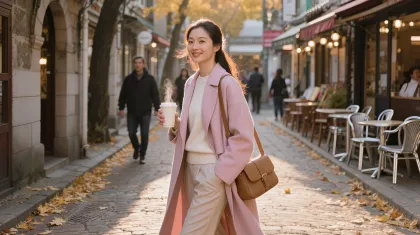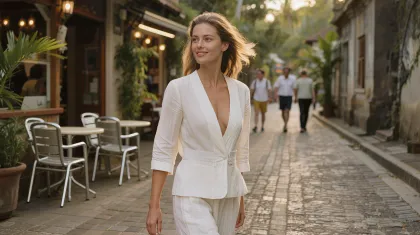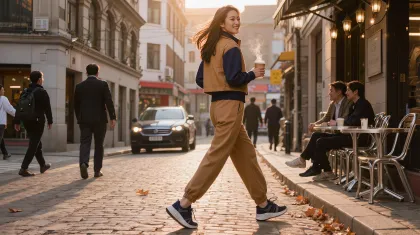
The coffee dripped onto my white COS shirt at around ten, just as I hit the steepest cobblestone pitch in Bukchon Hanok Village. I'd been gripping a paper cup from a corner place with mismatched chairs, trying to navigate alleyways where the ginkgo leaves had turned that specific, almost aggressive gold that only happens when the temperature hovers between fifteen and eighteen degrees.
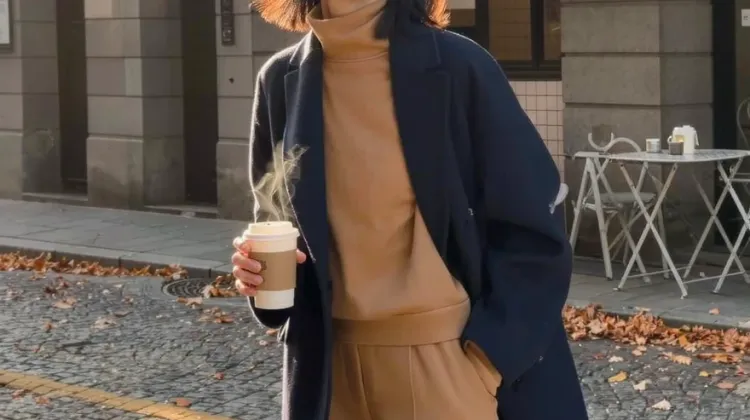
The stain spread immediately—cotton poplin doesn't forgive liquid—while I stood there sweating slightly, watching a group of Seoul locals glide past in perfectly pressed navy trousers and unstructured camel coats that somehow looked both expensive and completely unconscious.
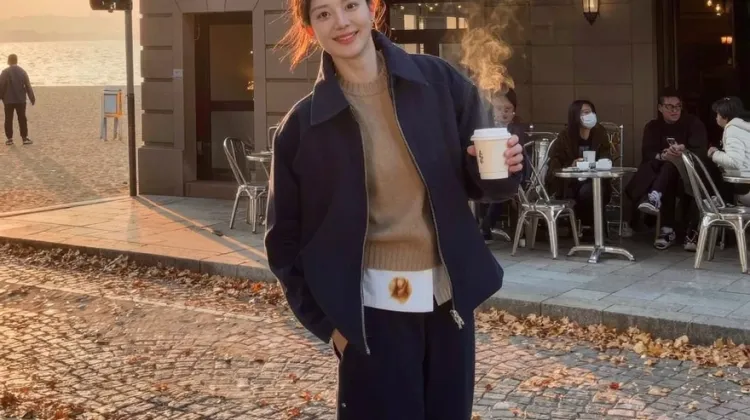
My dark berry wine nails—chipped from clutching the uneven railing—looked suddenly too intentional against the mess blooming on my chest.
You think you understand how to dress for Seoul because you've seen the K-dramas or the airport fashion photos. But standing outside a Myeongdong clothing store with music blasting onto the sidewalk at nearly seven, I realized the gap between tourist assumptions and reality is wider than the Han River divides the city.
The visitors wear hiking boots and utility vests as if preparing for an expedition to the DMZ. The actual twenty-somethings shopping for vinyl records wear elevated casual pieces that look put-together enough for a Gangnam gallery opening but comfortable enough to survive twenty thousand daily steps.
The Navy and Camel Formula I Tested
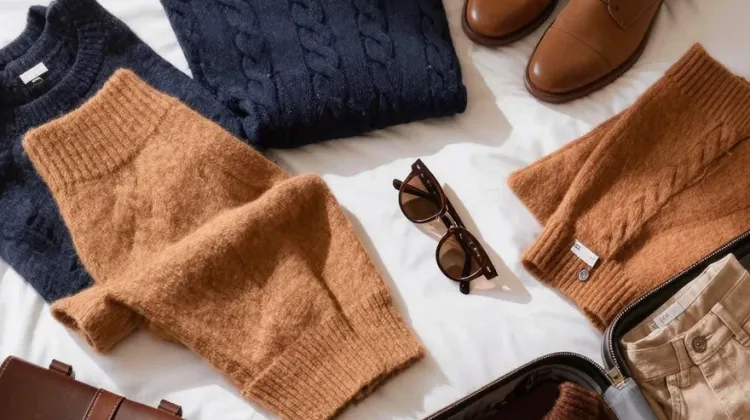
I spent four days testing whether two colors could actually anchor an entire trip. Uniqlo's extra-fine merino turtleneck in a deep charcoal-navy became my base layer—four consecutive wears without washing, zero odor retention, which matters when you're taking the color-coded metro from Anguk to Hongdae and transferring twice.
Side note: the Seoul subway has English signage that actually corresponds to reality, unlike the cryptic maps I've wrestled with in other cities.
I paired the merino with wide-leg trousers from & Other Stories in a camel cotton-nylon blend that contained exactly the right percentage of synthetic fiber to prevent sagging at the knees by hour six of walking.
The fabric had enough stretch for squatting to photograph temple cats but enough structure to look intentional when I ducked into a convenience store at two in the morning.
The reforming overpacker in me had originally packed three dresses "just in case." They stayed folded in the bottom of my bag. Instead, I relied on a lightweight linen blazer—breathable enough for when the afternoon heat hit twenty degrees, substantial enough for when it dropped to twelve at seven—layered over the wool base. The right fabric matters more than the right brand.
What Seoul Locals Actually Wear
The elevated athleisure look isn't about wearing gym clothes to dinner. It's about technical fabrics cut like tailoring. I saw women in Myeongdong wearing joggers that looked like wool flannel but moved like performance wear, paired with sneakers that had never seen a actual running track.
The men wore oversized camel coats over crewnecks in exactly the same navy shade as mine, creating a uniform that felt both anonymous and intentional.
The tourists stood out not because they were underdressed but because they were overdressed for the wrong context. Heels on the uneven stones of Bukchon. Silk blouses that wrinkled during the twenty-minute walk from the metro exit.
I thought about my previous trips, like the Mykonos Fall Style experiment where I'd packed for transition weather differently, but Seoul required something more specific: the ability to look polished while essentially doing cardio.
The coffee stain incident taught me something else. When I finally gave up and bought a replacement shirt from a boutique near Euljiro, the clerk didn't blink at my disheveled state. She simply handed me a black cotton tee folded with geometric precision and said, "For walking." It cost ₩45,000, roughly €32, and had a matte texture that resisted both sweat and the gochujang sauce I'd later drip on it from the tteokbokki cart near the cathedral.
Train Hopping Minimalism in Practice
My bag weighed seven kilograms. That was the hard limit enforced by the sheer logistics of Seoul's verticality. The metro system operates on a color-coded logic—the deep purple of Line 5, the bright green of Line 2—that becomes intuitive after two rides.
I moved from Itaewon to Dongdaemun without checking a map, my duffel stowed between my knees during rush hour, small enough not to inconvenience the commuters in puffer vests who smelled faintly of the cedar incense that seems to permeate the city in autumn.
This is where the Crete Spring Packing strategy diverged from my Seoul approach. In Greece, I'd needed linen that could transition from beach to taverna. Here, I needed layers that could transition from overheated subway cars to wind-exposed palace courtyards within the same hour.
At two AM, when the temperature had dropped to ten degrees and my feet were throbbing against the Everlane Day Glove flats that I'd foolishly believed could handle cobblestones, I found salvation at CU. The convenience stores in Seoul aren't sad affairs with wilting sandwiches.
GS25 and CU serve full hot meals—ramyeon with actual vegetables, triangular kimbap heated in the microwave, hot barley tea in paper cups. I sat on a plastic stool watching taxi drivers smoke outside, wearing my navy merino layer and camel pants, feeling surprisingly put-together for someone eating instant noodles at an ungodly hour.
What I Actually Wore for Ten Days
Here's the complete list. Nothing else made it out of the bag:
- Uniqlo extra-fine merino turtleneck (navy) — odor resistant, survived four days of heavy sweating
- & Other Stories cotton-nylon trousers (camel) — stretch recovery meant no knee bags after squatting for photos
- COS white cotton poplin shirt — ruined by coffee, replaced by black tee
- Linen blazer — breathability prevented overheating in twenty-degree afternoons
- Everlane Day Glove flats — inadequate for cobblestones, would swap for chunky sneakers next time
Layers are non-negotiable when the temperature swings ten degrees before noon.
The beach-to-town concept doesn't apply literally in autumn Seoul. But that liminal feeling—when you need to look presentable at a wine bar at seven but you've been walking since ten and it's now nearly seven and you smell like the subway—requires the same wardrobe philosophy. I watched locals manage this effortlessly while I blotted at my shirt stains.
The Ginkgo Gold Standard
The weather stayed between ten and twenty degrees Celsius for my entire trip. Perfect walking weather, theoretically. But the humidity in the mornings meant merino wool was essential—cotton would have stayed damp against my skin.
By afternoon, when the sun hit the gold ginkgo leaves on the streets near Gyeongbokgung Palace, I'd shed the blazer and rolled the turtleneck sleeves, grateful for the thermoregulating properties of natural fibers.
I ate tteokbokki from a street cart near Myeongdong Cathedral for exactly ₩3,000—roughly €2—and the rice cakes were chewy and aggressively spiced, the sauce staining my fingers despite the cardboard boat. Side note: the smell of gochujang and roasting chestnuts from nearby vendors became the defining scent of the trip, more memorable than any department store perfume.
The white shirt never recovered. I left it in the trash can of my Airbnb in Hongdae, folded neatly because old habits die hard. The navy and camel pieces came home with me, already packed for the next trip, wherever that might be. Probably somewhere with flatter streets.
What fabrics work best for walking all day in Seoul during autumn?
Merino wool is essential for Seoul's ten-to-twenty-degree temperature swings because it resists odor even after four consecutive days of heavy walking. I wore Uniqlo's extra-fine merino turtleneck as a base layer, while cotton-nylon blend trousers from & Other Stories provided the stretch needed for Bukchon Hanok Village's cobblestones without sagging at the knees.
How much should I budget for street food in Myeongdong?
A filling portion of tteokbokki from a street cart near Myeongdong Cathedral costs ₩3,000, which converts to roughly €2. For late-night meals, CU and GS25 convenience stores serve full hot ramyeon and kimbap starting at similar prices, available twenty-four hours including at two AM.
What's the best way to navigate Seoul's metro system?
The Seoul metro uses a color-coded line system with accurate English signage at every station. I transferred between the purple Line 5 and green Line 2 multiple times without getting lost, and the trains accommodate small bags easily if you keep them stowed between your knees during rush hour.
How can I avoid looking like a tourist in Seoul?
Skip the hiking gear and opt for elevated athleisure in neutral palettes like navy and camel. Locals wear technical fabrics cut like tailoring—think structured joggers and oversized coats—while tourists tend toward neon outdoor wear. Avoid heels entirely; the cobblestones in Bukchon Hanok Village will destroy them within an hour.
What should a reformed overpacker bring to Seoul?
Limit yourself to a seven-kilogram bag and pack only three pieces: a merino wool base layer for odor control, cotton-nylon trousers for stretch, and a linen blazer for temperature regulation between overheated subway cars and outdoor palace courtyards. Leave the "just in case" dresses at home; you won't need them.