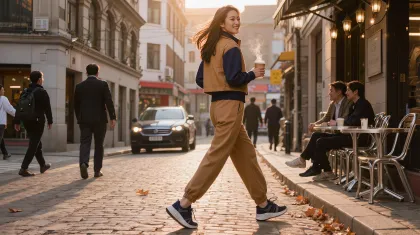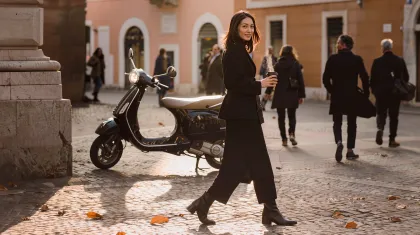
You've heard about the cobblestones. Everyone mentions them—the ankle-breaking, suitcase-destroying Sanpietrini that cover Rome like a fever dream of uneven geometry. They'll ruin your spinner suitcase and your ankle stability, but they'll also give you calves like a cyclist if you surrender to the walking.
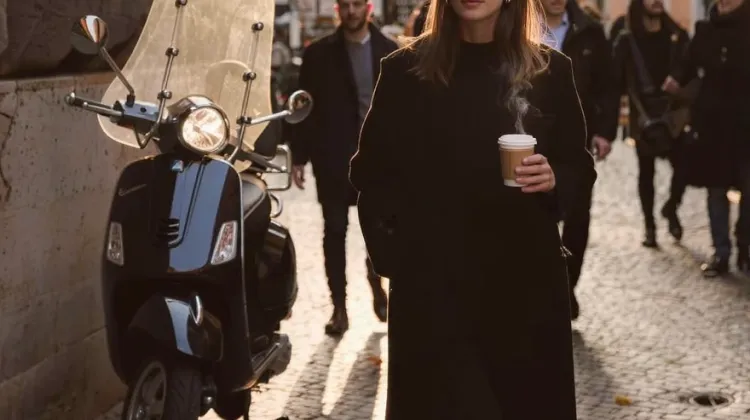
But nobody warns you about the hair. Okay so, : you've landed at Fiumicino around nine, mastered the Leonardo Express, checked into your hotel near Campo de' Fiori feeling smug and minimalist and impossibly put-together.
Then the mist hits at two. Not dramatic thunder. The sneaky, horizontal drizzle that turns your sleek bun into something resembling a worn-out scrub brush. I stood under a yellow awning near a cheese shop, watching Roman women in fitted trench coats glide past me untouched by frizz, and I questioned every life choice that led me to skip the anti-humidity serum.
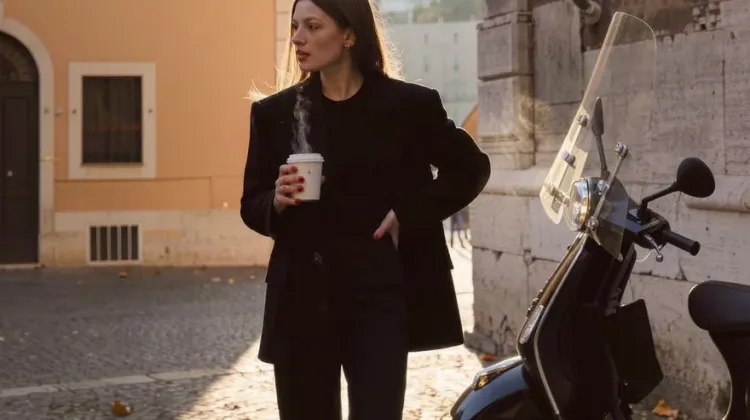
Was I overthinking the head-to-toe black thing? Probably. But standing in front of the mirror that morning at six-thirty, watching the rain streak the hotel window, I knew the monochrome palette wasn't about looking mysterious.
It was about hiding coffee spills and repeating outfits without announcing it to the entire piazza. Black doesn't show salt stains from sweat. It doesn't show where you leaned against a wet wall. It just keeps going.
The Only Shoes That Matter
The & Other Stories leather Chelsea boots cost €149 and I treated them like an investment. The leather is stiff out of the box—unforgiving, really—but by day three it had molded to my heels like it was custom-made.
Could I have managed this in the loafers I'd packed? No. The gap between a stylish shoe and a cobblestone-ready shoe is roughly the width of the Tiber, and I learned that somewhere near the Spanish Steps when I saw a woman in stilettos actually cry.
She was leaning against a Vespa, one shoe off, examining a blister the size of a euro coin.
Rome's stones are brutal. They're convex, centuries-worn, and spaced just far enough apart to catch a heel. I averaged twenty thousand steps daily—roughly fourteen kilometers—and my feet survived because of the block heel.
Under two inches. Anything higher is masochism. The leather soles absorbed the shock of ten thousand impacts. By noon on the second day, they had formed to my arch so precisely that I forgot I was breaking them in.
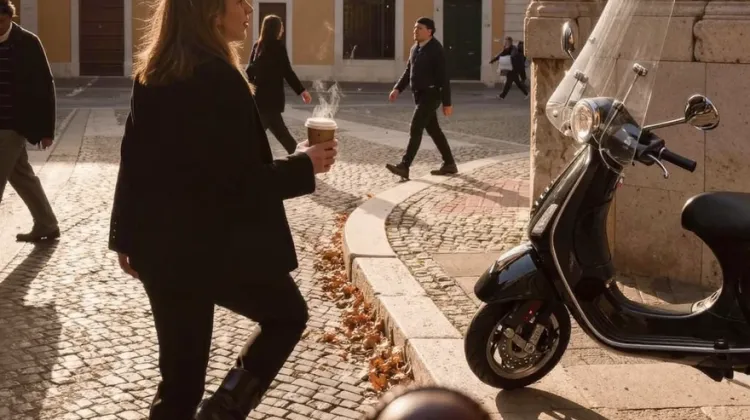
By four-thirty each afternoon, when the sun slipped behind the basilica domes, the temperature dropped from sixteen degrees to twelve. The boots kept my ankles warm. The sound they made on wet stone—a dull, satisfying thud—became the rhythm of the trip. I could hear myself coming from blocks away, a steady percussion against the city's white noise.
Why Merino Wool Is Non-Negotiable
I lived in the Uniqlo extra fine merino turtleneck. €39.90. Black, naturally. Merino doesn't hold odor; I wore it four days straight without smelling like a hostel, which matters when you're sweating through temperature swings in October.
The fabric feels like cashmere but behaves like armor. When that unexpected rain hit—the kind that smells like wet travertine and exhaust and ancient dust—the wool didn't cling or chill. It released the moisture while I ducked under awnings near the Pantheon, waiting for the sky to clear around ten past three.
The texture against my skin was soft enough to wear without a base layer, which saved packing space. Did I wash it? No. Did it need it? Absolutely not. That's the magic of the fiber—the lanolin in the wool creates natural antimicrobial properties.
I hung it over the hotel shower rod each night, and by morning it smelled like nothing, ready for another fourteen kilometers.
The Trousers That Moved With Me
COS wide-leg trousers. €79. Ninety-eight percent cotton, two percent elastane. That two percent is the difference between looking polished and looking like you're wearing pajamas. I needed stretch for lunging across Roman roads without announcing to Piazza Navona that I was wearing activewear.
The waistband sat high enough to cover the merino base layer completely, creating a smooth line that photographed well even when I felt like a damp rag.
They hid everything. The pockets were deep enough for my phone and a map and the €1.10 coins I kept for espresso. And when I sat on the Villa d'Este steps, the fabric didn't pull or gape across the thigh. It just settled, like heavy water.
Comfort is the only neutral
Rome in October Has Opinions
The forecast said sixteen degrees and sunny. It didn't mention the humidity that frizzes straight hair into a halo, or the wind that cuts through wool coats near the river. Packing for two climates meant layering for Mediterranean afternoons and Northern European mornings.
I reached for my espresso at the bar—€1.10, standing room only at a marble counter sticky with sugar—and caught a flash of cherry red against the black sleeve. My nails. Still perfect from Thursday morning's polish, looking almost too deliberate for someone about to chase trains.
But they anchored me. When you're wearing nothing but black, that small slash of color becomes a talisman. The barista noticed. He nodded, as if to say 'bella,' and I felt less like a soggy tourist and more like a woman who had her life together, even though my hair had expanded to twice its normal volume.
The €7 Decision
Okay so, the plan was just Rome. But by Thursday I needed green. The train to Tivoli costs €7 from Tiburtina station. Forty-five minutes later you're in a different climate entirely—misty Renaissance gardens where the temperature drops five degrees under cypress canopies and the air tastes like minerals and moss.
Villa d'Este. Fountains that sound like white noise machines. Gritty sand from the garden paths under my boots—different from the city grit, more like crushed bone and limestone. I didn't plan it. I just saw the sign at the station and went, because the merino was dry and the boots were broken in and I had nothing to lose but time.
It was the best choice I made.
What Actually Went Into the Bag
- Uniqlo extra fine merino turtleneck (black, odor-resistant)
- COS cotton-elastane trousers (black, 2% stretch)
- & Other Stories leather Chelsea boots (block heel, under 2 inches)
- One oversized blazer (structured wool—mistake)
- Silk scarf (multipurpose: neck, hair, bag handle)
- Two pairs merino socks (should have brought three)
That one outfit hiking aperitivo in Cinque Terre taught me the value of a uniform. This trip confirmed it. You don't need options. You need armor that moves.
Five things that matter in Bali? Different muscle groups. But the philosophy holds.
Next Time, I'm Leaving These Behind
The structured blazer. Beautiful, architectural, completely wrong for twenty thousand steps. It looked sharp in photos—the shoulder pads gave me posture, the wool was substantial—but by day two I was carrying it more than wearing it. Next trip, I'm packing an unstructured alpaca wrap instead—something that moves when I move, that I can ball up in a bag without weeping.
And I'd add one more pair of socks. Not because I needed them, but because dry feet on day three feel like luxury. The boots will still come. The merino will still come. But I'll check the humidity forecast first, and I'll pack the anti-frizz serum. Some battles aren't worth fighting, but hair this expensive to maintain deserves protection.
What shoes work best for Rome's cobblestones?
Leather Chelsea boots with a block heel under two inches handle the Sanpietrini better than any loafer. The leather molds to your feet by day three, absorbing the shock of daily walking across convex, centuries-worn stones.
How do you pack for unpredictable fall weather in Italy?
Layer Uniqlo merino wool base layers with cotton-elastane trousers to handle temperature swings from warm afternoons to chilly evenings. The merino regulates heat and resists odor, while the stretch fabric moves with you through sudden rain.
What fabric is best for multi-day travel without washing?
Merino wool is the only fabric I've found that doesn't hold smell after four days of heavy walking. The Uniqlo turtleneck released moisture during unexpected drizzle without clinging or chilling against my skin.
Is an all-black outfit too boring for Rome?
Head-to-toe black acts as camouflage for coffee spills and repeated wear, plus it provides a backdrop for small color details like cherry nail polish. The monochrome palette looks intentional rather than repetitive when every piece is high-quality fabric.
What's the best spontaneous day trip from Rome?
The train to Tivoli takes forty-five minutes from Tiburtina station and delivers you to misty Renaissance gardens with cooler temperatures under cypress canopies. Villa d'Este offers a climate shift from the city with gravel paths that test your boots differently than Roman streets.