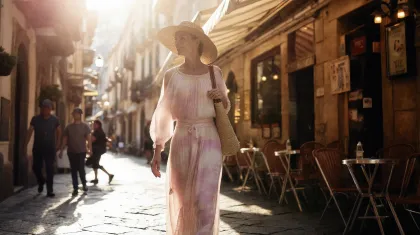
The linen was already creased across my lap before the ferry had even pushed off from Salerno, and the horn was still echoing against the concrete dock. I was sweating through the €8 ticket in my pocket, watching the water below turn that impossible turquoise that makes you blink—it looks photoshopped, but that's just July on the coast.
Thirty-four degrees and the kind of blue that reflects up onto the hull of the boat and makes everything look like a filtered dream. My COS shirt had looked crisp at Gatwick at six a.m., but eight hours in transit had turned it into a topographical map of wrinkles.
I kept smoothing the collar while my partner dug through our single checked bag for sunscreen, his elbow bumping my ribs as he searched.
One bag between two people sounds romantic in theory, like you're living inside a scented candle commercial, but in practice it means your silk slip dress is balled up next to his hiking boots and everything starts to smell like SPF 50 and compromise.
The crossing takes thirty-five minutes, just enough time for the heat to bake the cabin and for me to regret every fabric choice I'd made in the rush of packing the night before. I could feel the sweat pooling at the base of my spine, that specific sticky sensation of linen that isn't breathable enough anymore.
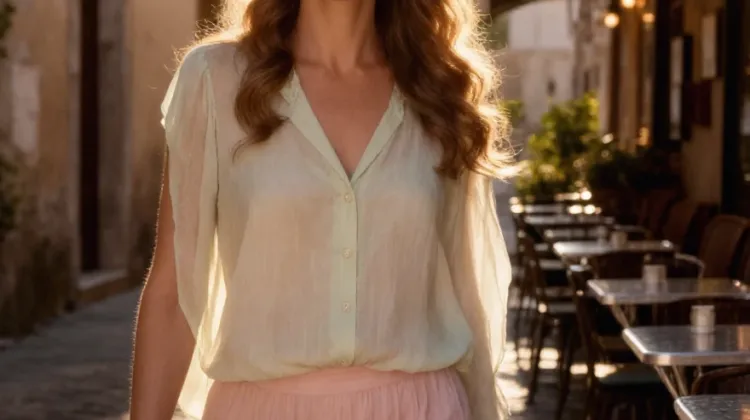
Not gonna lie, sharing luggage requires the strategic precision of a military operation where the enemy is clutter and the weapon is merino wool. I brought three Uniqlo merino tees in oatmeal, slate, and white that I rotated for four days straight without smelling like a hostel common room.
Merino doesn't just resist odor; it drapes in that specific way that looks intentional rather than abandoned, unlike the linen that betrayed me on arrival. The fabric has this slight fuzz to it that catches the light softly.
One Checked Bag and the Fabric Math
You can't bring backups when you're splitting a suitcase, so every piece has to earn its place twice. I chose a cotton-viscose blend for my wide-leg trousers because they have enough stretch to survive the two-hundred-step walk from Atrani up to Ravello without cutting off circulation.
They still look structured enough for dinner at nine, which matters when you're not going back to change. The color palette stayed soft and romantic without being fussy—peach, chalky blue, and the oatmeal of the tees.
Everything mixed without matching, which is the only way to survive half a wardrobe.
When you share a bag, versatility isn't a bonus—it's the entire point.
I learned the hard way that pure linen and shared baggage are natural enemies. That COS shirt breathes beautifully in thirty-plus heat, but it wrinkles if you look at it wrong. Next time, I'd go with the Mango linen-cotton blend I saw in a Salerno shop window—more forgiving, slightly heavier weave, less likely to look like you've been sleeping in it.
The fabric you choose determines whether you look like you belong or like you're trying too hard on your first vacation. I kept thinking about how those winter linen layers from Nice had held their shape better, but summer weight is always a gamble.
The Amalfi Coast Bus-to-Beach Gauntlet
This place is not designed for your cute outfits. The buses leave at eight-thirty in the morning packed tight as canned fish, switchbacking up cliffs so steep you can smell the burning clutch through the open windows.
The cicadas are screaming by the time you reach Positano, and the main beach has roughly enough sand for three people and a determined seagull. You end up walking down to Fornillo Beach on cobblestones that have been polished smooth by centuries of feet, stones that will destroy anything but leather.
I wore slides from & Other Stories that have survived Rome and Lisbon, and even they looked worried by the gradient.
The aesthetic here leans soft without trying, grounded in pastels that catch the golden hour glow around six. It's crowded everywhere—book everything, I'm serious—and the heat sits on your shoulders like a heavy shawl.
I learned quickly that moving from transport to beach to bar isn't a change of clothes here; it's a state of being. You need an outfit that can handle the ferry splash and still look intentional under string lights.
I wore a pale blue slip dress over the merino tee for the boat ride to Da Adolfo, which sounds like overkill until you remember the restaurant is boat-access only.
You have to wade through shin-deep water to get there, holding your bag above your head while the wooden boat rocks against the current. The dress dried in eight minutes flat in the heat, the merino wicked away the splash, and I didn't look shipwrecked when they handed me the ceramic plate.
The smell of the boat engine—diesel and salt—clung to my hair, but the outfit looked fresh enough that the host didn't hesitate before seating us.
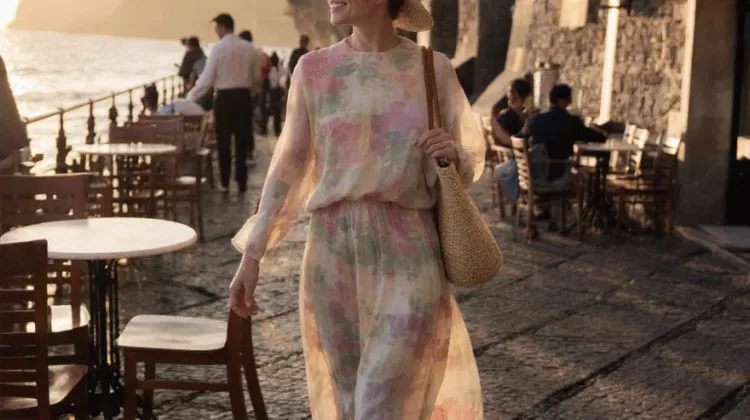
The smell of the restaurant hit before we docked—grilled mozzarella and lemon leaves and that specific salt-air mix that makes you hungry even if you ate breakfast two hours ago. We'd booked three weeks ahead because that's the minimum lead time in July, and even then we were squeezed onto a shared table with a family from Milan who were arguing about soccer in rapid Italian.
I checked my reflection in the back of a spoon—my nails were clear gloss natural, just shine, no color, looking clean against the ceramic—and adjusted the strap of my dress. It felt like the right amount of effort for a place where you arrive by wooden boat and eat off plates that have seen thirty summers.
On the way back through Amalfi town, I bought a sfogliatella for €3 from a bakery on the main drag where the ricotta was still warm and the pastry shattered like sugar glass in my hand.
The powder got on my chin and I didn't care, licking my fingers clean while waiting for the bus. The heat was peaking at thirty-four degrees, and the shade of the shop awnings was the only mercy.
When the Day Trip Becomes Dinner
Not gonna lie, the real test came when we decided around four o'clock that we weren't returning to Ravello yet. We were sitting on rocks at the beach, salt drying on my ankles, when my partner suggested staying for dinner in Praiano.
Spontaneity is expensive on this coast—taxis cost a small fortune, and the last ferry leaves at seven sharp—but we were committed. The temperature had dropped from thirty-four to twenty-eight, and the breeze coming off the water carried a chill that didn't exist at noon.
This is where layers become essential.
I had a thin merino cardigan from Everlane tied around my waist all day—light enough that I forgot it was there, but substantial enough to save me when the sun dipped behind the cliffs.
We walked up the road to the village, passing lemon groves that smelled like furniture polish and honey, the scent sticking to my clothes. The walk took about forty minutes, long enough for the sweat to dry and for me to feel human again.
We ended up at a terrace built into the cliffside, sitting on ceramic tiles that still held the day's heat through my cotton trousers.
The texture of those tiles—rough, warm, slightly dusty against my palms—mixed with the cool glass of my wine is one of those sensory bookmarks I keep from trips. I kept the slip dress on, added the cardigan, and swapped the leather slides for slightly heeled sandals I'd crammed into the day bag that morning on a whim.
The outfit worked because everything was breathable enough to handle the sweat of the afternoon, but structured enough to look deliberate under the string lights. The light turned gold, then pink, then that specific deep blue that happens quickly in the mountains.
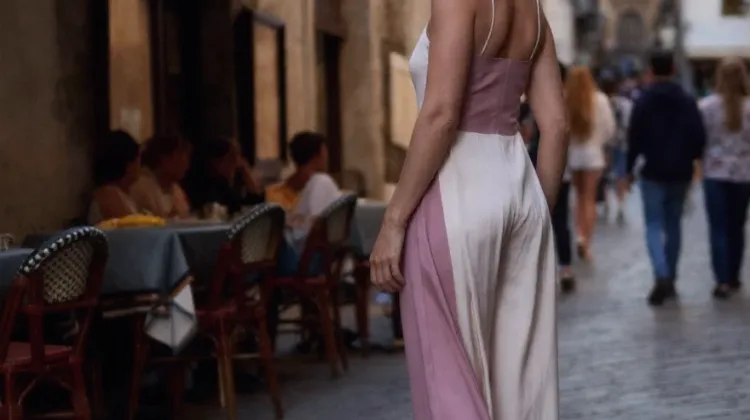
The Servizio Stare
You need to know this before you go: they will stare if you leave twenty percent. We finished dinner—grilled fish that tasted like the sea, local wine that tasted like minerals and sunlight—and I reached for my wallet to add a tip.
My partner stopped me with a hand on my arm. Servizio is included here, built into the bill, and leaving extra cash on the table isn't just unnecessary; it's vaguely confusing. I caught the waiter's eye as I hesitated with the notes in my hand, and he looked at me like I'd suggested wearing stilettos on the Path of the Gods.
We paid the exact amount, €140 for two, and left quietly.
The ferry back to Salerno was less crowded at nine-thirty, and I wrapped the cardigan tighter as the wind picked up, watching the lights of Positano climb the cliffside in soft yellow spots. My hands looked clean in the moonlight, which is rare for me—usually I have chipped polish or ink stains—but the gloss had held up better than my hair, which was a salt-crusted disaster.
Compared to that Paris spring manicure I wore in March, this felt like honesty.
What's the best fabric for Amalfi Coast summer heat?
Merino wool resists odor during long days, while a linen-cotton blend wrinkles less than pure linen. The lightweight base layer I wore for four days straight handled the ferry sweat better than that crumpled shirt I started with.
How do you pack for two people in one checked bag?
Stick to a cohesive color story where everything mixes, prioritize natural fibers that can be reworn, and avoid pieces requiring separate shoes. I shared one suitcase using breathable layers and slip dresses that worked for boat arrivals and dinner terraces.
What should I wear to a boat-access beach restaurant?
Something that dries quickly after wading through water—my pale blue dress handled the splash and looked appropriate for grilled seafood under lemon trees. Book well in advance for July and remember service is included in the bill.
Do you need layers for summer on the Amalfi Coast?
Absolutely—afternoon heat drops significantly by evening, and boat rides get windy; I tied a thin cardigan around my waist daily. The temperature swing between midday peaks and sunset requires adaptable pieces that handle both sweat and breeze.
How much should I budget for transport and pastries?
Ferries from Salerno cost under ten euros for a ride just over half an hour, while warm ricotta pastries from local bakeries run a few euros each. Taxis are expensive so plan to walk or use public boats, and remember restaurants include service—don't leave extra cash.