I packed for beach weather. Real talk: Crete in April is not beach weather.
I realized this while shivering at the KTEL bus station outside Heraklion airport around ten in the morning, watching the driver toss luggage into the hold. My linen dress was a mistake. The air smelled like diesel and impending rain, and the thermometer hadn't even crawled to sixteen degrees yet.
My Uniqlo merino turtleneck was buried under my pack, and I was too proud to dig it out while the queue formed.
That €15 ticket to Chania bought me 2.5 hours of coastal highway and regret. But it taught me the first rule of spring island hopping: the gap between airport tarmac and mountain elevation is wider than any weather app shows.
The 10kg Line in the Sand
Budget airlines don't care about your aesthetic. They care about dead weight. My bag clocked in at 9.8 kilos, and every item had to justify its grams against two competing scenarios.
Morning meant the gorges—limestone scree, wild thyme and oregano scent so thick it clung to my sleeves, temperatures that felt like November in the shade. Evening meant Thalassino Ageri, that taverna hanging over Chania's harbor where the octopus grills over charcoal and the wine is chilled precisely right.
You cannot haul hiking boots to dinner without looking like you've given up on life. And you cannot wear leather sandals on sharp limestone without bleeding. Real talk: compromise is inevitable.
What I Actually Wore in Crete
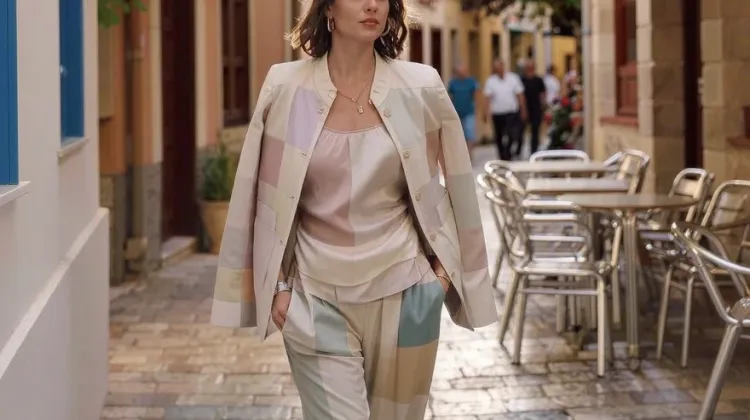
I chose fabric over volume. One COS oversized shirt in a cotton-linen blend that dried in twenty minutes after I splashed through snowmelt at Agia Roumeli. One pair of & Other Stories wide-leg trousers in lyocell that didn't crease when I sat on the bus for nearly three hours straight.
The cotton-linen mix had just enough synthetic recovery to keep its shape after I sweated through uphill switchbacks, but breathed when the afternoon hit twenty-three degrees and the wildflowers—purple chamomile and yellow broom—lined the trail edges.
My base layer was merino wool, which sounds hot but isn't. It actively repels odor, so I didn't smell like a hostel laundry room after four days of wear.
The palette was soft stone and washed sage. My nails were that Neutral Beige Matte I'd painted at the airport, now chipped but somehow complementing the dust on my ankles.
The Physics of Temperature Swings
Sixteen degrees at dawn requires insulation. Twenty-three by mid-afternoon requires ventilation. Shade feels like winter; sun feels like August.
Linen is obvious for heat, but pure linen bags out and stays damp against your skin. The cotton blend from COS created micro-air pockets that trapped warmth when the wind picked up near the gorge exit, then released it when the path opened to full exposure.
Merino regulates body temperature through some wool magic I don't understand—I just know I stopped shivering at the trailhead without overheating by noon.
The boat trip to Balos cost €35 and confirmed what I already knew: good fabric moves with you. Bad fabric fights.
From Limestone to Lantern Light
The transition had to happen without a hotel stop. I left Chania at just before seven, hiked until around two, then caught the return bus with salt on my skin and dust in my hair.
The shirt came off. The merino stayed. I tied a silk scarf—Mango, from last season—around my neck to hide the sports bra straps, swapped my trail runners for leather sandals, and suddenly looked like someone who belonged at a waterfront table drinking raki.
Cretans pour raki after every meal. It's not optional hospitality; it's infrastructure. Refusing is almost offensive, like insulting someone's grandmother. I sat at Thalassino Ageri with my feet—tan lines already forming across the tops—dangling toward the water, accepting thimble glasses of clear liquid while the sun dropped below the horizon.
The One-Bag Math
Here's exactly what fit:
- One merino base layer (Uniqlo heattech ultra warm)
- One cotton-linen shirt (COS, men's section, size M)
- One lyocell trouser (& Other Stories, wide leg)
- One silk scarf (Mango, for neckline transformation)
- One pair of leather sandals (broken in, not new)
- One pair of trail runners (worn on the plane to save weight)
Six items. Infinite combinations. The key was choosing pieces that handled the temperature spread without requiring additional layers. Everything coordinated because I stuck to soft, muted tones that don't compete with white walls or blue water.
Invest in fabric that works harder than you do.
I made mistakes. I packed a denim jacket I never touched. I forgot that Cretan gorges have freezing creek crossings in April, so my feet got wet. But the clothes worked. They shifted from active to passive without looking like costume changes.
The bus back to Heraklion left at nearly seven. I wore the same trousers I'd hiked in, hair still damp from a quick swim, using the same island minimalism strategy I tested in Mykonos fall packing. For the nail color that survived three days of rock scrambling, see my spring nail palette notes.
What fabric handles Crete's spring temperature swings best?
Merino wool for temperature regulation and cotton-linen blends for quick drying. The merino base layer I wore through the gorges wicked sweat during uphill climbs and provided warmth in shaded valleys without retaining odor.
How do I transition from hiking to dinner without changing clothes?
Use a silk scarf to cover sports bra straps and switch from trail runners to leather sandals. The lyocell trousers I packed looked polished enough for waterfront dining but stretched enough for limestone scrambles.
Is it necessary to drink raki when dining in Crete?
Yes, refusing is considered offensive. Cretans pour the clear spirit after every meal as a gesture of hospitality, and declining implies disrespect to your host's generosity.
What should I avoid packing for Crete in spring?
Skip the denim jacket and pure linen dresses. Denim is too heavy for the temperature range, and pure linen bags out when damp. The cotton-linen blend I tested performed better than my 100% linen pieces.
How do I deal with wet feet while gorge hiking?
Pack quick-dry socks and embrace the creek crossings. My base layers kept me warm even when my shoes got soaked, drying faster than cotton would have.