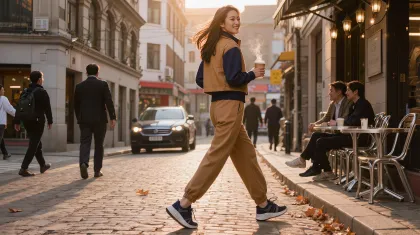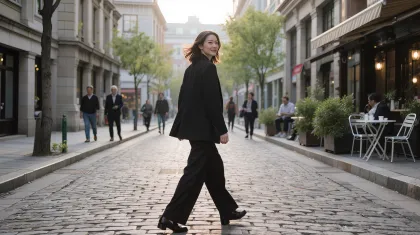
Mistake number one: I packed for a costume party. I thought Harajuku meant dressing like the street style blogs — layered tulle, neon platforms, accessories that require their own train seat. I spent three evenings in London curating a capsule wardrobe that looked like a carnival.
The sequin skirt took up half my carry-on. I brought platforms that added four inches and zero stability. What did I think Harajuku was, exactly? A costume contest?
The sequin skirt never left the hotel. 
Turns out, blending in with Harajuku street style has nothing to do with standing out. Real talk: the best dressed people I saw on Cat Street were wearing navy COS trousers and Uniqlo merino crew necks.
Maybe one vintage scarf. The teenagers in full Decora style exist, absolutely, but they're the exception moving through a sea of beige and black and oatmeal. I was sweating through a polyester blouse trying to look interesting while everyone else was just — cool.
Effortless. Like they'd thrown on whatever was clean and somehow achieved altitude.
I was dealing with two weeks in a carry-on. That constraint shapes every choice you make. You can't bring the sequin skirt because you need the merino turtleneck that doesn't smell after four wears. You need the black linen dress that works with sandals for lunch or boots for dinner.
You need fabrics that forgive, not perform. Coastal Bohemian sounds like a Pinterest board, but in practice it means natural fibers that breathe when it's 20°C in the afternoon sun and layer when it drops to 12°C in the shade.
The only rule: natural fibers only, and nothing that needs an iron.
My anchor was all black monochrome. Not goth, not severe. Just easy. A pair of COS wide-leg trousers in cotton-poplin that cost €79 and have survived three continents without pilling. An & Other Stories linen shirt in ivory that — well, we'll get to the linen situation.
And the Uniqlo extra-fine merino crew neck in charcoal that I wore for five days straight, including the red-eye flight. Merino doesn't hold odor. It breathes when you're walking from Harajuku to Shibuya and layers under a blazer when the evening wind picks up.
That's the genius of it. You look like you're wearing different outfits because the silhouette changes, but you're just rotating the same three pieces.
Harajuku Street Style Is Just Good Basics
The realization hit me around eleven in the morning, just past the crepe stands on Takeshita Street. The air smelled like sugar and waffle cones — that warm, burnt-vanilla scent that follows you for blocks. Cherry blossom season means the crowds triple, and I was shoulder to shoulder with tourists holding selfie sticks and locals trying to cut through to the station.
Everyone was dressed in uniform excellent taste. Vintage Levi's. White cotton tees. Canvas totes. Navy blazers over cashmere. The platforms I brought — four inches of cork and regret — stayed in the bag. Everyone was wearing loafers or white sneakers or combat boots with actual tread.
The kind of shoes that say "I have a train to catch" not "I have a photo shoot."
I'd worried about being too plain. About not having enough flair. But Harajuku isn't asking you to perform. It's asking you to edit.
I escaped the crush by ducking onto Cat Street. It's about a fifteen minute walk from Harajuku proper to Shibuya if you follow the backstreets, past the vintage stores with their incense smoke drifting onto the pavement, past the boutiques where the sales assistants wear better outfits than you'll ever manage.
The cobblestones are real. They will destroy inappropriate footwear. I stopped at Glaciel for an ice cream that looked like an architectural model — all clean lines and seasonal sakura flavor. The texture was silky, almost elastic, nothing like the dense gelato I'm used to in Italy.
I ate it on a bench watching a guy in beige wide-legs and a vintage band tee navigate the crowd with the ease of someone who never second-guesses his closet.
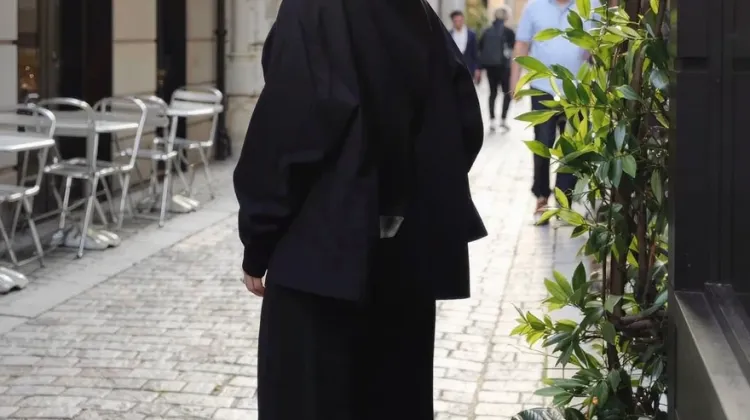
The temperature swung wildly that week. Morning shade at Meiji Shrine required a jacket. Afternoon sun on Cat Street had me tying my sweater around my waist. I kept reaching for my clear gloss natural manicure — chipped on the index finger from wrestling the suitcase zipper that morning — and tucking hair behind my ears.
Small gestures. Trying to look like I belonged while my linen betrayed me.
Real Talk: You Can't Iron Humidity
I made the mistake of ironing. Real talk: I used the terrible wall-mounted hotel iron with the sticky handle and the brown stain on the plate. I stood there in the towel, pressing the & Other Stories linen shirt until it looked like something from a Celine campaign. Crisp. Expensive. Intentional.
I looked crisp for exactly forty minutes.
By the time I walked through Takeshita Street's sensory overload — the J-pop blaring from every storefront, the neon signs reflecting off last night's puddles, the sugar scent thick enough to taste — my ivory linen had transformed into origami.
Wrinkled linen after a flight is expected. Wrinkled linen after simply existing in Tokyo spring humidity is a personal attack. The fabric was breathing, yes. It was keeping me cool in the 20°C heat. But it was also mapping every place I'd sat, every bag strap I'd carried, every nervous hand-wringing moment.
And then came the hotel checkout rush. The lobby was chaos at 9:45 AM. Suitcases stacked like Tetris blocks, people arguing about late checkout in three languages, the coffee machine making that death-rattle grinding sound. I had to be out by ten, but my train to Kyoto wasn't until two.
I carried my bag to the restroom stall — the handicap one because it had space to pivot — and performed the day-to-night transition that travel requires.
The mirror in the hotel bathroom was unflattering fluorescent. It showed every pore and every wrinkle in the linen. I watched myself change from "tourist who tried too hard" to "local who has a reservation" in the space of three minutes.
The blazer — black, technical fabric, similar to The One Blazer That Works for Mayfair Afternoon Tea but lighter — changed the silhouette entirely. Merino tee off. Merino tee back on — the charcoal one, still fresh. Linen shirt abandoned for the cotton-poplin blazer I'd packed because it weighs nothing and holds its structure.
The COS trousers stayed; black doesn't show coffee drips. I changed shoes from the walking sandals to the ankle boots, using the toilet paper dispenser to balance.
Linen is beautiful until you have to sit down. Then it's topography.
I didn't bother ironing again. Ironing on vacation is a waste of time and hotel hangers and your own patience. You just embrace the creases. The Japanese aesthetic has a word for this — wabi-sabi — the beauty of imperfection. But I just call it realistic. The shirt was wrinkled. I was fed. The shrine was waiting.
From Takeshita To Cedar
Meiji Shrine is fifty meters from Takeshita Street. That's not a metaphor. You walk past the last crepe stand, past the donation box where I dropped ¥200 — technically the entry is free, but you should pay — and suddenly the frequency changes. The quiet is eerie. Immediate. Like walking through a door into a vacuum.
The transition happens suddenly. One step you're in the smell of burnt sugar and the sound of shop clerks calling out discounts. The next step you're in shadow and the air tastes like cedar and ozone.
The temperature drops from 20°C to 12°C in the space of a breath. I shivered in my merino layers and was grateful I'd kept the blazer.
The cedar forest rises up. The path crunches under your feet, that specific sound of clean gravel under rubber soles. I stood there in my wrinkled linen and chipped clear gloss nails and felt appropriately small.
The torii gates are massive, ancient, indifferent to your outfit choices. Fifty meters. That's the distance between sugar-scented neon chaos and cedar-scented silence. Between standing out and blending in. Between the costume you thought you needed and the clothes that actually let you live.

I walked back to Shibuya via Cat Street. It took fifteen minutes. I stopped at a corner place with mismatched chairs and a chalkboard menu, the kind that doesn't have an English option so you point and hope.
The barista had better hair than me and was wearing exactly what I should have packed from the start — vintage Levi's, white cotton tee, canvas tote. No iron required. No performance necessary.
The Outfit Formula
What I actually wore for fourteen days straight:
• Uniqlo extra-fine merino crew neck (charcoal) — odor resistant, wore it five days without washing, layers under blazers or stands alone
• COS cotton-poplin wide-leg trousers (black) — structured but pack flat, cost €79, survived three continents
• & Other Stories linen shirt (ivory) — breathable for 20°C afternoons but wrinkles if you look at it wrong
• One blazer in black technical fabric — similar to The One Blazer That Works for Mayfair Afternoon Tea but lighter
• Sandals that survived the cobblestones on Cat Street and the marathon walk from the Covent Garden Summer: One Bag, Two People, Theatre Night trip last June
The day-to-night transition isn't about changing clothes. It's about changing context. The same black trousers at 10 AM with sneakers look different at 8 PM with boots and a slick of lip balm. The merino doesn't change; the lighting does.
My nails — clear gloss, natural, chipped by day three — looked intentional in the shrine's shadow and professional in the hotel lobby. Small details. Big difference.
The sequin skirt is still in my closet in London. Ironically, that sequin skirt was the only thing that came home unwrinkled.
What should I pack for Harajuku to blend in with local style?
Skip the sequins. The best dressed locals were wearing COS trousers and Uniqlo merino in navy or black. Stick to natural fibers like cotton-poplin that hold structure without looking costume-y.
How do you handle wrinkles when traveling with linen?
Don't bring linen if you hate ironing. My & Other Stories shirt looked like origami after forty minutes of humidity. Choose merino wool instead—it doesn't hold creases or odor even after five days of wear.
Is Meiji Shrine worth visiting during cherry blossom season?
Yes, but expect triple the usual crowds nearby. The cedar forest offers complete sensory silence just steps from Takeshita Street's chaos. Drop a donation in the box near the torii gate before entering.
What's the best way to travel between Harajuku and Shibuya?
Walk Cat Street. It takes about fifteen minutes past vintage stores and the Glaciel ice cream shop. The cobblestones are real, so wear shoes that can handle the texture without blisters.
How do you manage hotel checkout with a late train?
Change in the restroom stalls. I performed my day-to-night switch at 9:45 AM, swapping my Uniqlo merino tee and adding a blazer over my COS trousers. Black monochrome hides coffee drips and hotel lobby panic.