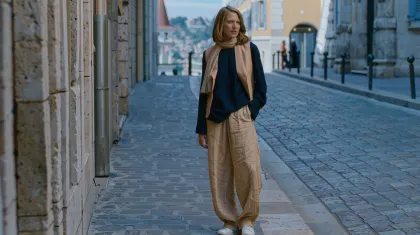
I packed three pairs of boots, two wool coats, and enough thermal underwear for a Nordic hiking expedition. All of it stayed in the hotel closet, mocking me, while I lived in the same three pieces for four days.
The woman across the aisle on Tram Line 2 wore white linen trousers and a camel coat that appeared to have been folded into a tote bag. She looked as if she belonged there. I looked ready for ski season.
The mistake was assuming February in France meant wool and waterproofing. Nice operates on its own logic. The tram took thirty-four minutes to reach Jean Médecin from Aéroport Terminal 2, costing €1.70, and during that ride the temperature outside climbed from fourteen degrees to nearly twenty.
I stepped onto the platform sweating through a cashmere sweater that had seemed prudent in London's drizzle. The air smelled like lavender and sunscreen—an impossible combination for winter, but there it was. It drifted from a flower shop near Place Masséna mixed with the iodine scent of the sea.
I walked to Promenade des Anglais with my suitcase clicking against the pavement, past the orange ochre buildings of the old town, and down to those famous white rocks. They look like smooth eggs from the sidewalk. They are not. They are rough, porous, calcified things that skin your palm if you brace yourself wrong against the wind.
And the wind hits first—sharp, salty, coming off the Baie des Anges with enough force to make your eyes water. But the sun was already twenty degrees and climbing. I sat down to adjust my sandals—sandals, in February, because I'd panicked and changed at the hotel—and realized with a specific horror that only comes three months before summer: I was developing tan lines across my feet.
The Mediterranean sun reflects off the water with an intensity that ignores the calendar.
What Winter in Nice Actually Looks Like
The weather apps lie by omission. They report fourteen to twenty degrees Celsius as if that's a static reality. They don't explain that those six degrees feel like twenty-five when you're tucked against a sun-warmed wall in Vieux Nice, and like four when you're exposed on the rocks with the wind cutting across the water.
It's a climate of microclimates, and dressing for it requires fabrics that negotiate between states.
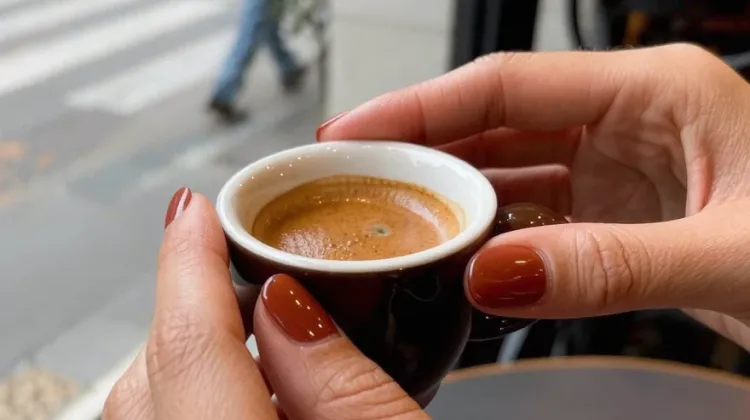
Cotton betrays you here. It soaks up sweat when you're walking up Castle Hill to the cemetery, then chills against your spine when you stop for coffee. I sat at a terrace facing the water—a mistake, price-wise—and paid €5 for an espresso that would cost €2.50 one street back.
But I paid for the view of the rocks and the sound of waves dragging against pebbles.
The wind carried salt and the smell of expensive perfume from passersby. My manicure, done hurriedly at Gatwick in terracotta warm, chipped against the ceramic cup. The color appeared wrong against my navy sleeve, but right against the blue horizon.
That's the thing about this coast. It demands colors that exist in the landscape already. Navy like the deep water. Camel like the pale stones. Anything else appears as if you're trying too hard.
The Tram Line 2 Uniform
There's a specific humiliation in arriving overdressed. You lug your inappropriate layers past locals in t-shirts, marking yourself as someone who didn't do the research, who confused geography with meteorology. Tram Line 2 is a commuter line, not a tourist shuttle. You stand between airport workers reading Le Monde and students with backpacks, and nobody is wearing Gore-Tex.
I learned to build from the skin out. The base layer is Uniqlo's extra-fine merino turtleneck in charcoal—thin enough to breathe at twenty degrees, warm enough when the wind drops the temperature to fourteen by the rocks at six in the evening.
Merino resists odor. I wore mine for four days straight, through tram rides and beach sitting and dinner, and it never smelled stale. Over that, I layered a boxy camel knit from & Other Stories, loose enough to appear intentional when draped over my shoulders during the midday heat.
The key is refusing to carry anything that fights you. Discomfort shows in your shoulders, in the way you hurry through meals. I used to think style required suffering—breaking in stiff leather, enduring waistbands—but Nice operates on a different contract. Comfort isn't the enemy of style here; it's the prerequisite.

Unlike Paris, where What to Wear in Le Marais requires more structured blazers and heavier layers, Nice allows for fluidity.
The Navy and Camel Math
These aren't just aesthetic choices. Navy and camel anchor your travel wardrobe because they match the Riviera's winter light—that specific golden quality that hits around four in the afternoon and turns everything sepia. They work in every lighting condition, from the fluorescent tram to candlelit restaurants.
My uniform became:
- Uniqlo extra-fine merino turtleneck (charcoal or navy)
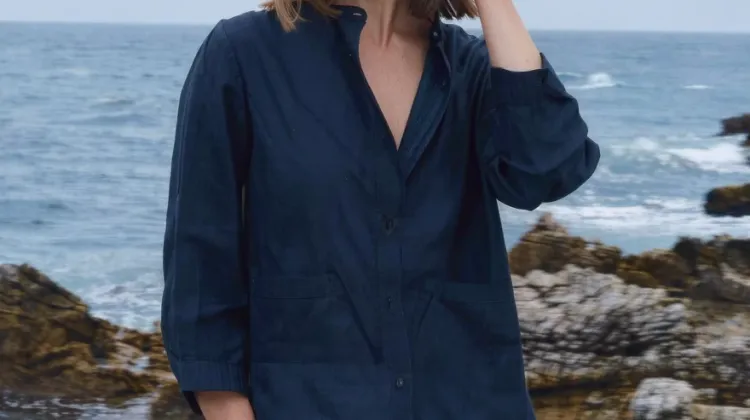
- COS 100% linen shirt in deep navy, worn open over the turtleneck or buttoned alone
- & Other Stories camel knit or blazer
- One pair of linen trousers from Mango that wrinkle beautifully
- Sandals (despite the tan lines, or maybe accepting them)
I packed nothing else for the upper body. Everything mixed. Everything breathed.
The One-Block Rule
Vieux Nice operates on a gradient of tourist density. The waterfront restaurants along Cours Saleya charge €28 for a salade niçoise because you're paying for the striped awning and the view of the flower market.
Walk one block north—just one, where the streets narrow to medieval widths and the buildings turn that specific shade of ochre—and the same meal costs €14.
The wine improves, too, because it isn't chosen for name recognition.
With Budget Travel vs. New US Tariffs affecting exchange rates, that €5 espresso on the Promenade stings even more. I ate at a place on Rue Rossetti, two streets back from the chaos, wearing the same navy linen and camel combination I'd worn to the beach. I'd added nothing except gold hoops and lipstick.
The linen had softened through the day, developing that specific wrinkled elegance that happens when the fabric knows you've been living in it. The waiter spoke only French, which is always a good sign, and the table next to me held locals arguing about football.
The transition from beach to rooftop dinner isn't about changing clothes. It's about fabrics that improve with wear. Linen does this. It starts crisp and ends up looking as if you earned it.
Why Linen Works in February
People assume linen is for August heatwaves. They're wrong. It's for any situation where you might experience fourteen degrees in shadow and twenty in full sun within the same hour. The weave creates natural gaps that let air circulate when you're overheating, but the structure provides enough barrier against a sea breeze that you don't freeze.
I tested this by necessity. I wore the COS linen shirt to the rocky beach at ten in the morning, when the stones were still cold and retained the night's chill. I kept it on through lunch at a café where the heater blasted against the open door, creating a greenhouse effect.
I wore it to a rooftop bar near the port at eight, when the temperature dropped again and the wind returned with a vengeance.
It never felt wrong. It simply felt natural, slightly more rumpled, slightly more salt-stained.
The fabric dries in twenty minutes if you splash yourself at the beach. Try that with a polyester blend.
The Digital Nomad Reality
Working from Nice means accepting that your office changes throughout the day. You start at a corner café with mismatched chairs and a chalkboard menu, typing with one hand while holding a €2.50 coffee with the other.
You move to the rocks when the sun hits its peak, balancing your laptop on your knees, aware that the glare makes the screen invisible but the warmth is worth it. You end at a bar with wifi near Garibaldi, nursing a glass of wine while you send emails.
You can't do this if you're wearing the wrong clothes. If you're tugging at waistbands or shivering in a breeze or sweating through synthetic blends. The minimalist approach isn't about owning less; it's about owning things that don't restrict your movement between states—between sun and shadow, between work and dinner, between the tram and the sea.
I still don't know if this philosophy holds in cities with stricter dress codes. Paris demands a rigidity that Nice lacks. Milan requires architecture. But here, where the air smells like lavender and sunscreen even in February, where the rocks are rough and the coffee is expensive but the tram is cheap, there's a flexibility that rewards the comfortable.
Maybe that's the real neutral. Not the colors, but the ease.
What should I wear in Nice during winter?
Pack Uniqlo's extra-fine merino turtleneck as your base layer—it handles the 14-20°C temperature swings without odor. Layer with a COS linen shirt and a camel knit from & Other Stories to navigate the wind off Promenade des Anglais.
Is Tram Line 2 the best way from Nice Airport?
Yes, it takes thirty-four minutes from Terminal 2 to the port for €1.70. It's a local commuter line, not a tourist shuttle, and runs every few minutes during the day.
How do I avoid overpacking for the French Riviera?
Stick to navy and camel as anchor colors that work from the rocky beach to dinner. Choose linen and merino fabrics that breathe in sun and block wind, so you don't need separate outfits for day and night.
Where should I eat in Vieux Nice on a budget?
Walk one street back from the waterfront terraces where espressos cost €5. Restaurants on Rue Rossetti and similar side streets charge half the price for better wine and authentic salade niçoise.