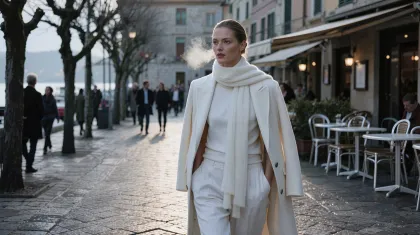
Salt and diesel and something like warmed lemon peel caught in the wool of my collar the moment I stepped onto the concrete quay. The €14 ferry from Santa Margherita Ligure had taken just under an hour, cutting through water so clear I could track schools of silver fish from the deck without leaning over the rail.
The engine made a sound like a sewing machine running through thick denim, rhythmic and low, vibrating up through the soles of my boots.
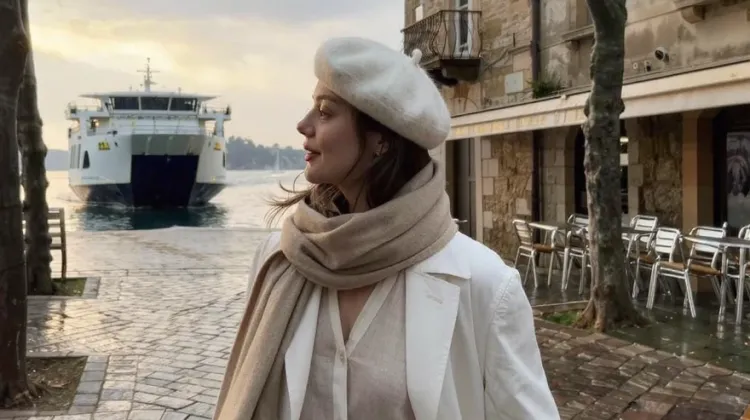
I had fifteen minutes of walking ahead of me to cover the entire village, theoretically, but I was already sweating through the wrong shirt. The thing is, I'd packed for that specific aesthetic everyone photographs.
You know the one. Breton stripes replaced with white, linen instead of jersey, the kind of look that suggests you own a sailboat you don't know how to sail. I had a cream-colored button-down from Zara that I'd convinced myself was Italian Riviera appropriate, 100% linen with a dense, heavy weave that looked expensive in the mirror but functioned like plastic wrap against skin.
I should have known when I boarded at ten that morning. The temperature was hovering around fourteen degrees, breezy enough to warrant layers, but the forecast promised a climb to twenty by noon. That's the trouble with winter on the Ligurian coast.
It isn't cold, exactly. It's theatrical. One moment you're zipping your jacket against the wind coming off the water, the next you're carrying it over your arm while hiking up stone steps in direct sun, wishing you'd chosen a different fabric entirely.
The Fabric That Failed on the Hike
Castello Brown sits above the harbor like a judgmental relative, all stone walls and sudden views. The walk up takes roughly twenty minutes if you're fit and not wearing linen that chafes. I was wearing both.
The shirt—the Zara one—was theoretically breathable, but the weave was too tight. It held moisture instead of releasing it. By the time I reached the terrace overlooking the harbor, I had dark patches under my arms and a stripe of sweat cooling against my spine that no amount of artful tucking could hide.
And linen wrinkles. Obviously. I'd ignored my own rule about ironing being pointless when you're living out of a suitcase, thinking this particular shirt had that "intentionally rumpled" vibe. It didn't. It had the "I slept in a hostel" vibe, which might work at twenty-two but feels different at thirty-four when you're trying to look pulled-together for dinner later.
The cuffs were creased from where I'd pushed them up my forearms, and the collar had wilted.
I stood there on the castle terrace, watching the water change from turquoise to navy as the sun shifted, and realized I'd need to solve this before six. More or less. The view was spectacular—fishing boats bobbing like toys, the pastel houses stacked against the hillside—but I was too aware of the damp fabric sticking to my back to appreciate it fully.
A French family walked past, the mother in a navy cashmere sweater that looked like it had never encountered moisture, and I felt a specific type of wardrobe shame.
The stone steps were worn smooth in the center from centuries of feet, curved like shallow bowls that threatened to send my loafer sliding if I wasn't careful. I pressed my toes against the leather and kept climbing, feeling the eighteen-degree sun on my neck and regretting every choice that had led me to wear a shirt that weighed three pounds when wet.

Building a Portofino Layering System
The solution, I knew, was sitting in my carry-on back at the hotel—a small room near the piaetta that I'd booked precisely because it forced me to pack light. Two weeks in one bag means every item has to work harder than you do.
I'd brought a Uniqlo extra-fine merino turtleneck in off-white that I'd already worn four times without washing, because merino wool doesn't retain odor the way cotton or synthetic blends do. It breathes when you're warm, insulates when you're not, and it doesn't wrinkle in a way that looks accidental.
You can scrunch it into a ball and it springs back with dignity.
I paired it with wide-leg trousers from COS, Irish linen but a looser weave than the Zara shirt, lined with cotton so they weren't see-through but still allowed air to move. The trick to wearing pale colors in winter on the coast is texture variation.
If everything is the same matte cotton, you look like you're in a uniform. If you mix the slight sheen of merino against the dry hand of linen, you look like you understood the assignment.
The aesthetic is restrained but not boring. Grounded but not heavy.
The temperature had dropped back to sixteen degrees by four, that coastal wind picking up again and carrying the smell of someone's woodfire from a chimney I couldn't see. I added a cropped cardigan from & Other Stories, a wool-cotton mix that added structure without bulk.
It was the kind of outfit that could handle the twenty-minute coastal walk from Paraggi beach if I decided to take the long way back, or sit through a three-hour dinner without looking like I'd melted into my chair.
And I wouldn't need to touch an iron. That was non-negotiable.
The Twenty-Minute Path from Paraggi
The coastal walk from Paraggi beach to Portofino harbor takes exactly twenty minutes if you don't stop to take photos of the fishing boats, which of course you do. I took it the next morning, leaving the village by the stone archway near the bus stop, my feet in the same black leather loafers I'd worn through Rome's cobblestones the year before.
They're from a small Italian brand I found in Trastevere, but if you need something that survives uneven stone without blistering through twenty thousand steps, I've written about durable options for high-step days before.
The path winds past villas hidden behind bougainvillea that shouldn't be blooming in January but somehow were, their papery bracts scraping against the stone walls with a sound like dry fingers on denim. The air smelled like pine resin and salt and wet stone.
I passed a man carrying a bucket of anchovies, their scales catching the light like scattered coins, their smell sharp and metallic and alive.
This is where the transition from sand to sidewalk matters. Paraggi is a crescent of sand and rock pools, the kind of place where locals swim even when the thermometer says sixteen degrees. I didn't swim, but I sat on a bench removing my cardigan, then putting it back on when the breeze hit, then removing it again.
The outfit worked because the layers were distinct enough to remove without destroying the silhouette. The merino turtleneck stayed on—it's thin enough to look intentional alone, unlike a bulky sweater that makes you look half-dressed when you lose the jacket.
The trousers moved like water when I walked, not clinging or swishing.
My loafers made a specific sound on the gravel path, a crunch-slide that was different from the click they'd made on Roman cobblestones, softer. I thought about buying a replacement shirt at the little boutique near the piaetta, but everything had gold buttons or anchor motifs, and I couldn't do it.
Six PM at the Harbor
The real test came at six, nearly seven, when the light turned that specific lavender-grey that happens in Liguria before dinner. I had a table at a corner place with mismatched chairs and a chalkboard menu, the kind where the owner brings you wine he hasn't written down yet.
I'd changed back into the COS trousers but kept the Uniqlo merino, adding a vintage silk scarf I'd bought in Paris to cover the fact that I'd been wearing the same top for three days.
My nails were milky white, barely there, just enough to catch the candlelight when I reached for my wine glass.
The silk scarf was a mistake, actually. Too slippery for the merino, constantly sliding off my shoulders whenever I leaned forward to look at the fish in the harbor. But it looked good in photos, which is more or less what scarves are for when you're traveling alone and need to differentiate day three from day four in your camera roll.
The thing is, you don't need statement jewelry in a place this small. The harbor is statement enough, all those painted houses stacked like sugar cubes against the darkening hill, the water reflecting the marina lights so clearly you could read the name on a yacht from across the quay.
I watched a couple at the next table struggling with a map, both in brand-new white sneakers that looked too bright against the salt-stained pavement. They'd probably walked the whole village in fifteen minutes as the guidebooks promise, but they hadn't accounted for the verticality of it.
Portofino looks flat in photos. It isn't. The streets tilt upward without warning, and those polished shoes will slide.
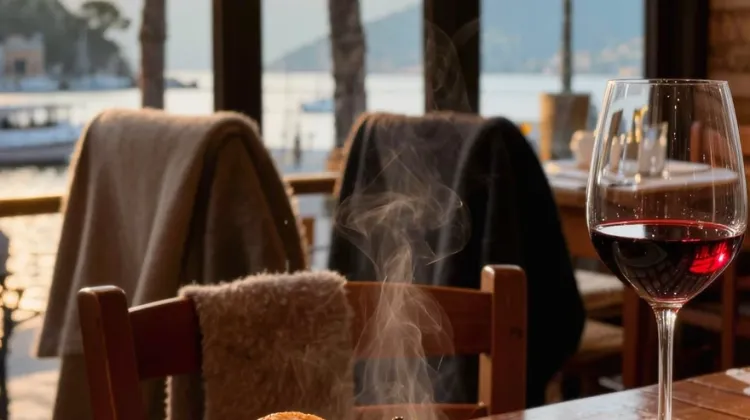
The fish was whole, grilled with rosemary that crumbled between my fingers when I touched the stems, the flesh flaking off the bone in opaque chunks that tasted like the sea but cleaner. The COS trousers have an elastic panel at the back waist that saved me after the meal.
Real linen waistbands don't give, but these have two inches of hidden stretch that meant I didn't have to undo my top button discreetly under the tablecloth. That's the kind of detail you only notice when you've eaten too much focaccia, but it matters.
The outfit held up through two glasses of Vermentino, through the walk back up the hill to my hotel, through the moment I realized I'd packed exactly right except for that one Zara shirt which I would leave in the hotel's donation bin.
I considered keeping it for the flight home, but the thought of putting it back on made me itch preemptively. The linen trousers had softened with wear, draping better than they had on day one.
The merino still smelled like nothing, like air.
Two Weeks in One Bag
People always ask what I actually pack for these trips, as if there's a magic formula. There isn't, but there are non-negotiables when you're refusing to check luggage for fourteen days.
- One merino wool base layer (Uniqlo, crew or turtleneck depending on season—wear it four times, wash it in the sink, it dries overnight)
- One pair of wide-leg linen trousers with lining (COS, the ones that don't require ironing and look better wrinkled, with hidden stretch at the waist)
- One wool-cotton cardigan that can sub for a jacket (& Other Stories, size down so it doesn't slouch off your shoulders)
- One silk or satin skirt for evening, black, that weighs nothing and takes up negative space in the bag
- Two pairs of shoes maximum: the broken-in loafers for Walking Rome's Cobblestones, and one pair of strappy sandals that can handle a nicer dinner but pack flat
- No cotton t-shirts. They smell after one wear and take up space you need for layers.
- A nail file and the white polish, because chipped nails ruin photos faster than bad outfits, and you won't find a good salon in a village you can walk in fifteen minutes.
I didn't bring a hairdryer. I didn't bring jeans—they're too heavy for the carry-on weight limit and take forever to dry if you hand-wash them in a tiny hotel sink with a shower that switches between scalding and freezing if you breathe wrong.
I brought a small bottle of lavender oil to scent the merino between wears, which sounds precious but matters when you're rewearing clothes in close proximity to other humans on the Perfect Sydney Opera House captions ferry back.
The ride back to Santa Margherita two days later cost the same €14, but the light was different, morning instead of afternoon, and I wore the merino again with the cardigan buttoned up against the wind on deck.
The village was dark by eight the night before, the shops closing, the day-trippers gone back on the last boat. I sat on my hotel balcony with the wool-cotton mix wrapped tight, listening to the waves hit the breakwater below, wondering if the Zara shirt was a metaphor for something I hadn't figured out yet, or just a bad purchase.
Probably both. But the merino was still perfect, and sometimes that's enough.
What fabric works best for winter layering in Portofino?
Uniqlo's extra-fine merino wool is the ideal base layer because it regulates temperature between 14-20°C and doesn't retain odor after four days of wear. For trousers, look for Irish linen with a loose weave and cotton lining, like the ones from COS, which breathe without being see-through.
Which shoes survived the coastal walk from Paraggi beach?
The same black leather loafers I wore for twenty thousand steps across Rome's cobblestones. They made a crunch-slide sound on the gravel path that was softer than the click of heels, and the broken-in leather didn't blister during the twenty-minute walk.
How do you pack for two weeks in Portofino with just a carry-on?
Bring one Uniqlo merino base layer, one pair of COS linen trousers with elastic waist, one & Other Stories wool-cotton cardigan, and one black silk skirt. Skip cotton t-shirts and jeans entirely, and limit yourself to two pairs of shoes maximum.
Why did the Zara linen shirt fail during the Brown Castle hike?
The 100% linen had a dense, heavy weave that trapped heat like plastic wrap and held sweat instead of releasing it in the 18-degree sun. Unlike the loose-weave Irish linen from COS, it wrinkled into hostel-sleep wrinkles rather than artful rumples.
What outfit works for a harbor dinner in Portofino?
The Uniqlo merino turtleneck in off-white paired with COS wide-leg linen trousers and a cropped & Other Stories cardigan. The merino is thin enough to look elegant at candlelight but warm enough for the sixteen-degree evening breeze coming off the water.